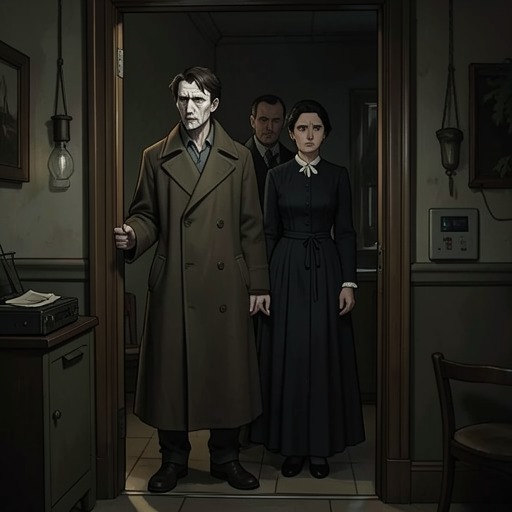
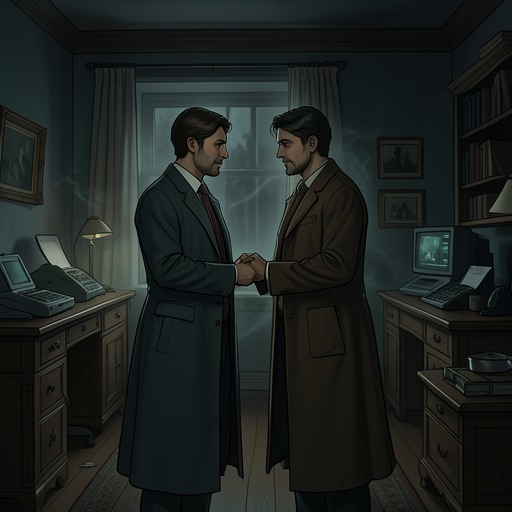
Derby Mansion
The Thing on the DoorstepDerby Mansion is the Derby family’s old home and the intended refuge Edward Pickman Derby repeatedly fails to reclaim. Its contrast with Crowninshield House gives the two residences distinct roles: the mansion represents family continuity and a possible return to ordinary life, while Edward’s inability to move there exposes how strongly he remains bound to the house he fears.
Family Home and Rival Residence
The mansion is identified as the old family house Edward hopes to inhabit again after his father’s death. That loss leaves him badly upset, although he is not wholly disorganized. He had seen little of his father since marrying Asenath Waite, and the account suggests that Asenath had come to occupy the place of family connection in Edward’s life. His desire to return to the mansion therefore carries more than practical weight: it points toward a household and inheritance from which his marriage has distanced him.
The return is also contested. Edward wants the family to move back, but Asenath insists on remaining at Crowninshield House, where she has become well adjusted. The contrast is not simply between a new residence and an old one. The mansion belongs to Edward’s family past, while Crowninshield House is the setting in which his estrangement and fear have taken shape. For a time, the latter prevails: Edward’s wish to go home does not itself release him from the place he wants to leave.
A Return Planned, Then Deferred
After Edward says he has paid off the servants who had returned and intends to move home, the mansion becomes an immediate practical plan. He hopes to restore his father’s old servants to the household, in place of the dismissed servants, whom he describes as Asenath’s kin from Innsmouth. At Daniel Upton’s house, Edward and Upton discuss possible arrangements for the move. Upton hopes Edward will make it promptly, and their conversations turn to renovating the old house as well as to travels they plan for the following summer.
The plans give the mansion the shape of a fresh start, but they do not bring Edward into it. By December the old house is ready, and Edward has again acquired servants, including his father’s former butler. Yet he continually postpones moving. He hates and appears to fear Crowninshield House, while remaining strangely enslaved to it. He cannot seem to begin dismantling things there and finds excuses to delay. The obstacle is thus not that the family home is unavailable: it is prepared for him, but preparation cannot overcome his attachment to the residence he dreads.
The House and the Cellar
The returned butler supplies one of the few specific glimpses of life around the mansion. He reports that Edward sometimes prowls about the house, particularly down in the cellar, and that these movements seem odd and unwholesome. The report does not explain what Edward is doing, and the house is not described in architectural detail. Instead, this brief observation turns the mansion from a straightforward symbol of safety into a place touched by the unease surrounding Edward’s condition.
That unease sharpens the contrast between public arrangements and private behavior. The mansion has been made ready, and familiar servants have been brought back, but Edward does not settle into its ordinary domestic routine. His reported movements through the house, especially toward the cellar, accompany his failure to complete the move. The account leaves their precise meaning uncertain; what it establishes is that even the home intended to restore his former life cannot yet be separated from the disturbances that follow him.
A Home Kept in Readiness
When Edward is taken to Arkham Sanitarium, Upton acts on the assumption that he may recover and need a home. He transfers the servants to Derby Mansion, judging it the place Edward would choose if he became well enough to return. This is the clearest practical use the mansion serves: it is maintained as a possible destination for a future Edward, rather than abandoned when he can no longer occupy it.
Crowninshield House, by contrast, is left untouched for the moment. Its complicated arrangements and collections of inexplicable objects leave Upton unsure what should be done with it. He orders the Derby household to visit weekly to dust the principal rooms and arranges for the furnace to be lit on those days. The modest routine preserves the mansion as a functioning home while keeping the other residence in a suspended state. The two houses thus mark competing possibilities: a familiar family refuge prepared for Edward’s return, and a disturbing household whose contents and hold over him remain unresolved.