Necronomicon
The Thing on the DoorstepThe Necronomicon is a forbidden occult text that links Edward Derby’s youthful immersion in hidden lore to the terrifying explanation he later gives for his loss of control over his own body. Its supposed formula offers him a framework for understanding identity as something that can pass between bodies, while the story leaves the supernatural claims entangled with the testimony of a man in profound distress.
Early Study and Occult Learning
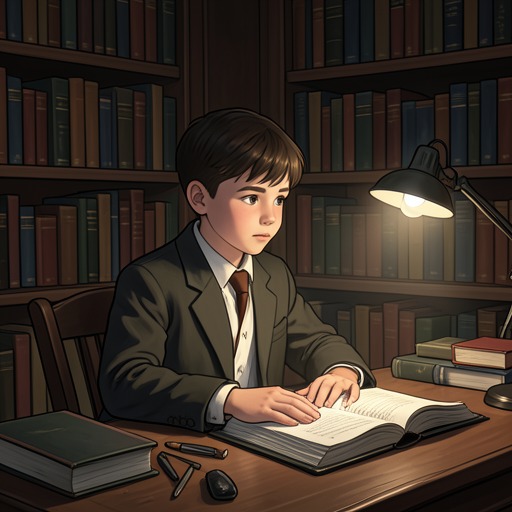
At Miskatonic University in Arkham, Derby became an almost fanatical student of subterranean magical lore. He read the Necronomicon without telling his parents, alongside other forbidden works, and pursued texts that seemed to him to preserve riddles from a remote past. This study developed from his earlier attraction to fantasy and strangeness into a serious engagement with occult writing. The book therefore belongs to the foundations of his intellectual life, not merely to the later crisis he associates with it.
The Formula and the Life-glow
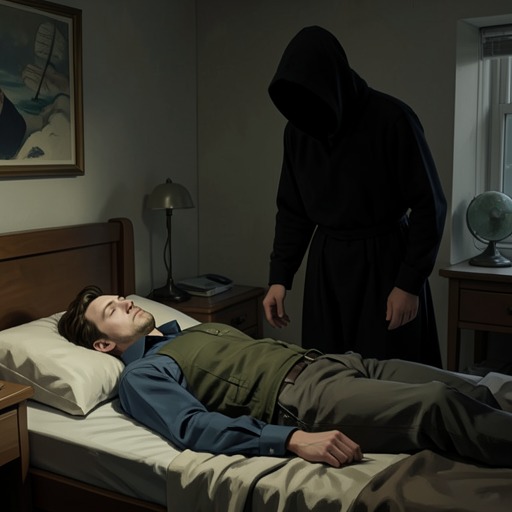
Years later, Derby tells Daniel Upton that Ephraim Waite found a formula in the Necronomicon. Derby connects it to a sequence of exchanges from body to body, and to a means of breaking the link between a person and a body. In his account, the life-glow may continue flickering for a time even after the body dies. These ideas turn the book into a key to Derby’s attempted explanation of what has happened to Asenath Waite, Ephraim, and himself; they are presented as Derby’s conclusions, not as an independently verified exposition of the text.
Derby’s suspicions draw on details he regards as evidence: Asenath Waite’s handwriting sometimes resembles Ephraim Waite’s manuscripts, and she has, he believes, displayed knowledge and mannerisms that belong to an older man. He interprets these signs through the formula’s apparent promise of bodily transfer and permanence. The Necronomicon thus gives a structure to his fear, even as his account leaves unresolved how much the reader should accept of his deductions.
Wider Occult Connections
The book sits within a larger body of knowledge Derby describes as enabling exchanges of personality and journeys into forbidden places, other worlds, and different continua of space and time. He also speaks of meetings in lonely locations and of objects whose shapes and textures seem to him to come from beyond the ordinary world. His testimony associates the Necronomicon with practices and claims that exceed ordinary explanation, but does not establish the book’s precise contents or make every reported phenomenon independently certain.
Consequences and Narrative Role
After his experience in the Maine woods, Derby tells Upton that he has been drawn into horrors connected with Asenath Waite and resolves that he wants no further involvement with occult study. He says that, if he were librarian at Miskatonic University, he would burn the Necronomicon and related books. The declaration reverses the direction of his youthful fascination: the texts he once sought out now represent knowledge he wishes to destroy or escape.
The Necronomicon’s importance rests as much on the limits of what can be established as on the powers Derby attributes to it. It supplies the terms through which he describes transferred identity and survival beyond bodily death, while the narrative delivers those terms through a frightened witness whose explanations cannot be cleanly separated from uncertainty. The book consequently binds Derby’s early scholarship to the story’s central instability: whether a person can be distinguished from the body that appears to contain them.