Assassination of Buckingham
The Three MusketeersThe assassination of George Villiers, Duke of Buckingham, on August 23, 1628, at Portsmouth, is the novel's central catastrophe. It simultaneously fulfills Cardinal Richelieu's political and personal vendetta, destroys the last hope of the besieged Huguenots of La Rochelle, and seals the fate of the woman who engineered it, Milady de Winter. The event is carried out by the fanatical Puritan lieutenant John Felton, whom Milady has seduced and manipulated into believing that killing Buckingham is a divine mission. The duke's death, occurring just as he was about to sail with a relief fleet, instantly ends the English threat to France and leaves the cardinal free to dictate the terms of peace, while also severing the last tangible link between Queen Anne of Austria and the man she loved.
Background and Conspiracy
The assassination is the culmination of a complex plot orchestrated by Cardinal Richelieu. Having learned that Buckingham is preparing a massive fleet to relieve the besieged city of La Rochelle, the cardinal decides to eliminate his rival. During a secret meeting at the inn of the Red Dovecot, Richelieu commissions Milady to travel to London and deliver an ultimatum to Buckingham: abandon the expedition or face public exposure of his secret love affair with the queen. The cardinal provides Milady with a list of damning proofs, including details of Buckingham's clandestine visits to the Louvre disguised as an Italian fortune-teller and his meeting with the queen at Amiens. Should the duke persist, the cardinal hints at the need for a fanatic to assassinate him, a task Milady eagerly accepts. She is given a signed carte blanche by the cardinal, absolving her in advance for any act committed "for the good of the state."
The Assassination
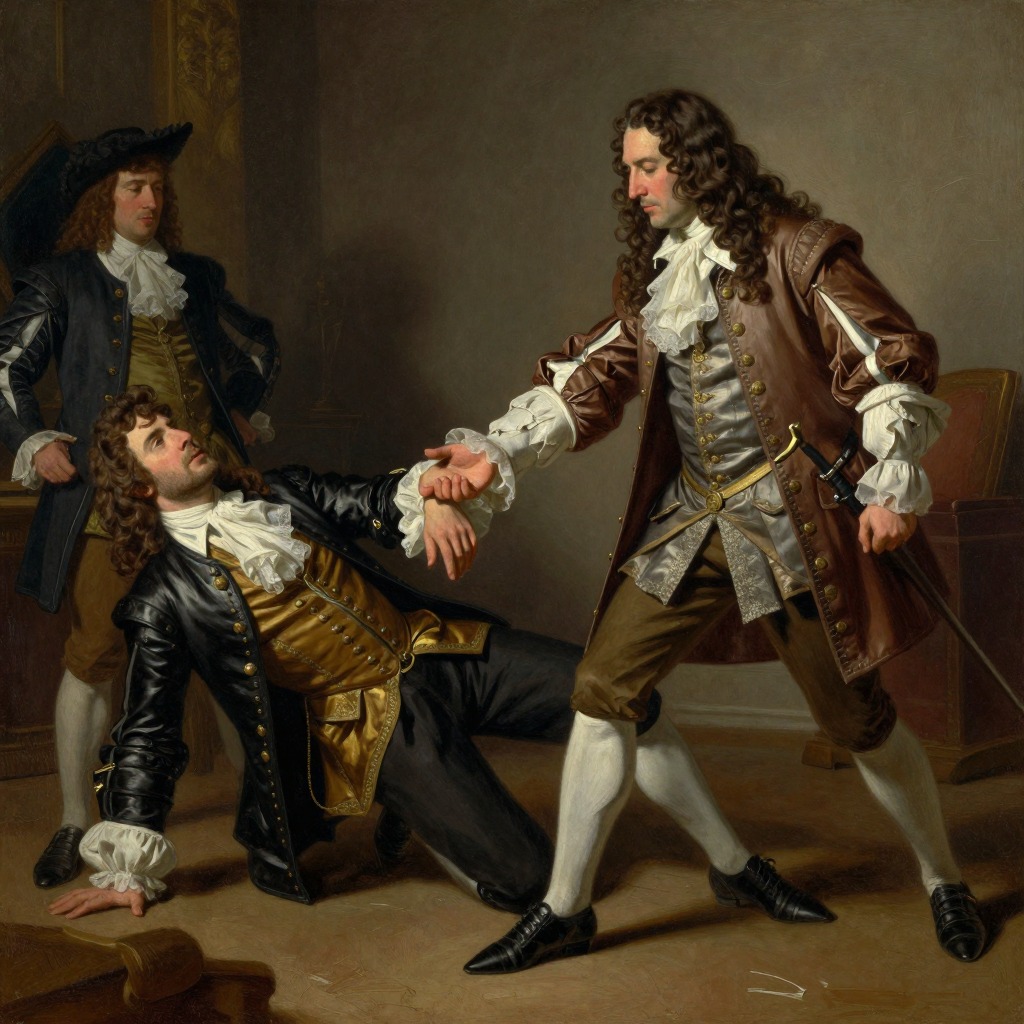
Milady, having escaped from her captivity in Lord de Winter's castle with Felton's help, sails for Portsmouth. Felton, now utterly devoted to her, goes ahead to the Admiralty Palace to deliver a forged order for Milady's transportation, which he intends to use as a pretext to confront the duke. He finds Buckingham in his dressing room, attended by his valet Patrick. Felton presents the order, but when Buckingham prepares to sign it, Felton reveals his true purpose, demanding the duke's signature on a document freeing Milady. A heated argument ensues, during which Felton accuses Buckingham of being a tyrant and a seducer. As Buckingham calls for help, Felton draws a knife—the same knife Milady had used to fake her own suicide—and stabs the duke in the side. The duke cries out, "Ah, traitor, you have killed me!" and collapses. Felton is immediately seized by Lord de Winter, who has arrived too late to prevent the murder.
Consequences and Aftermath
Buckingham dies within minutes, his last words a desperate inquiry about a letter from the queen, which his faithful servant Laporte reads to him. The letter, in which Anne of Austria begs him to abandon the war for her sake, brings him a bitter consolation. He bequeaths to the queen the silver casket containing her letters and the knife that killed him, as a final token. The news of the duke's death throws the English court into chaos. King Charles I, fearing the news will demoralize the Rochellais, orders all ports closed to prevent the information from spreading. The English fleet never sails, and La Rochelle, its last hope extinguished, surrenders to the king's army two months later. The cardinal's greatest enemy is removed, and his political strategy is vindicated. For Milady, the assassination is her final, most devastating act of vengeance, but it also seals her own doom, as the four Musketeers, now knowing her true nature, pursue her to the banks of the Lys and execute her.