Athos
The Three MusketeersAthos, the Comte de la Fere, is the eldest and most enigmatic of the four Musketeers, a nobleman of immense courage, profound melancholy, and a hidden past that shapes the novel's darkest conflicts. His secret marriage to the woman who becomes Milady de Winter, and his subsequent discovery of her branded shoulder, drives a personal vendetta that culminates in her trial and execution, making him the moral anchor and the most tragic figure among the friends. He is the embodiment of the aristocratic code of honor, a man whose past sins and present stoicism define the moral gravity of the story.
Identity and Background
Athos is the pseudonym of the Comte de la Fere, a nobleman of the highest rank from the province of Berry. He is described as being of middle height but admirably shaped, with piercing eyes, a straight nose, and a chin cut like that of Brutus, giving him an indefinable character of grandeur and grace. His hands, of which he took little care, were the despair of Aramis, who cultivated his with almond paste and perfumed oil. His voice was at once penetrating and melodious. He possessed a delicate knowledge of the world and the usages of the most brilliant society, which appeared unconsciously in his least actions. He was profoundly versed in hunting and falconry, and one day astonished even King Louis XIII, who took pride in being considered a master of the art. His education was so little neglected that he smiled at the scraps of Latin which Aramis sported and which Porthos pretended to understand, and he could replace a verb in its right tense and a noun in its case. His probity was irreproachable in an age when soldiers compromised easily with their religion and consciences. He was the friend of the king, who was accustomed to say that if he had a friend who was about to fight, he would advise him to choose as a second, himself first, and Treville next—or even, perhaps, before himself.
Life and Plot Trajectory
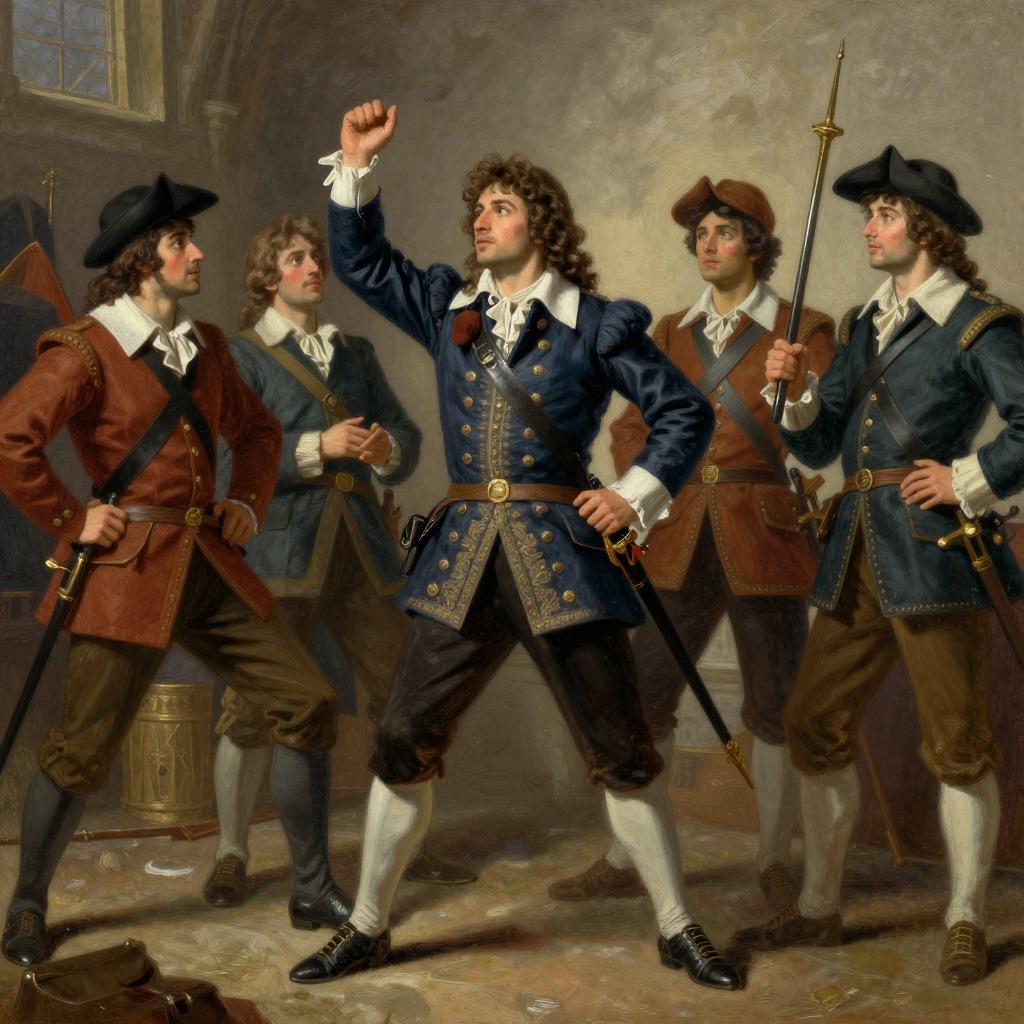
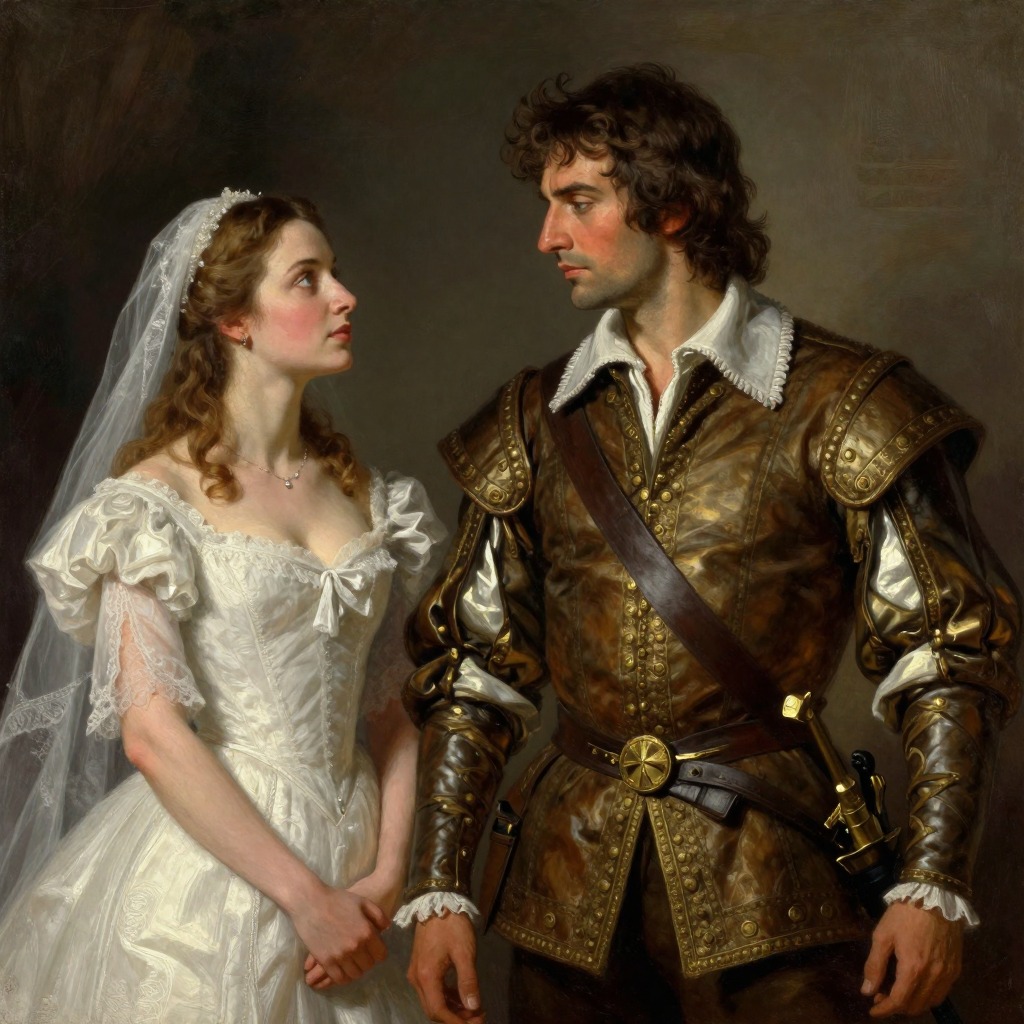
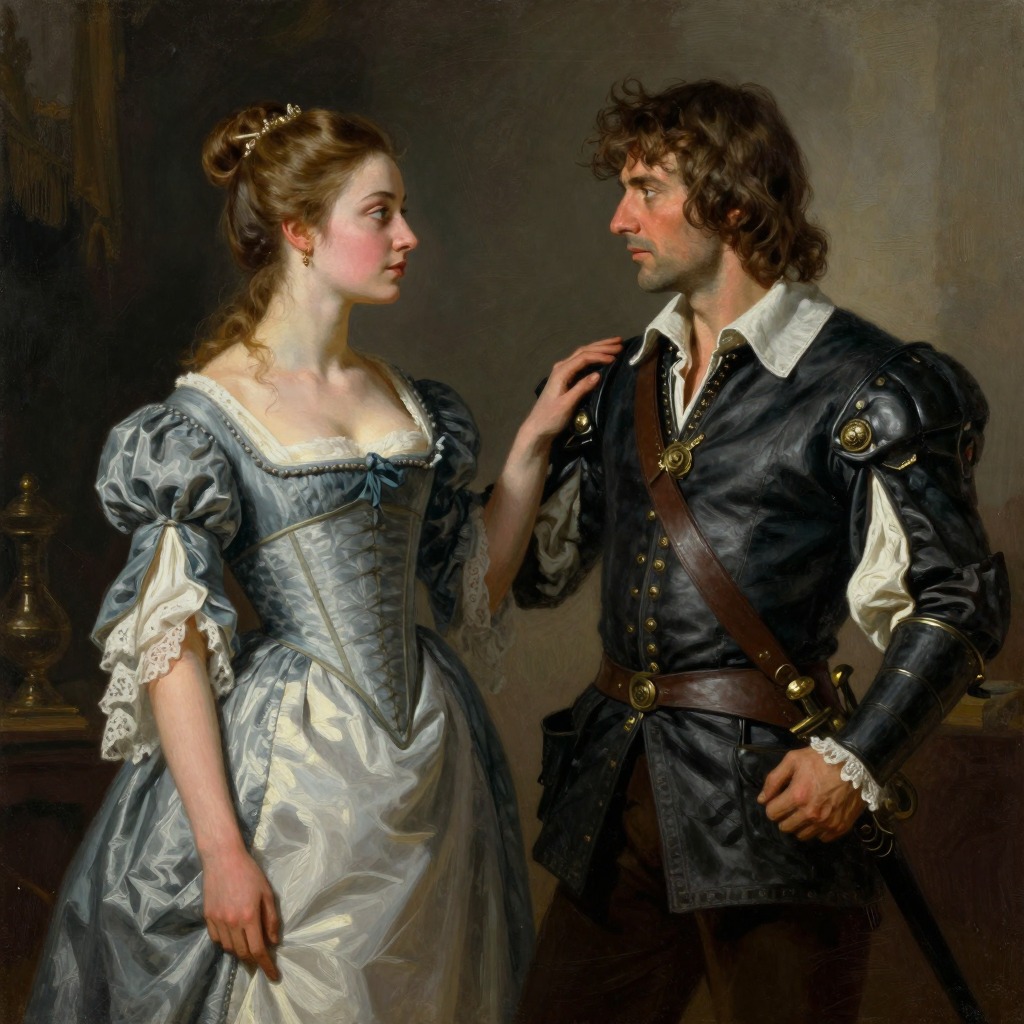
Athos's life is defined by a single, catastrophic event: his marriage to a young woman of sixteen, beautiful as fancy can paint, whom he discovered, after the wedding, to be branded with a fleur-de-lis on her shoulder. As the seigneur of his province, he had the rights of high and low tribunals. He tore the dress of the countess to pieces, tied her hands behind her, and hanged her on a tree. This act of justice, or murder, haunts him throughout the novel. He then assumed the name Athos and joined the Musketeers, burying his identity and his grief. He is first seen in the antechamber of M. de Treville, where he is called in along with Porthos and Aramis to be reprimanded for a brawl. He enters the cabinet, pale from a recent wound, and collapses from loss of blood. Later, d'Artagnan accidentally runs into him, hurting his wounded shoulder, which leads to a duel. The duel is interrupted by the arrival of the Cardinal's Guards, and Athos, Porthos, Aramis, and d'Artagnan fight together, forging their bond. During the journey to England, Athos is captured at Amiens after a fight with the innkeeper, but he barricades himself in the cellar and holds out for days, drinking the wine. He is eventually freed by d'Artagnan. He later reveals his past to d'Artagnan in a drunken stupor, telling the story of the count who married a branded woman and hanged her. He is the one who, at the inn of the Red Dovecot, overhears Milady's conversation with Cardinal Richelieu and steals the cardinal's carte blanche from her. He then leads the trial of Milady, acting as the chief judge, and after her execution, he is the one who tells d'Artagnan to be a man and avenge the dead.
Key Actions and Objectives
Athos's primary objective is to protect his friends, particularly d'Artagnan, and to exact justice upon Milady. He is the strategist of the group, often providing the calm, rational plan in moments of crisis. He is the one who proposes the wager to breakfast in the Bastion St. Gervais, a seemingly reckless act that provides a secure place for the four friends to discuss their plans. He is also the one who, after the poisoning attempt on d'Artagnan, devises the plan to warn Lord de Winter about Milady. His most significant action is confronting Milady at the Red Dovecot, where he forces her to hand over the cardinal's signed order, a document that later saves d'Artagnan's life. He is the one who, after Constance Bonacieux is poisoned, declares, "I will be accountable for her," and sets in motion the final pursuit and execution of Milady.
Relationships and Conflict
Athos's central relationship is with d'Artagnan, whom he loves like a son. He is the most trusted advisor and the moral compass of the group. His relationship with Milady is the most complex and fraught. She is his wife, the woman he believed he had killed, and the source of his deepest shame and rage. He is the only one who knows her true identity and her secret, and he is the one who ultimately judges her. His relationship with his fellow Musketeers is one of deep, unspoken loyalty. He is the leader of the "Three Inseparables," and his word is law. He is also the one who, after the execution of Milady, refuses the lieutenant's commission, saying it is too much for Athos and too little for the Comte de la Fere.
Change and Ending
Athos undergoes a profound change from a man haunted by his past to one who actively confronts and resolves it. His initial melancholy and alcoholism are a direct result of his trauma. The revelation of his secret to d'Artagnan is a turning point, as it allows him to begin to share his burden. His confrontation with Milady at the Red Dovecot is a moment of triumph, where he reclaims his power and his honor. The trial and execution of Milady is the climax of his personal arc, where he finally achieves a form of closure. After the execution, he is able to forgive her, saying, "I pardon you the ill you have done me." He then refuses the lieutenant's commission, choosing to remain a Musketeer under d'Artagnan's command until 1633, when he retires to a small property in Roussillon. He is last seen in the epilogue, having left the service, followed by his faithful servant Grimaud.
Thematic Significance
Athos embodies the themes of honor, justice, and the burden of the past. His story is a meditation on the consequences of a single, terrible act and the possibility of redemption through action. He is the most tragic figure in the novel, a man of immense nobility and courage who is forever marked by his past. His refusal to accept the lieutenant's commission underscores his commitment to the brotherhood of the Musketeers and his rejection of worldly ambition. He is the moral center of the story, the one who, in the end, dispenses justice and offers forgiveness, embodying the ideal of the noble gentleman.
The character of Athos has also left a mark on popular culture beyond the novel. The British rock band The Smiths, in their 1985 song "You've Got Everything Now," included the lyric "I've seen you smile, but I've never really heard you laugh," which was directly borrowed from a narrative description of Athos in the original text. This reference underscores the enduring resonance of Athos's melancholic and stoic demeanor, a trait that has made him a favorite subject for literary analysis and adaptation. His complex personality, blending nobility with a tragic past, continues to inspire reinterpretations in film, television, and music, cementing his status as one of Dumas's most memorable creations.