Comte de Wardes
The Three MusketeersComte de Wardes is a minor but pivotal antagonist in Alexandre Dumas's The Three Musketeers, a creature of Cardinal Richelieu whose name becomes a weapon in the novel's central deceptions. Though he appears in person only briefly, his identity is stolen by d'Artagnan in a sustained act of impersonation that drives the seduction and near-destruction of Milady de Winter, and his offstage presence as her intended lover and as a target of vengeance shapes the plot's most dangerous intrigues.
Identity and Role
Comte de Wardes is a young, handsome, and wealthy nobleman in the service of Cardinal Richelieu. He is described as one of the cardinal's most trusted men, a cousin of the cardinal's agent Comte de Rochefort. His position at court is sufficiently high that he is considered a rival by d'Artagnan, who notes that de Wardes is "young, handsome, rich, and high in the cardinal's favor." He is also a skilled swordsman, though he meets his match when he is wounded four times by d'Artagnan in a duel near Calais. His servant is a lackey named Lubin, a Norman whom Planchet later recognizes and interrogates.
The Duel at Calais and Its Aftermath
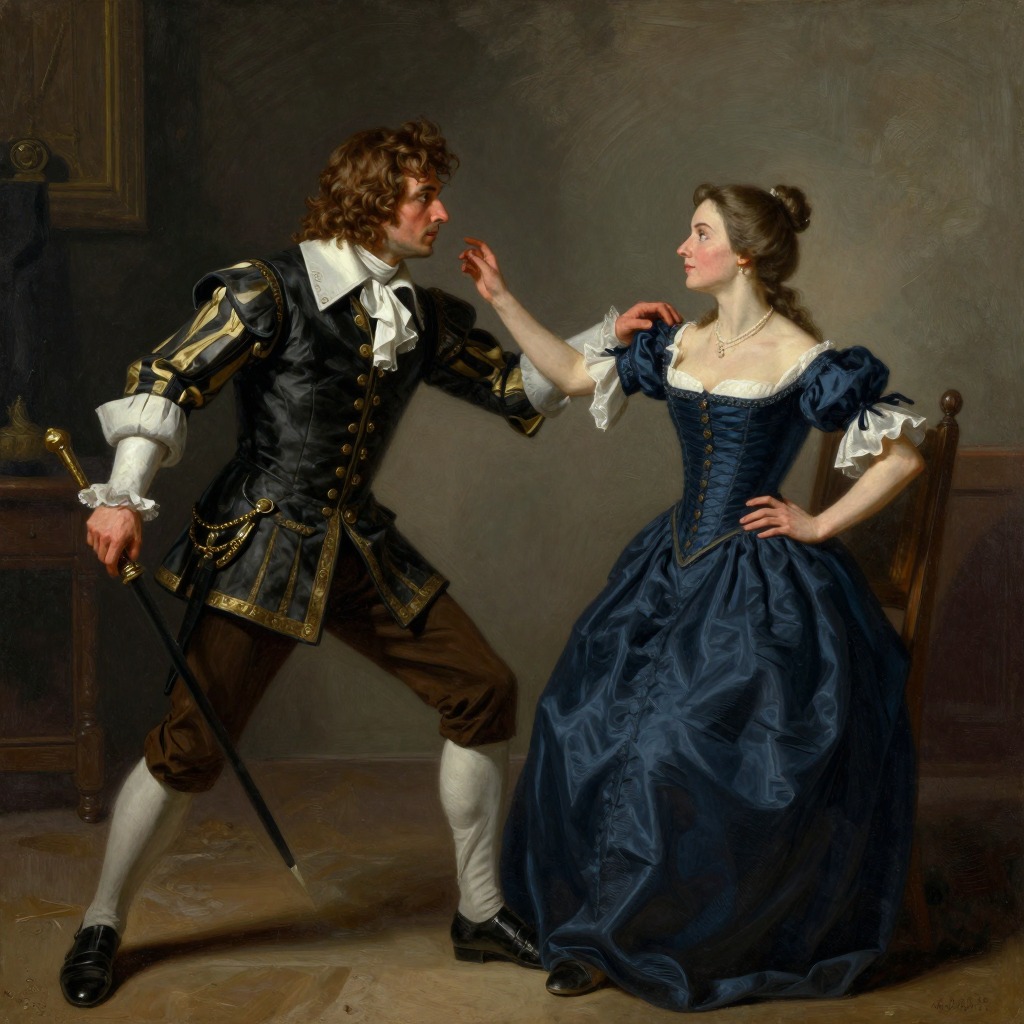
De Wardes's most significant direct action occurs during d'Artagnan's journey to England. At Calais, de Wardes arrives with an order from the cardinal to prevent anyone from crossing to England without permission. D'Artagnan, who has no such order, intercepts him in a wood outside the city and demands the document. A duel ensues in which d'Artagnan wounds de Wardes three times, crying "One for Athos, one for Porthos; and one for Aramis!" at each thrust. De Wardes, though fallen, manages to stab d'Artagnan in the breast with a fourth thrust, crying "One for you!" D'Artagnan then kills him with a final blow, takes the cardinal's order, and uses it to secure his own passage to England. De Wardes is left for dead in the wood, but he survives; Planchet later learns from Lubin that de Wardes is "as well as a man can be with four sword wounds in his body" and is recovering, though very weak from loss of blood.
The Impersonation and Its Consequences
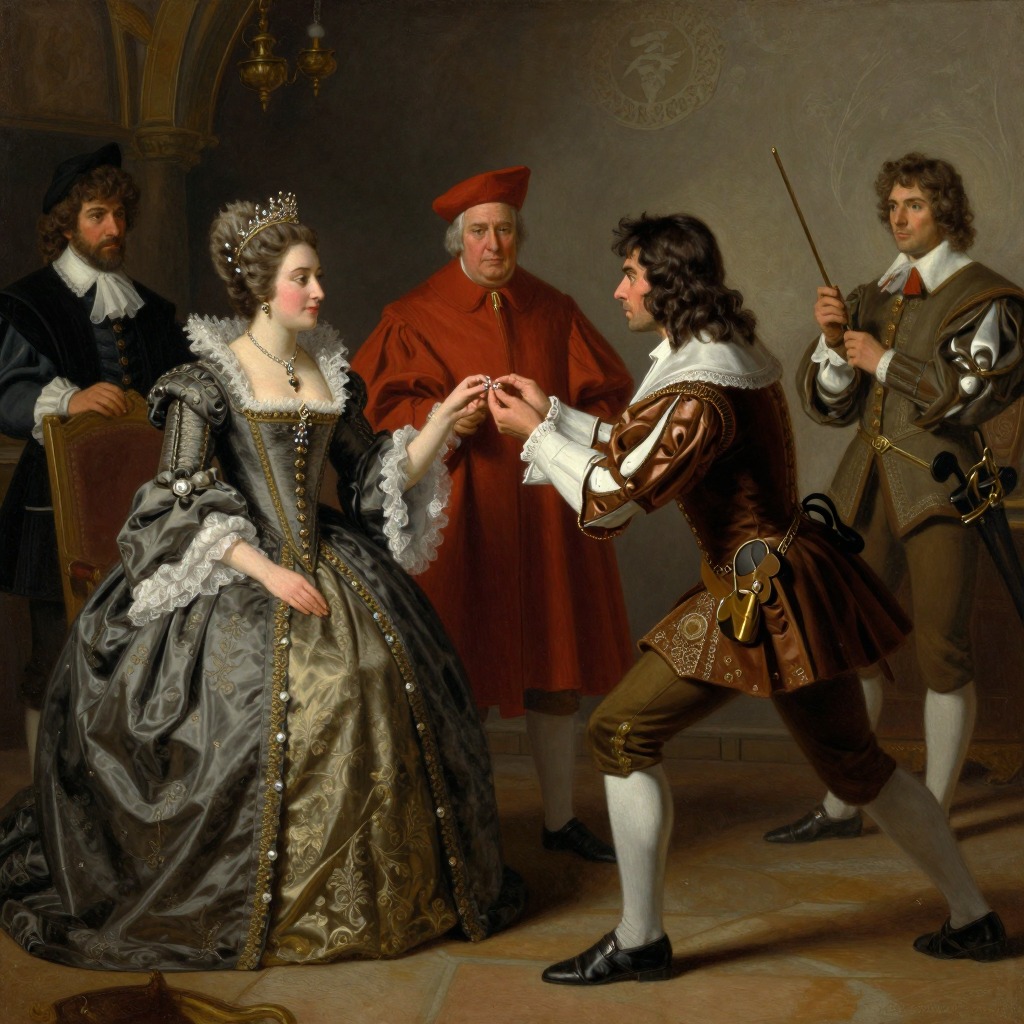
De Wardes's name becomes the instrument of d'Artagnan's most audacious deception. After discovering that Milady de Winter is in love with de Wardes and has written him passionate letters, d'Artagnan intercepts her correspondence and forges replies in de Wardes's name. He arranges a nocturnal rendezvous with Milady, impersonating de Wardes, and successfully seduces her. During this encounter, Milady gives him a magnificent sapphire ring intended for de Wardes. The deception is so complete that Milady, believing she has been betrayed by de Wardes, vows vengeance against him and asks d'Artagnan to kill him. D'Artagnan, still in his role as the impersonator, writes a cruel letter of rejection in de Wardes's name, which drives Milady into a fury and deepens her desire for revenge. The impersonation is only revealed when d'Artagnan, in a moment of weakness, confesses to Milady that he and de Wardes are the same person, a revelation that nearly costs him his life.
Narrative Function and Significance
De Wardes functions primarily as an offstage catalyst for the novel's most intricate plot machinery. His name is the mask behind which d'Artagnan operates, and his supposed betrayal of Milady provides the emotional fuel for her later, more focused hatred of d'Artagnan himself. He is also a marker of the cardinal's network of agents: Athos, upon hearing d'Artagnan's account of the duel, immediately identifies de Wardes as "one of the cardinal's men, a cousin of Rochefort." In the final reckoning, d'Artagnan accuses Milady of having urged him to murder de Wardes, a charge that forms part of the case against her at her trial. De Wardes thus remains a shadowy figure whose name, rather than his person, does the work of the plot.