Isle of Re
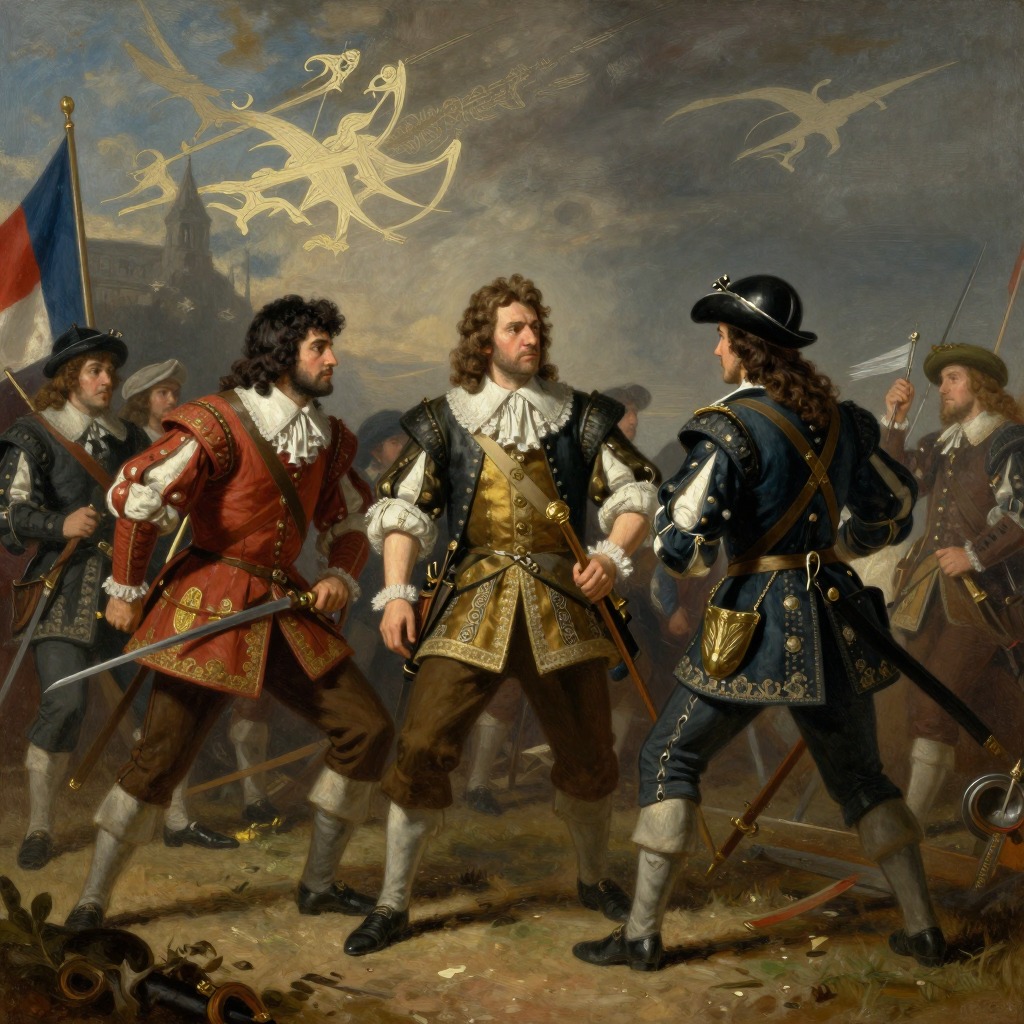
The Three MusketeersThe Isle of Re, a small island off the western coast of France, serves as the opening battleground in the war between England and France that frames the latter half of The Three Musketeers. Its strategic importance lies in its proximity to the besieged Huguenot stronghold of La Rochelle, making it the key to controlling access to the city and the channel for English reinforcements. The island's fate becomes a direct reflection of the power struggle between Cardinal Richelieu and the Duke of Buckingham, a struggle that is as much about personal rivalry as it is about national dominance.
The English Landing and the French Defense
The conflict on the Isle of Re begins with a surprise attack. The Duke of Buckingham, arriving unexpectedly with a fleet of ninety vessels and nearly twenty thousand men, catches the French commander, the Comte de Toiras, off guard. After a bloody conflict, Buckingham successfully effects a landing on the island, forcing Toiras to retreat with his garrison into the citadel of St. Martin and to throw a hundred men into the smaller fort of La Pree. This initial English victory is a direct challenge to French authority and a personal affront to Cardinal Richelieu, who sees Buckingham not only as an enemy of France but as a rival for the affections of Queen Anne of Austria. The English occupation of the island is a constant threat to the French siege of La Rochelle, as it provides a potential base for resupply and reinforcement for the besieged city.
The Stalemate and the Cardinal's Response
Following the landing, the situation on the Isle of Re becomes a protracted stalemate. The English, under Buckingham, besiege the citadel of St. Martin and the fort of La Pree but fail to take them. The French, meanwhile, are unable to dislodge the English from the island. This deadlock forces Cardinal Richelieu to accelerate his plans for the main siege of La Rochelle. He sends Monsieur, the king's brother, to direct the initial operations and orders all available troops to march toward the theater of war. The stalemate on the island is a source of great frustration for the cardinal, as it prolongs the war and keeps Buckingham, his hated rival, in a position of power. The English forces on the island suffer from poor supplies, including salt meat and bad biscuit, and the rough sea destroys many of their smaller vessels, weakening their position over time.
The French Victory and the English Retreat
The decisive action on the Isle of Re comes when the king, despite his own illness, gives the necessary orders for a final assault. The French expedition succeeds, repulsing the English foot by foot. The English are defeated in all encounters and are forced to re-embark, leaving behind a significant number of dead and wounded, including five colonels, three lieutenant colonels, two hundred and fifty captains, and twenty gentlemen of rank. They also abandon four pieces of cannon and sixty flags, which are taken to Paris and suspended with great pomp in the arches of Notre Dame. This victory is a major triumph for the cardinal, freeing him to focus entirely on the siege of La Rochelle without the immediate threat of English interference. The retreat is so precipitous that Buckingham is forced to abandon his lodging, where papers are found that confirm a league against France and compromise Madame de Chevreuse and, by extension, the queen.
Narrative Significance
The Isle of Re campaign serves as a crucial military and political backdrop for the personal adventures of d'Artagnan and his friends. It is the event that draws them away from Paris and into the larger conflict, providing the setting for their continued service to the king and queen. The island's fall is a direct consequence of the cardinal's strategic genius and a bitter defeat for Buckingham, setting the stage for the duke's final, fatal mission to save La Rochelle. The island's fate is intertwined with the novel's central themes of loyalty, honor, and the clash between personal ambition and national duty, demonstrating how the grand sweep of history directly impacts the lives of even the most humble of soldiers.