King Louis XIII
The Three MusketeersKing Louis XIII, the reigning monarch of France during the events of the novel, is a weak, capricious, and emotionally dependent ruler whose reign is overshadowed by the superior political genius of Cardinal Richelieu. His character is defined by a constant struggle between his affection for his Musketeers and his subservience to the cardinal, a dynamic that drives much of the courtly intrigue and shapes the fortunes of the novel's heroes.
Character and Courtly Role
Louis XIII, often called "Louis the Just," is a man of deep but easily manipulated passions. He is portrayed as a monarch who is bored, petulant, and prone to melancholy, frequently complaining of being "bored" and seeking distraction in hunting and hawking. His relationship with Cardinal Richelieu is the central political axis of the court; the king is both reliant on and resentful of his minister's power. He acknowledges the cardinal as "the prop of the state, my only servant, my only friend," yet he is also secretly pleased when the cardinal is humiliated, as when d'Artagnan and the Musketeers triumph over the Cardinal's Guards. The king's favor is fickle, and he is easily swayed by the cardinal's insinuations, particularly regarding the queen's fidelity. His love for his Musketeers, especially their captain, Monsieur de Treville, is genuine, but it is a love that must constantly contend with the cardinal's influence. He famously said that if he had a friend about to fight, he would advise him to choose as a second, himself first, and Treville next, or even perhaps before himself, a testament to his high regard for the captain's loyalty and swordsmanship.
Relationship with the Queen and the Cardinal
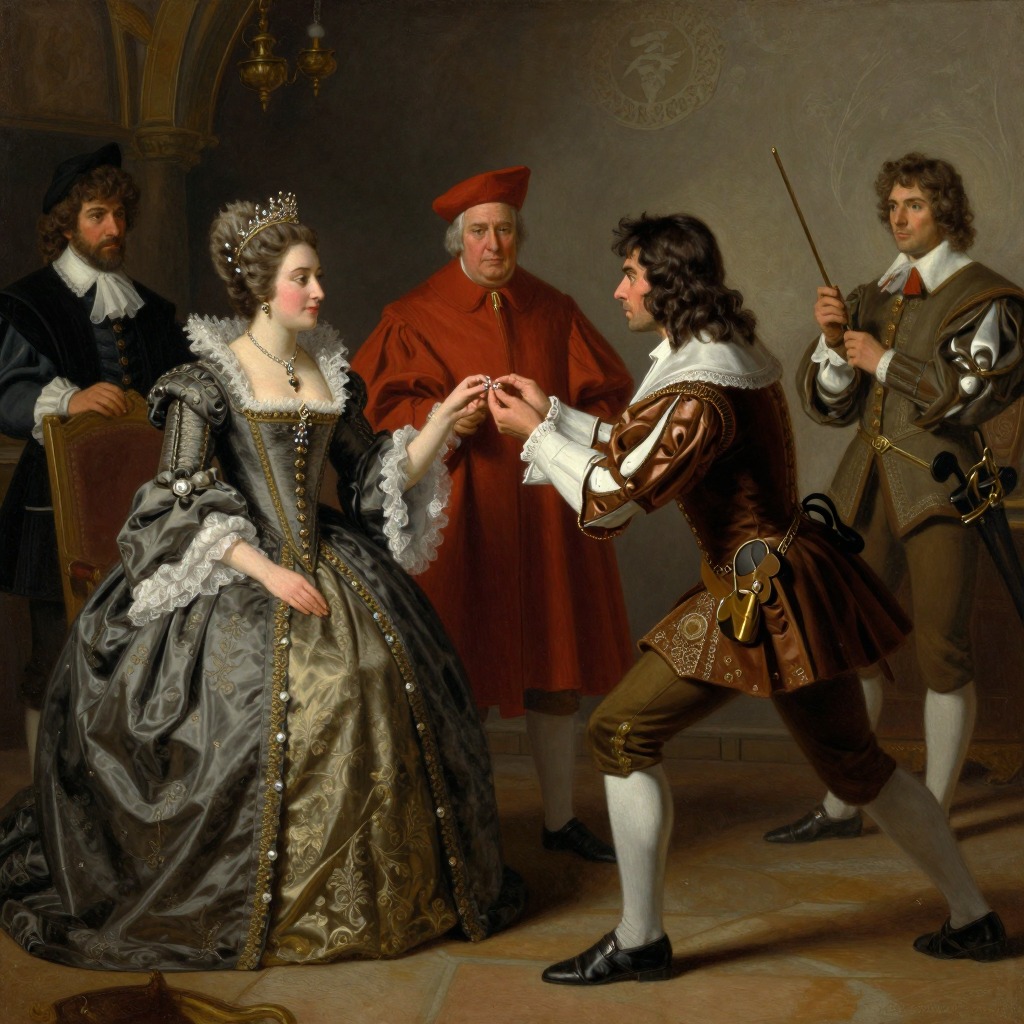
The king's marriage to Anne of Austria is poisoned by jealousy and political suspicion, largely fomented by Richelieu. He is deeply insecure about her affections, believing she loves the Duke of Buckingham, and this suspicion makes him a tool in the cardinal's schemes. The cardinal skillfully plays on these fears, leading the king to demand that the queen wear the diamond studs he gave her to a ball, a trap designed to expose her infidelity. When the queen appears with all twelve studs, the king is momentarily triumphant, but the cardinal quickly recovers, claiming he merely wished to present her with two more. This incident reveals the king's emotional volatility and his inability to see through the cardinal's machinations. He is capable of cruelty, as when he coldly enjoys the queen's terror at the demand for the studs, but he is also susceptible to remorse and can be guided toward clemency, as when Treville successfully pleads for Athos's release.
The King and the Musketeers
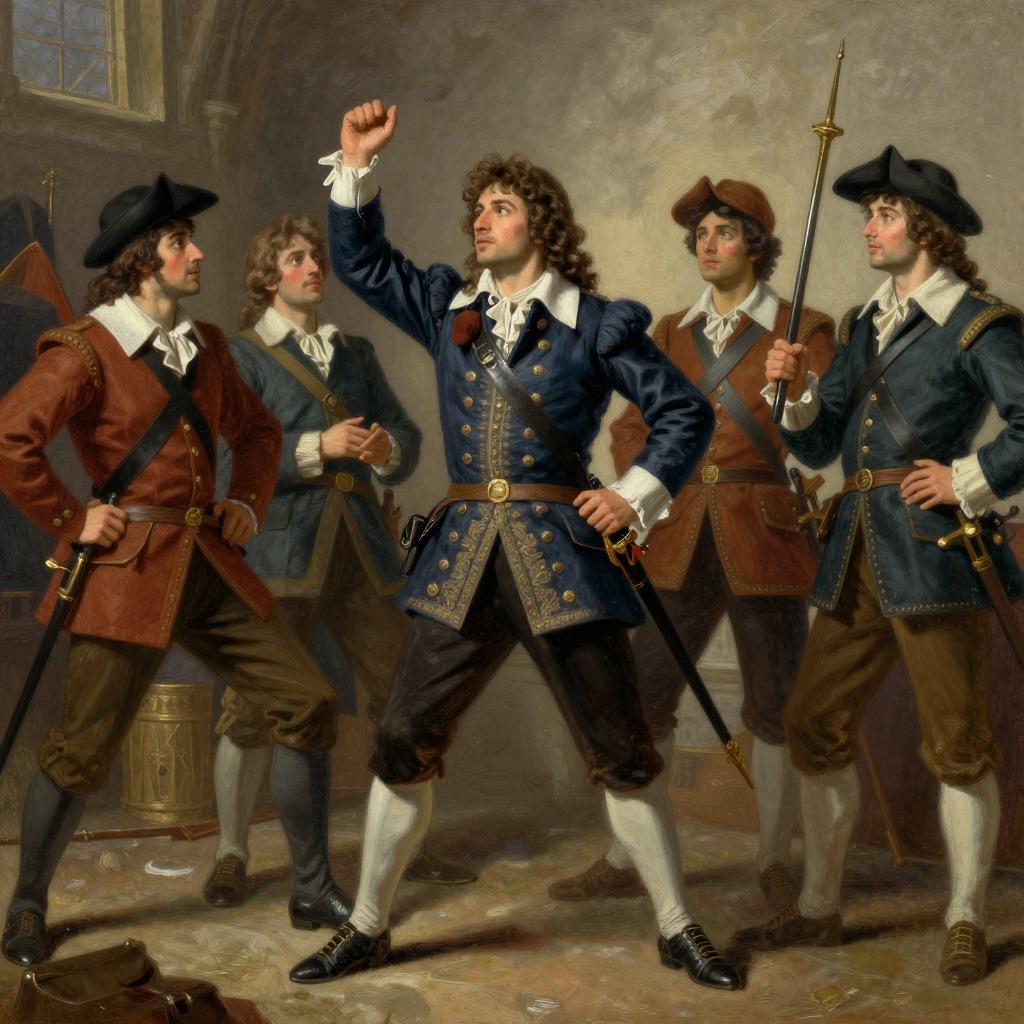
Louis XIII holds a genuine, almost paternal affection for his Musketeers, seeing them as a personal guard of elite, loyal swordsmen. He takes pride in their bravery and is delighted by their victories over the Cardinal's Guards, which he sees as a reflection of his own glory. He personally rewards d'Artagnan with forty pistoles after the young man's first exploits, and he is instrumental in d'Artagnan's eventual promotion to lieutenant of the Musketeers. However, his favor is conditional and easily undermined. He is quick to believe the cardinal's accusations against them, as when he scolds Treville for their brawling, but he is also just as quick to forgive them when their valor is proven. His relationship with Treville is one of deep trust, and he often relies on the captain's word as a guarantee of his Musketeers' conduct. The king's final act in the novel, signing the order that makes d'Artagnan a lieutenant, is a testament to his enduring, if inconsistent, appreciation for courage and loyalty.
Narrative Role and Significance
King Louis XIII serves as a crucial, albeit passive, fulcrum in the novel's power dynamics. He is the ultimate source of authority, yet he is perpetually manipulated by the more forceful personalities around him, primarily Cardinal Richelieu. His indecisiveness and emotional fragility create the political vacuum that allows the cardinal to operate. The king's favor is the prize for which the Musketeers and the cardinal's agents constantly compete. His presence in the narrative provides the necessary tension between the legitimate, if weak, monarchy and the ambitious, powerful minister. He is a figure of pathos, a king who longs to be strong and just but is perpetually outmaneuvered, making him a tragicomic figure whose reign is defined not by his own actions but by the actions of those who serve and manipulate him.