Mousetrap
The Three MusketeersThe Mousetrap is a police tactic used in seventeenth-century Paris, in which the arrest of a suspect is kept secret and the suspect's residence is staked out so that anyone who subsequently visits the house is themselves captured and interrogated. In The Three Musketeers, the apartment of Monsieur Bonacieux is turned into a mousetrap by Cardinal Richelieu's agents after Bonacieux's arrest, and it is through this device that d'Artagnan first encounters and rescues Constance Bonacieux, setting in motion the central romantic and political intrigue of the novel.
Definition and Mechanism
The invention of the mousetrap does not date from the seventeenth century; as soon as societies formed and invented any kind of police, that police invented mousetraps. When an individual suspected of any crime is arrested, the arrest is held secret. Four or five men are placed in ambuscade in the first room of the house. The door is opened to all who knock. It is closed after them, and they are arrested; so that at the end of two or three days they have in their power almost all the habitués of the establishment. That is a mousetrap.
Operation in the Novel
The apartment of M. Bonacieux, situated in the Rue des Fossoyeurs, became a mousetrap after Bonacieux himself was arrested and taken to the Bastille. Whoever appeared there was taken and interrogated by the cardinal's people. A separate passage led to the first floor, in which d'Artagnan lodged, so those who called on him were exempted from this detention. Nobody came thither but the three Musketeers; they had all been engaged in earnest search and inquiries, but had discovered nothing. D'Artagnan did not budge from his apartment. He converted his chamber into an observatory. From his windows he saw all the visitors who were caught. Then, having removed a plank from his floor, and nothing remaining but a simple ceiling between him and the room beneath, in which the interrogatories were made, he heard all that passed between the inquisitors and the accused. The interrogatories, preceded by a minute search operated upon the persons arrested, were almost always framed thus: "Has Madame Bonacieux sent anything to you for her husband, or any other person? Has Monsieur Bonacieux sent anything to you for his wife, or for any other person? Has either of them confided anything to you by word of mouth?" D'Artagnan deduced that they wanted to know if the Duke of Buckingham was in Paris and if he had had, or was likely to have, an interview with the queen.
Climax and Consequences
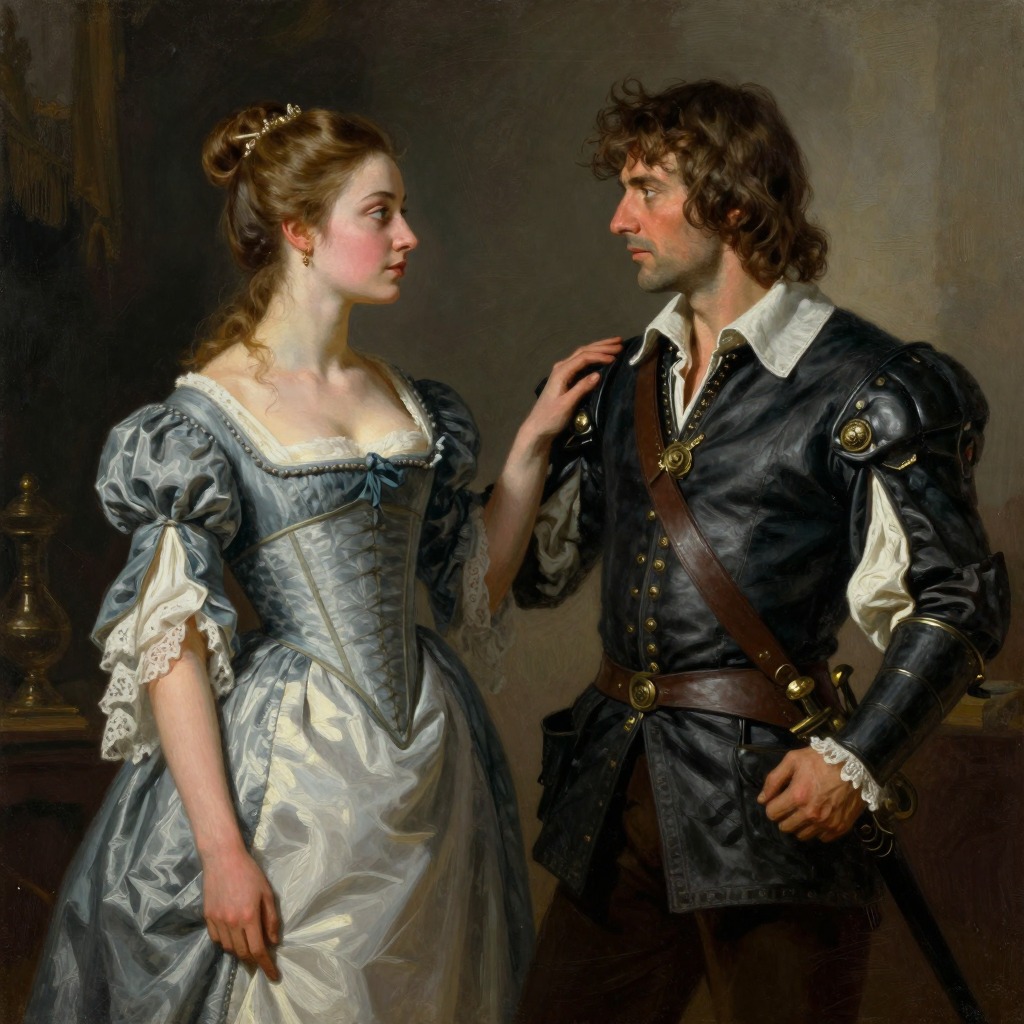
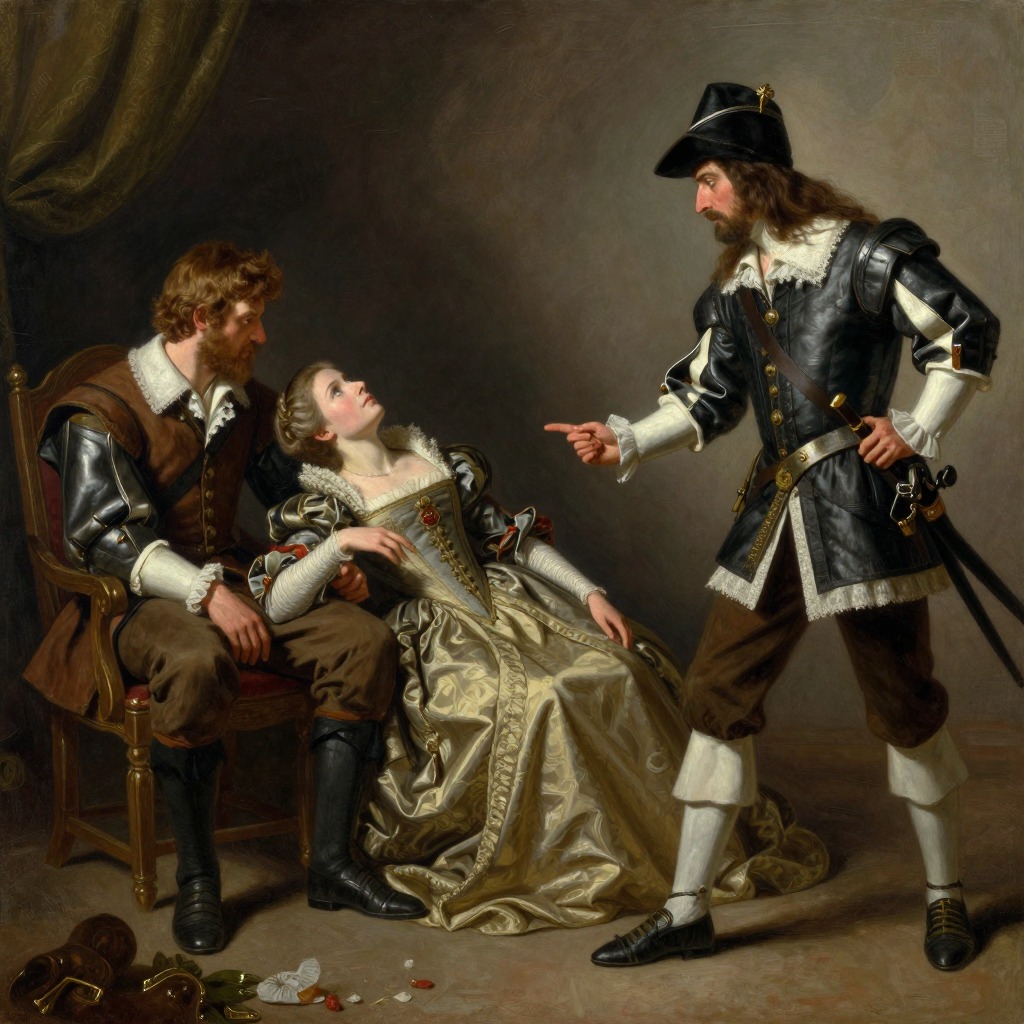
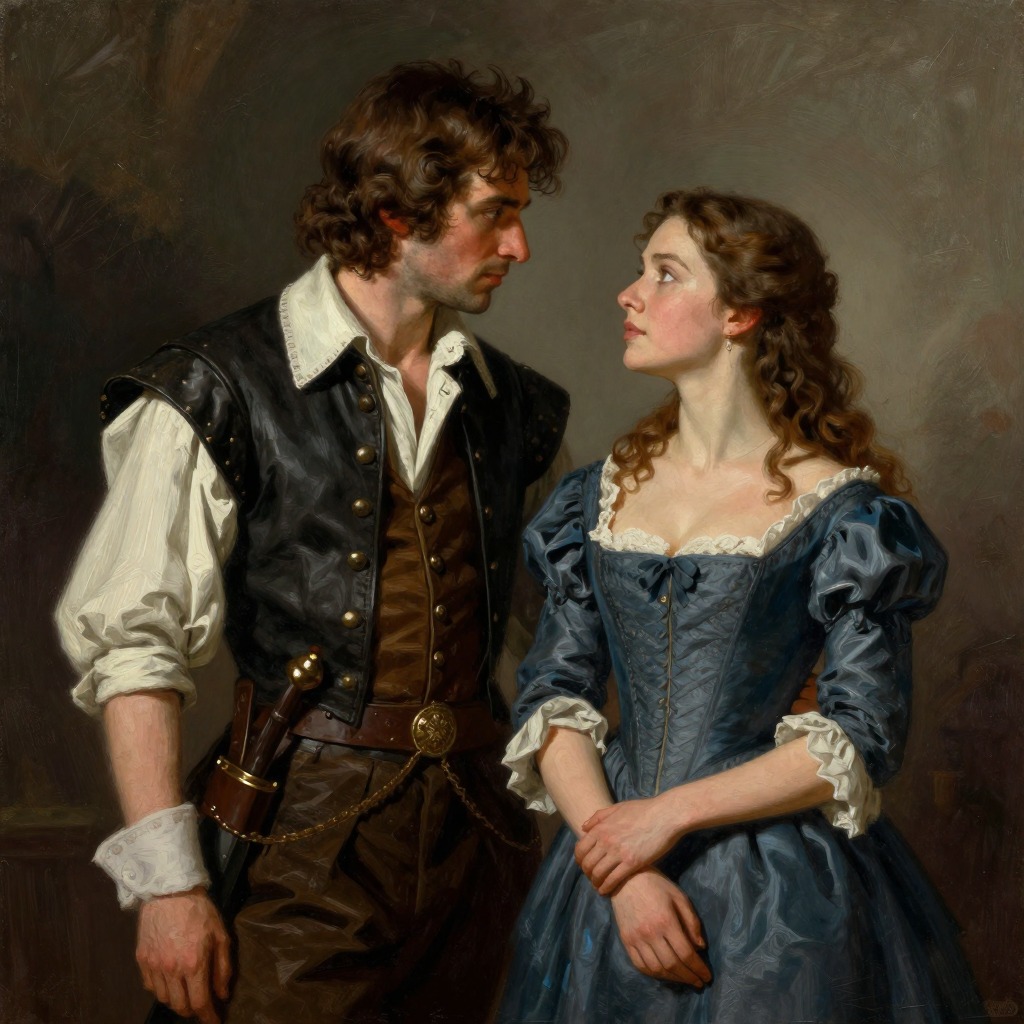
On the evening of the day after the arrest of poor Bonacieux, as Athos had just left d'Artagnan to report at M. de Treville's, and as nine o'clock had just struck, a knocking was heard at the street door. The door was instantly opened and shut; someone was taken in the mousetrap. D'Artagnan flew to his hole, laid himself down on the floor at full length, and listened. Cries were soon heard, and then moans, which someone appeared to be endeavoring to stifle. A woman's voice cried out, "I tell you that I am the mistress of the house, gentlemen! I tell you I am Madame Bonacieux; I tell you I belong to the queen!" D'Artagnan, realizing that the woman caught in the trap was Constance Bonacieux herself, sprang into action. He let himself down from his first-story window, rushed to the door, and sword in hand, burst into the rooms of M. Bonacieux. He defeated the four men in black who were holding her, and remained master of the field of battle. This rescue led directly to Constance confiding in d'Artagnan the secret of the queen's letter to Buckingham, and to d'Artagnan's journey to England to retrieve the diamond studs, a mission that becomes the pivotal event of the novel's first half.