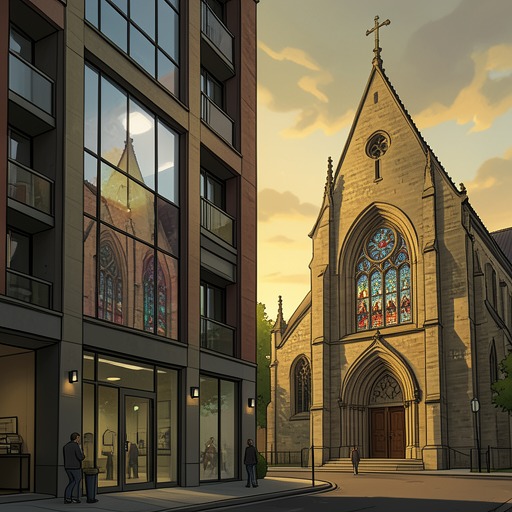
Hillcrest
The Thursday Murder ClubHillcrest is the development planned for the farmland on the hill beside Coopers Chase, and the anticipated final phase of Ian Ventham’s expansion. Ventham regards it as a future source of enormous profit: it would double the size of Coopers Chase, and, in his calculation, double his returns. The project’s course runs from confident plans and a difficult land negotiation to construction and a consequential change in the development’s priorities. Its projected value also enters the investigation into Tony Curran’s murder, although Hillcrest and its owner ultimately prove to be distractions from the immediate case.
Setting and proposed expansion
Ventham first thinks of Hillcrest as a later step, to follow once The Woodlands is established. The land is farmland at the top of the hill, adjoining Coopers Chase, and belongs to Gordon Playfair. The physical proximity makes it a natural extension of the existing development; the fact that it is privately owned makes it a separate and uncertain venture. Ventham’s plans run ahead of his control of the site: he sees a profitable final phase, but he does not yet own the land needed to build it.
The scale of the opportunity shapes his calculations. Hillcrest would eventually double the size of Coopers Chase, adding profits that Ventham would no longer have to share with Curran after removing him from the deal. For Ventham, the land is not merely a possible expansion but a way to increase the returns from the development and leave his former partner out of that future gain.
Negotiations with the Playfairs
Ventham drives about five minutes from Coopers Chase up a rough track to Karen Playfair’s country kitchen. Karen, whose father owns the land, tells him that nothing has changed: Gordon will not sell, and she cannot make him. Ventham responds by offering more money. Karen rejects that as the answer, telling him that her father simply does not like him. Gordon has taken one look at Ventham and gone upstairs, leaving Karen to conduct the discussion.
The negotiation reveals the gap between Ventham’s confidence and the limits of his influence. He dismisses Gordon’s dislike as other people’s problem and treats it as one more obstacle to manage. Karen, meanwhile, knows both the potential advantages of the deal and the difficulty of moving her father. She says she will find a way and ends the conversation with Ventham on a plan of action, but that agreement does not itself transfer the land.
Ventham’s approach is notably transactional. He thinks that briefly flirting with Karen may be worthwhile if it helps secure the farmland, and imagines that the eventual sale will make her rich. His assumptions about her age and appearance sit alongside his business calculations, showing how readily he turns a personal encounter into another instrument for advancing Hillcrest. Karen’s polite response to his efforts does not suggest that she shares his view of the interaction; what the evidence establishes is that she is prepared to continue working on the land question.
Hillcrest in the Curran investigation
The proposed expansion becomes relevant when Elizabeth and Donna De Freitas examine the development’s financial projections. Elizabeth explains that Curran had expected an enormous payday before Ventham cut him out of the deal, on the day Curran was murdered. Donna considers whether Curran threatened Ventham and whether Ventham retaliated by killing him. Elizabeth agrees that the development conflict could have sharpened the stakes, particularly with Hillcrest still to come: an expert describes that next phase as making the financial prospect even larger.
The investigation also clarifies the obstacle. Ventham does not own the land; Gordon Playfair does. Elizabeth tells Donna to set Hillcrest and Gordon aside as red herrings and focuses her attention on the evidence that Ventham double-crossed Curran. Hillcrest therefore helps establish the possible scale of the business dispute, but the investigators do not treat the Playfairs’ land negotiation as the solution to the murder. Its narrative importance lies in distinguishing the wider commercial motive from the clues that can actually advance the case.
Gordon’s long connection to the area gives the land a history beyond Ventham’s projected profits. Joyce notes that he is the only person the group can think of who was there in the early 1970s and remains there in the present. The group hopes he may remember something useful about the past, while recognizing that he was nowhere near Ventham when Ventham was murdered and is not a suspect. In this way, the farmer is associated both with the unresolved question of who controls the hillside and with the longer history the investigators are trying to recover.
Sale, construction, and consequences
Hillcrest eventually moves from proposal to active construction. Joyce reports that cranes and diggers are working on the hill and that Gordon received £4.2 million for his land. After saying goodbye to the house where he had lived for seventy years, he packs his belongings into a Land Rover and trailer and moves roughly 400 yards down the hill to a two-bedroom flat at Larkin Court. Bramley Holdings provides the flat as part of the deal. The sale resolves the ownership obstacle that had kept Hillcrest hypothetical during Ventham’s earlier negotiations, while marking a substantial change in Gordon’s home and circumstances.
By the time the project is under way, Hillcrest has also altered the balance between competing development plans. Joanna explains that its expected returns will be enough: The Woodlands is quietly shelved, and the Garden of Eternal Rest is to stay where it is. The cemetery is protected by covenants intended to preserve it even if Coopers Chase is sold again. Hillcrest’s significance thus extends beyond expansion and profit. The development that Ventham once treated as a route to greater returns becomes the financial reason that a different, more destructive plan can be abandoned and the cemetery left intact.