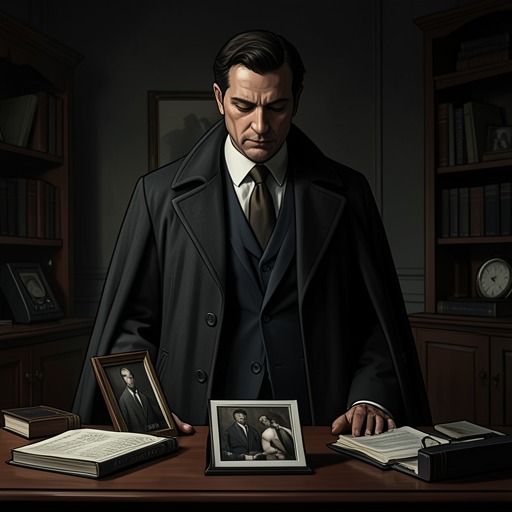
Jason Ritchie’s wilderness years
The Thursday Murder ClubJason Ritchie’s wilderness years were the largely unreported interval after his boxing career ended in 1998 and before his new-century return to public prominence. The period matters both as a break in the familiar story of a celebrated fighter and as the concealed stretch of his past that drew Donna De Freitas and Chris Hudson’s interest.
From boxing fame to defeat
By the late 1980s, Jason Ritchie had become a national celebrity through fights that made him, at different times, a hero or a villain to the public. His fame rested on the drama of the boxing rivalries as much as on the bouts themselves. But that prominence could not stop the conditions of his career from changing: his body slowed, his reflexes dulled, and the fellow fighters who had aged alongside him began to retire. As younger opponents arrived, the paydays shrank while training grew harder.
Ritchie later discovered that he had earned less than his contemporaries, a shortfall he attributed to problems with his manager. Much of his money was in Estonia. In 1998, after taking a last-minute fight against a Venezuelan stand-in in Atlantic City, he hit the canvas for the final time. That defeat marked more than the end of a bout: it closed the public chapter of his life as a boxer and left a gap that newspaper profiles did not explain.
The unrecorded interval
For a few years after boxing, Ritchie lived through a period of what the narrative calls wilderness. The profiles Donna De Freitas had read did not mention those years, even though they were a significant part of his history. During that interval he made money in a very different way from boxing and was photographed with Tony Curran and Bobby Tanner. The evidence does not specify the work that brought in this income; its emphasis is on the contrast between this hidden livelihood and the polished public accounts of his career.
That contrast is what makes the interval consequential to the investigation pursued by Donna De Freitas and Chris Hudson. Their interest turns toward the years missing from the profiles, and toward the photographs connecting Ritchie with Tony Curran and Bobby Tanner. The wilderness period is thus both a biographical blank and a point of contact between Ritchie’s celebrity past and the less public world that investigators are examining.
Return to public life
As the new century began, demand for Ritchie revived, and menace paired with charm became a marketable public persona. He found work across lad magazines, films by mockney directors, reality television, and gambling advertisements. He placed third on I’m a Celebrity, dated Alice Watts from EastEnders, and appeared in films with John Travolta and Scarlett Johansson, playing a washed-up fighter in each. This second career eventually brought in more money than boxing had.
The revival did not last at its height. Like his boxing career, the new one followed a declining trajectory: there were fewer films and advertisements, and he increasingly appeared on a wider assortment of programs. Even so, fame endured. The sequence—from celebrated fighter, through an omitted and financially different interval, to television and film personality—shows how a public image can persist even as the work supporting it changes. The wilderness years remain the obscured hinge between those versions of Ritchie.