John’s suicide to protect Penny
The Thursday Murder ClubJohn’s suicide to protect Penny is the final consequence of a chain of concealed violence and marital loyalty: after learning that Penny had killed Peter Mercer, John killed Ian Ventham, then chose to die rather than leave her exposed. The novel frames his departure through Elizabeth’s careful farewell and her later conversation at Penny’s bedside, before Joyce’s account of the couple’s burial traces the cost of their secrets through the lives around them.
The choices behind his departure
The background to John’s death is a history Penny had kept from him: she killed Peter Mercer, who had murdered Annie Madeley, and concealed the truth throughout their life together. Joyce later explains that dementia broke Penny’s ability to keep the secret. Once John knew, he acted to protect her, killing Ian Ventham. In Joyce’s account, the sequence is starkly linked: Peter Mercer’s murder of Annie led Penny to kill Mercer; Penny’s act led John to kill Ventham. John’s own death follows from his decision to take responsibility for the consequences rather than allow Penny to face them.
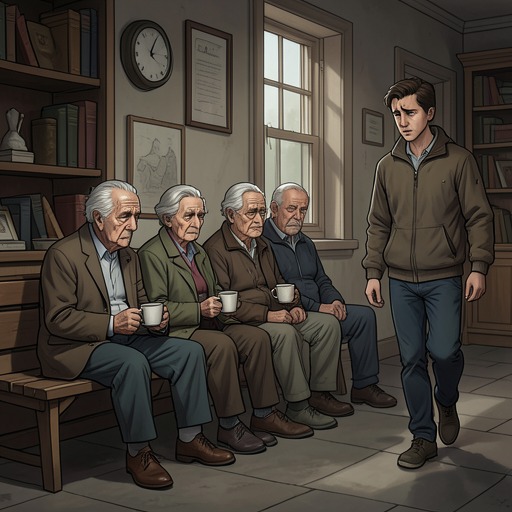
The couple’s history is not presented only through crimes. John recalls that he and Penny used to picnic on a hill, where the view was beautiful, and says he had wondered why they stopped. The memory briefly restores a shared life beyond its final disclosures. Their silence afterward, broken by the electronic beeps beside Penny’s bed, brings that ordinary past into contrast with the choices now confronting John. The scene gives his decision a personal cost: he is leaving the woman with whom he shared those earlier days, not merely escaping the police.
Elizabeth arranges a farewell
Elizabeth does not force an immediate confrontation. She tells John that the others will take him home, that he should sleep in his own bed, and that if he has letters to write he should write them. She says she will return with the police in the morning and makes clear that she expects him to be there. Before he leaves, she offers him a moment alone with Penny. The arrangements are practical and gentle, but Elizabeth’s certainty about the morning sits against what she understands is likely to happen.
The friends step outside. Through the clear border of the frosted window in Penny’s door, Elizabeth watches John hold his wife. She turns away rather than intrude on the goodbye. When she returns to the room, John is putting on his coat; she tells him it is time to go. The brief exchange carries the scene’s restraint: Elizabeth gives him space, asks the others to see him home safely, and stays with Penny for a moment. John’s departure is understood without being staged as a dramatic confrontation.
Elizabeth names the cost
At Penny’s bedside, Elizabeth speaks as though Penny may or may not be able to hear. She reviews the unresolved deaths: Tony Curran has been killed, and people believe Gianni was responsible; Ian Ventham, too, will be found dead when she takes the police there in the morning. She understands that John knows enough to make his own death peaceful. These remarks make clear that she is not confused about the consequences of his leaving or about the body the police will find.
Elizabeth also addresses Penny’s responsibility directly. She sees why Penny chose to deliver her own justice, though she does not agree with that choice and acknowledges that she had not faced the same circumstances. She tells Penny that John has walked into the night to die because he wanted to protect her, and connects his sacrifice to the decision Penny made years earlier. To Elizabeth, that knowledge may itself be punishment enough if Penny can hear. If she cannot, then, Elizabeth observes, Penny has escaped even that reckoning. Her farewell holds judgment and compassion together without pretending they cancel each other out.
Burial, public knowledge, and private grief
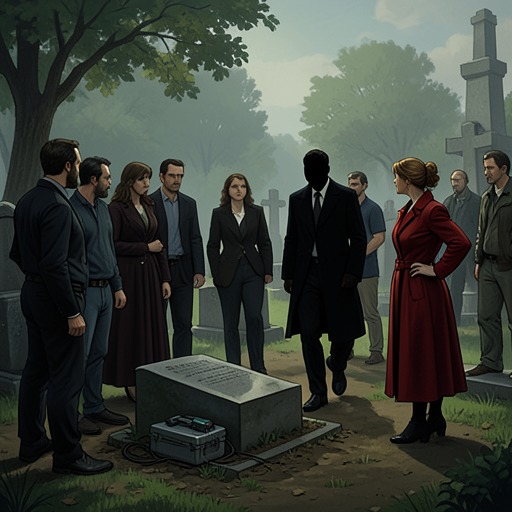
Joyce’s later letter reports that John and Penny were buried together on a rainy Tuesday. The funeral was quiet, though several of Penny’s former colleagues attended. The press had reported on the couple, coming close to the truth without getting the whole story straight. Ron Ritchie was also identified publicly as Penny’s friend and interviewed on Kent Today; when a reporter from The Sun came to speak to him, Ron refused and had the visitors’ car clamped outside Larkin Court. The story’s private choices thus become public news, but publicity does not amount to full understanding.
Elizabeth does not attend the funeral. Joyce does not know whether Elizabeth had already said goodbye or whether she has forgiven Penny, and leaves those questions unresolved. Joyce herself takes the view that Penny’s act was right, while recognizing that Elizabeth may be saddened by the secret: Penny had been the greater mystery between the two friends. Joyce imagines that Elizabeth might have acted as Penny did, though perhaps escaped discovery. Her reflections do not settle the moral disagreement; they show how the concealed past continues to shape a friendship even after both spouses are gone.
For Joyce, John’s final choice is an act of love comparable to what her late husband, Gerry, would have done for her. That interpretation does not erase the deaths or make the chain of violence harmless. It places John’s protection of Penny within the marriage Joyce believes they shared, while acknowledging the consequences for Annie Madeley and everyone drawn into the aftermath. The paired burial closes their story physically, but Joyce’s account leaves its moral and emotional legacy open: loyalty has protected Penny, yet it has also bound the couple’s lives and deaths to the secret she carried.