Joyce Meadowcroft
The Thursday Murder ClubJoyce Meadowcroft is a nurse, diarist, and member of the Thursday Murder Club whose apparent ordinariness conceals both practical expertise and a sharp eye for people. At Coopers Chase, where she describes herself as easily overlooked, she becomes more than a recorder of the club’s cases: her medical judgment helps reopen an old murder, and her questions draw out a buried account of a death decades earlier.
Identity and Background
Joyce lives at Coopers Chase in a flat purchased by her daughter, Joanna. She sees herself as socially distinct from many residents, who have had conspicuous careers and achievements. The contrast is not simply between modesty and status: Joyce identifies herself as a nurse rather than a doctor, and wonders what the others make of her. She considers being overlooked, or underestimated, a particular skill. That self-assessment becomes an important part of her role in the investigations: she notices details and offers knowledge without assuming that others will recognize its value in advance.
Her connection with Elizabeth begins as an acquaintance at Coopers Chase. Joyce knows Elizabeth by reputation and has encountered her husband, Stephen, through a quiz team. Two or three months before Joyce joins the club, Elizabeth approaches her during lunch on a Monday, when shepherd’s pie is being served, to ask about a medical question concerning an old case. Joyce is willing to help, though she is candid about the limits of her memory and does not claim to reproduce every conversation exactly. This careful qualification is characteristic of her diary: it conveys events while acknowledging the partial, fallible nature of recollection.
The Diary and the Thursday Murder Club
Joyce had kept a diary years earlier, but, looking back at it, considers its subject matter—life in Haywards Heath in the 1970s—of little interest to readers. After meeting Elizabeth, she attends her first Thursday Murder Club meeting and decides that the group’s work might be worth writing about. The decision gives her diary a new subject and gradually makes her account a record of the club’s inquiries, its members, and life at Coopers Chase.
She knows the group includes Elizabeth, Ibrahim Arif, and Ron Ritchie. Penny Gray had been a member but is now living at Willows, the nursing home. Joyce understands her own arrival as filling the place Penny left: she is, in effect, the new member who has joined a group with an existing history. That position gives her both an insider’s access to the club and a newcomer’s perspective on its habits and relationships.
The diary also records Joyce’s uncertainty about the boundary between private writing and public disclosure. When Elizabeth gives DCI Hudson and Donna De Freitas a file, Joyce notes that Joanna’s name is absent, preserving plausible deniability if the club’s conduct has crossed legal lines. She asks Elizabeth to repeat the phrase so she can write it down, explaining that she is keeping a diary. Elizabeth then asks whether she appears in it and whether Joyce uses her real name. Joyce says that she does, but the exchange leaves her reflecting on how readily people accept the names they are given. Her record is affectionate and observant, but it is not a claim to omniscience.
Medical Knowledge and the Old Case
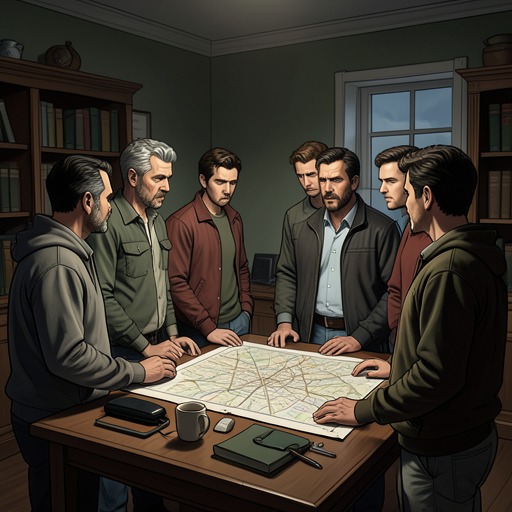
Elizabeth’s lunch-table question leads Joyce into the group’s review of the case of Annie Madeley. The investigation turns on whether the original account of Annie’s death fits the medical evidence. Joyce’s nursing knowledge helps test that account: asked how long Annie would have survived, she estimates roughly forty-five minutes. That interval does not fit the boyfriend’s claim that he returned to the kitchen and called the police immediately. Elizabeth also asks whether someone with medical training might have saved Annie, making Joyce’s professional experience relevant to the club’s reconstruction of events.
Joyce sees the autopsy photographs with the others and understands the limits of what the club can achieve. Annie’s boyfriend had fled from Penny Gray’s squad car while being taken to a police interview, and Penny had been assaulted by him. Joyce doubts that the club can simply bring him to justice, and recognizes that the case might have gone unpunished even if he had not escaped. Her contribution is therefore not a promise of easy resolution: she supplies a practical inference that helps expose the weaknesses in the old account, while acknowledging the distance between solving a case to the club’s satisfaction and securing justice through official means.
Questions, Relationships, and Further Revelations
Joyce’s work with Elizabeth develops through both companionship and investigation. She admires Elizabeth’s calm manner and hopes to help catch Tony Curran’s killer, while recognizing that the two women come from different worlds. Coopers Chase, in her view, brings people together across those differences. Joyce’s aspiration to help is measured rather than self-congratulatory: she wonders whether she can contribute in her own way, an attitude consistent with her belief that others may underestimate her.
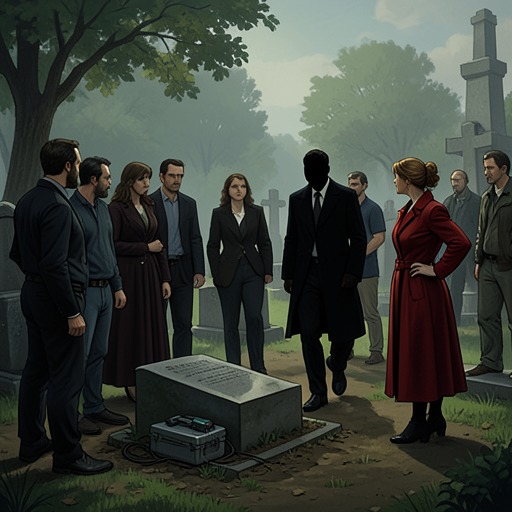
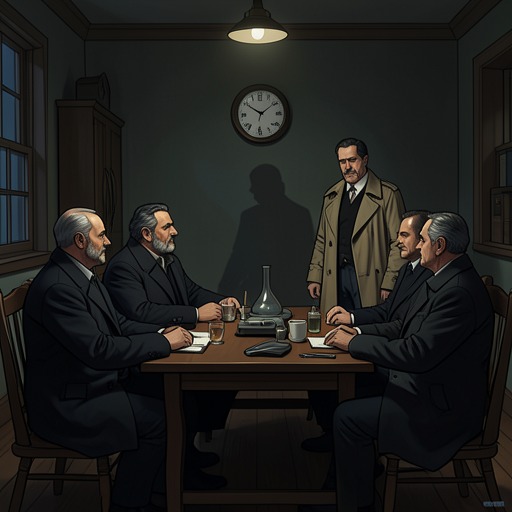
At a later Thursday Murder Club meeting in the Jigsaw Room, Joyce is among those present when Matthew Mackie recounts his early years at the convent and his relationship with Maggie. The meeting places her not only among investigators but also among listeners to histories that have remained private for decades. She similarly takes an active part in questioning John about the identity of the bones in a grave. Joyce asks who is buried there and follows John’s account of Matheson, a lonely farmer whose mare had died after giving birth. John says that he gave Matheson an injection he had also used for the mare, believing that he was ending the farmer’s distress. Joyce’s question prompts him to explain the circumstances behind the concealed remains; her role is to seek clarification, not to soften the moral weight of what he admits.
Change and Narrative Role
Joyce’s growing confidence as a writer becomes visible after the loss of a friend, when Anne, editor of Cut to the Chase, invites her to write about the comings and goings at Coopers Chase. Joyce accepts and settles on the column title Joyce’s Choices. The invitation turns a private habit into a public voice and recognizes the very qualities she had described as liabilities—her interest in other people and her tendency to involve herself in events—as material her community values.
As a character, Joyce is both participant and witness. Her diary follows the club’s investigations while revealing her own evolving sense of belonging, usefulness, and audience. She does not become an expert detective or abandon her self-effacing view of herself; instead, the plot repeatedly demonstrates how a person dismissed as merely chatty or harmless can contribute through memory, professional knowledge, attention, and well-placed questions. Her narrative importance lies in that combination: she records what others might overlook, and sometimes sees the significance of a detail precisely because she has learned to expect that she herself will be overlooked.