Sisters of the Holy Church
The Thursday Murder ClubThe Sisters of the Holy Church were the religious community whose long presence shaped the convent and surrounding grounds that later became the centre of Coopers Chase. For more than a century, their life of devotion was bound to practical care: the convent offered its members a place to live and serve, while its associated hospital tended to sick and vulnerable people. Though the institution was eventually sold and repurposed, its chapel and burial ground preserve a visible connection to the sisters and the lives they led there.
The convent and its community
For over a hundred years, the convent was a quiet, enclosed world of dormitory beds, long dining tables, dark corridors and prayer. The sisters’ life there was not presented as uniform: the convent held women who found serenity, women troubled by a changing world, women in hiding, and women committed to service. What united the community was a lifetime of devotion, answered by a place that fed and clothed its members and continued to need their work. The convent’s architecture and routines gave that shared life a distinct physical setting, separate from the faster world beyond it.
The community’s history is also bound to the surrounding Garden of Eternal Rest. Sisters were buried there beneath simple stones, among generations of women who had shared the convent’s life. Its iron gates and low walls looked back towards the convent, making the burial ground part of the same landscape of devotion and care. The oldest grave described is dated 1874 and belongs to Sister Margaret Bernadette; the cemetery held around 200 bodies, with the graves arranged in ordered lines up the hill.
Care beyond the convent
Attached to the convent, Willows began in 1841 as a voluntary hospital established by the Sisters. It served sick and distressed people when they had no other option, extending the community’s work beyond its own members. In the latter part of the twentieth century, the institution became a care home. Legislation in the 1980s eventually led to its doors closing, marking a major break in the Sisters’ tradition of care on the site.
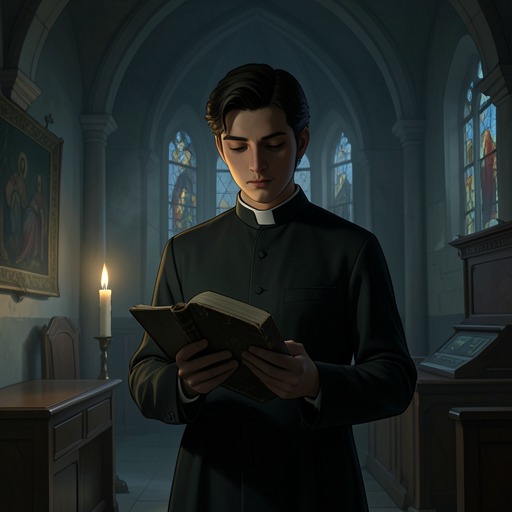
The chapel, by contrast, remained a place where that older life could still be felt. Its cream stucco exterior stood beside the convent’s darker architecture, and it was one of the few parts of the site required to remain unchanged when the land was sold. Residents continued to use it, experiencing it as a quieter, gentler space where the convent’s history lingered. The building’s significance was not only architectural: it had been a working part of the community’s religious life, including the cleaning work of Maggie, who served there as Sister Margaret. Her encounters with Father Matthew Mackie in the chapel’s confessional later became central to his account of their relationship.
Sale and conversion of the site
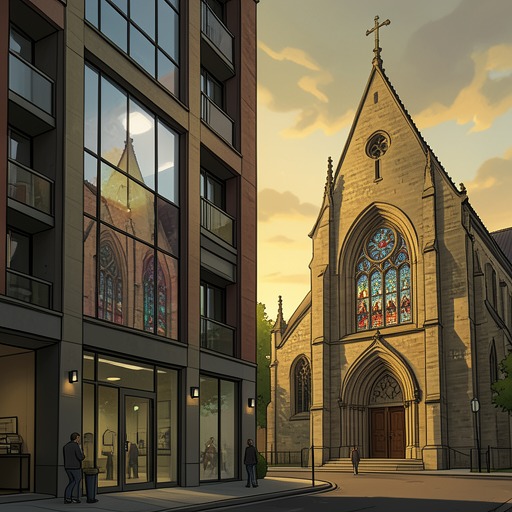
The sisters’ institutional presence ended gradually. Willows closed after changes in legislation, and the convent became, in effect, a waiting room. When the last nun died in 2005, the Catholic Church moved quickly to sell the property as a single holding. The land was sold about ten years before the account of Coopers Chase, and the former convent was adapted for a retirement village. Its buildings acquired new functions, but the transition did not erase the older pattern of convent, chapel, care home and cemetery.
The chapel’s protection was one of the conditions insisted upon by the executors of the Sisters of the Holy Church when the sale took place. That safeguard mattered because the site’s new commercial use placed the old buildings under pressure to change. Ian Ventham explored contractual loopholes that might allow the chapel to be redeveloped into additional flats. The attempt set the sisters’ surviving religious legacy against the development ambitions of the village’s owner: the chapel remained a working place of memory, but its continued preservation could not be taken for granted.
Legacy in the village
The Sisters of the Holy Church remain present in Coopers Chase less as an active organization than through the spaces and obligations their community left behind. The unchanged chapel, the former hospital and the graves on the hill each preserve a different aspect of their work: worship, care and burial. The Garden of Eternal Rest places individual stones within a collective history, while the chapel’s continued use gives the old convent a living, rather than solely historical, role.
That legacy also shapes the village’s contrast between past and present. The convent’s quiet religious routines have given way to retirement apartments and modern facilities, yet residents still enter the chapel and sense the lives embedded in its stone. The former convent was not simply an abandoned relic awaiting conversion: it had been a home and a centre of service, and its buildings carried the memory of those uses into their new setting. The Sisters’ lasting influence lies in that material continuity, and in the continuing question of whether development will respect the places through which their history remains visible.