The Woodlands
The Thursday Murder ClubThe Woodlands is the proposed residential development at Coopers Chase, a project whose promised profits are bound up with the village’s contested land, Ian Ventham’s business ambitions, and the murder of his former partner Tony Curran. For residents, its prospect means trees cut down and a graveyard uprooted; for Ventham and Curran, it is a valuable business venture whose ownership becomes the immediate source of betrayal. The development therefore stands at once for physical change to the village and for a hidden financial reversal that alters the murder investigation.
Proposal and village opposition
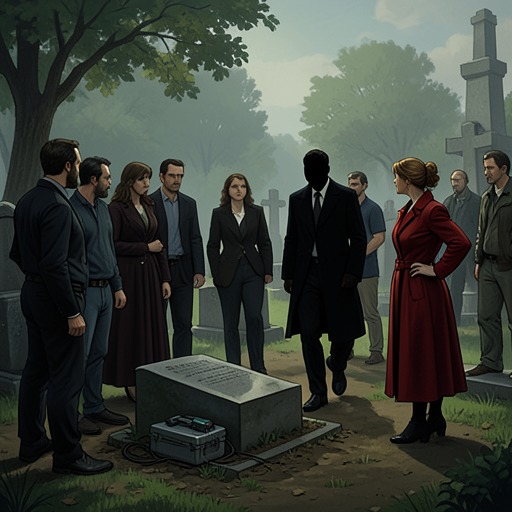
The plans provoke a fearsome dispute among Coopers Chase residents. The concerns include the cutting down of trees and the uprooting of a graveyard, while a rumour that wind turbines may also be part of the proposal adds to local unease. The development is not presented to residents as an abstract business plan: it threatens familiar features of their surroundings, including trees and a burial place, and makes the future of the village a matter for public argument.
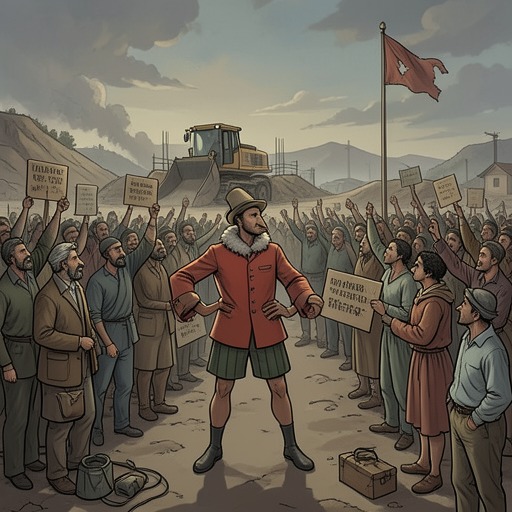
Ian Ventham attends a consultation meeting to discuss the proposal. Ron Ritchie challenges the process by pointing to the wording of the residents’ lease, which reserves the right to develop further residential possibilities on the site in consultation with current residents. Ventham treats the meeting itself as the consultation, leaving the residents a limited period in which to respond. The contrast is pointed: the lease’s language promises consultation, but the meeting gives residents little time and no assurance that their objections will change the plans. Ron’s forceful intervention makes the gap between formal consultation and residents’ influence visible.
A lucrative partnership becomes a dispute
The Woodlands is designed to extend the business that Ian Ventham has built at Coopers Chase. Ventham had shifted his company from Autumn Sunset Care Homes to Home from Home Independent Living, concentrating on fewer, larger properties and a wealthier clientele. Coopers Chase has been exceptionally profitable, and Ventham and Curran both understand that the new development offers a major financial opportunity. The proposed expansion is thus part of Ventham’s established commercial strategy, not simply a local building project.
The ownership arrangements explain the scale of the stakes. Curran owns twenty-five per cent of Coopers Chase, and the original plan for The Woodlands was to give him the same twenty-five per cent share, with Ventham holding seventy-five per cent. Ventham then changed the arrangement and excluded Curran from the company being used for the new development. The projected returns amount to millions, money on which Curran had expected to be able to count. The loss was not a small adjustment to their partnership: it removed Curran from a potentially enormous payday.
The timing turns a business dispute into evidence relevant to the murder. Ventham signed the papers cutting Curran out the day before the residents’ consultation, the day before the two men’s mysterious row, and the day before Curran was murdered. After Curran’s death, his shares reverted to Ventham. The sequence gives the investigation a concrete motive to examine: Ventham’s betrayal could have prompted Curran to threaten him, while Ventham stood to benefit when Curran’s share returned to him. The evidence raises the question of motive; it does not, by itself, establish who killed Curran.
The project after Curran’s removal
Following Curran’s removal and death, Ventham asks Bogdan Jankowski to oversee construction of The Woodlands. Bogdan takes over from Curran and studies the plans in detail, finding them complicated at first but manageable once he recognizes their patterns. He had enjoyed carrying out smaller jobs for Ventham, appreciating their order, and now sees the larger responsibility as a challenge he intends to meet as well as he can. The work interests him less for its money than for the challenge and for the chance to remain among the people of the village.
Bogdan’s appointment gives the project a practical successor to Curran, but does not erase the circumstances under which he was displaced. To Bogdan, stepping up is a change to handle; to the murder investigation, the change follows a suspected betrayal with a substantial financial consequence. The plans move forward under new supervision while the question of how Ventham acquired Curran’s share remains part of the project’s history.
Plans, memory, and significance
The Woodlands continues to matter even when its construction is not the immediate focus. Bernard Cottle looks over the plans repeatedly, having returned to them what must be the hundredth time. His attention places the development within the residents’ ongoing awareness: it is a proposal to scrutinize, not a settled transformation they have simply accepted. The plans connect the consultation dispute to the financial arrangements and give the development a presence beyond the meetings where it is argued over.
As a location and a project, The Woodlands brings two kinds of change into the same contested space. Its proposed buildings threaten to alter the visible landscape and disturb a graveyard, while its ownership arrangements reshape the partnership between Ventham and Curran. The residents’ lease makes consultation a formal issue; the exclusion of Curran reveals how decisions about the project can also redistribute wealth and power. These strands meet in the murder inquiry, where the timing of Ventham’s decision becomes significant. The Woodlands is consequently more than the setting for a proposed expansion: it is the point at which local resistance, commercial ambition, and concealed motive converge.