Thursday meetings of the Thursday Murder Club
The Thursday Murder ClubThe Thursday meetings of the Thursday Murder Club turn a vacant two-hour room booking into a durable practice of amateur investigation. At first a way for Elizabeth and Penny Gray to revisit unsolved murder cases, the weekly sessions become a social gathering, a place to consult a surprisingly wide range of people, and a means of keeping old evidence available for future inquiries.
Schedule and Secrecy
Elizabeth and Penny met every Thursday because a two-hour slot was free in the Jigsaw Room between Art History and Conversational French. The arrangement supplied the club with its name. To keep the room undisturbed, they booked it under the innocuous title Japanese Opera – A Discussion, a small act of concealment that let the investigation proceed without attracting attention.
The regular time gave their work a dependable rhythm. The meetings were not a formal police operation: they occupied a space in the ordinary timetable of village life, alongside classes and other activities, while quietly returning to crimes that had not been solved in court.
Cases, Company, and Outside Help
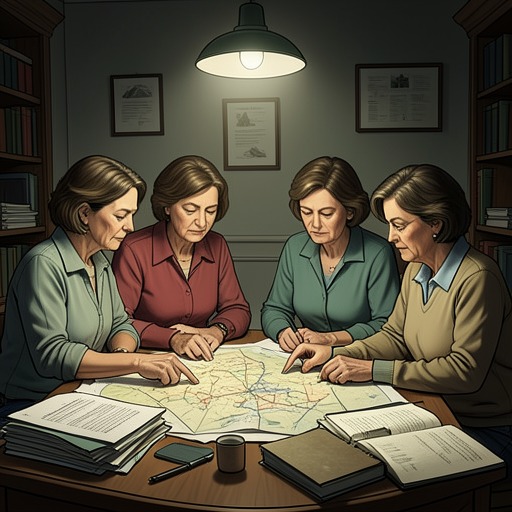
Elizabeth and Penny worked through files line by line, studying photographs and witness statements for details that might have been missed. Their aim was to identify guilty people who had escaped punishment, though solving a case to their own satisfaction did not necessarily mean they could bring anyone to justice. The work also held a social appeal: mystery and a few glasses of wine made the meetings enjoyable even when the material was grim.
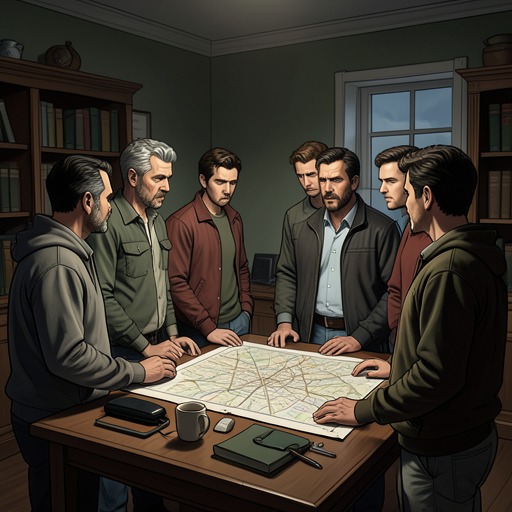
The gathering could extend well beyond its regular members. Elizabeth and Penny called on favors and invited people to the Jigsaw Room for a friendly conversation when their knowledge might help: among them were forensic officers, accountants, judges, tree surgeons, horse-breeders, and glass-blowers. Ibrahim Arif joined after helping them with occasional queries; he had previously played bridge with Penny Gray and had worked as a psychiatrist. Ron Ritchie was also part of the group by the time Joyce joined it.
Joyce Joins the Thursday Routine
Joyce’s introduction began at lunch, when Elizabeth approached her with a question about knife wounds. Elizabeth opened a manila folder containing typed pages and what appeared to be old photographs, then asked Joyce to consider an old stabbing case. She kept her voice low because other people were eating. After the conversation, Elizabeth asked whether Joyce was free on Thursdays; until then, Joyce had not heard of the club’s Thursday meetings.
Joyce’s first Thursday with Elizabeth, Ibrahim Arif, and Ron Ritchie felt natural to her, like completing a jigsaw. That image captures the meetings’ social as well as investigative function: Joyce was not simply handed a case file but brought into an established pattern of attention and companionship. The group’s regular day made her arrival a distinct change in the club’s composition without changing the routine that held it together.
Old Evidence and Unfinished Justice
One of the cases examined at a meeting concerned a girl’s fatal stabbing. The group looked at autopsy photographs and considered how the case had unfolded: the boyfriend had escaped from Penny Gray’s squad car while being taken to a police interview, assaulted her, and was never seen again. The club’s members understood that their discussions could not by themselves secure justice. Elizabeth and Penny had worked through many cases to their own satisfaction, while the people they believed guilty remained unpunished.
The files also gave the meetings a life beyond the Thursday on which they were discussed. Penny Gray kept copies of old case materials in storage, although the files were not supposed to be retained. She had made copies in case they might help catch a killer years later. After Karen Playfair recognized John, Elizabeth returned to one of those files to check a final detail. The meetings’ patient attention to old records thus mattered not only as a recurring pastime: preserving and revisiting their evidence could reopen questions long after the original cases had gone cold.