20 December 1849
The Tigers of Mompracem20 December 1849 anchors the opening scene of Sandokan and Yanez at Mompracem, setting the pirates’ confrontation with British power against a storm-lashed island stronghold. The date gives the narrative a precise point of departure; later episodes broaden the conflict across the waters near Labuan, but the supplied passages do not establish that every subsequent action occurs on that same day.
The Dated Opening at Mompracem
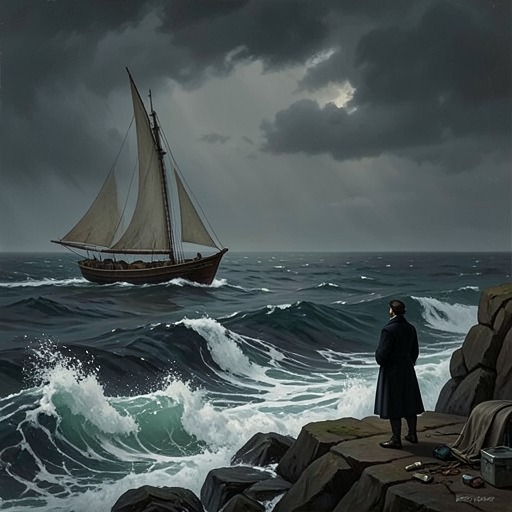
The narrative opens on the night of 20 December 1849, during a violent hurricane over Mompracem, a small island a few hundred miles off the west coast of Borneo and home to the most feared pirates in the South China Sea. Wind drives clouds across the sky and rain over the island’s forests, while rough seas crash around ships sheltering in the bay behind a reef. The darkness and storm make the island feel remote from ordinary traffic, though two lit windows high on a cliff mark the pirates’ occupied stronghold.
Beyond battered trenches, embankments, and ramparts stands a large hut beneath a red flag bearing a tiger’s head. Its decorated interior, stocked with the proceeds of past raids, contrasts with the defenses and battlefield remains outside. This setting establishes Mompracem as both a defended base and a center of accumulated pirate wealth before the date’s principal conversation turns to the threat posed by Britain.
Political Time and the British Presence
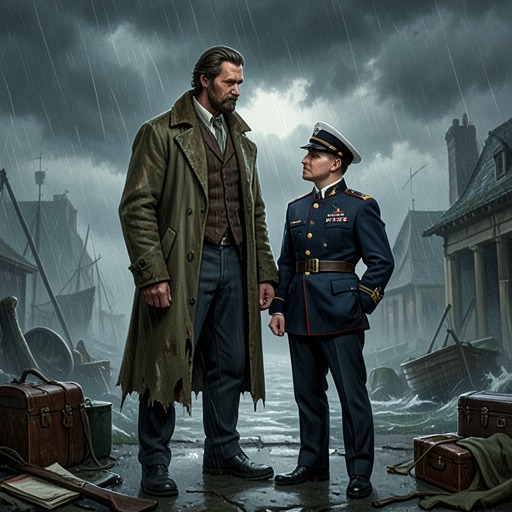
The discussion between Sandokan and Yanez links the opening date to a longer history of conflict. Sandokan asks why the British are in Labuan; Yanez says they are strengthening their defenses and may be plotting against him. Sandokan answers with a vow to defend Mompracem and retaliate against European powers. He attributes his hatred to their alleged conspiracy against his throne and the killing of his family, while also hoping that others will remember his generosity. Yanez supports that other side of his reputation by recalling Sandokan’s defense of vulnerable communities, the return of captive women to enemy ports, and the rescue and material assistance of shipwreck survivors.
The narrative supplies an earlier date for the British foothold in Labuan: the island was occupied in 1847 by Sir Rodney Mundy, commander of the Iris, under orders from the British Government to suppress piracy. By the time of the opening scene, Labuan has a population of about one thousand, mostly Malays, alongside a small European population of roughly two hundred. The British have built Victoria Citadel, with large bastions intended to protect the island from the pirates of Mompracem. These details place 20 December 1849 within an established struggle for control, rather than presenting British opposition as a sudden or isolated development.
The Sea Routes and the Limits of the Date
Later passages describe pirate ships moving toward the Romades in a separate episode. A southwest wind and calm sea allow the vessels to make more than twelve knots. Their speed reflects deliberate modifications: they retain immense sails approaching forty metres and flexible masts, use gamuti-and-rattan rigging, and have been given a faster keel, a reinforced bow, bridges, and rowing ports. The crews load cannons and firelocks, lay out ammunition and hand weapons, and ready grappling hooks for an attack on a junk. These particulars show how wind, vessel design, and preparation make the sea a practical route for both raiding and military action.
In another passage, the two prahus approach Labuan by following the coast and entering a small, vegetation-lined river. They anchor six or seven hundred metres upriver beneath enormous trees, out of sight of cruisers patrolling the coast. The island’s jungle and the river’s concealment offer a temporary alternative to the open waters watched by British forces. The British cruiser at Labuan later bars their westward route: it is described as a heavily armed vessel of fifteen hundred tons, with a crew four times the pirates’ size. The narrative gives no exact date for this encounter, so it belongs to the broader sequence of conflict rather than securely to 20 December 1849.
Darkness as a Changing Condition
A later escape attempt makes weather and visibility consequential in a different way from the opening hurricane. The moon has not risen, and storm clouds blot out both moonlight and stars, helping conceal the prahu. Yet the same darkness makes it difficult for Sandokan to see the banks beneath durian trees, palms, and banana leaves. In the near-silence of the river, with only its water audible and the crew holding quiet, the vessel approaches the mouth and then abruptly slows to a stop.
Across these passages, the date’s importance is chiefly structural: it fixes the opening encounter between Sandokan and Yanez, while the novel’s subsequent maritime action develops the political and geographical pressures introduced there. The contrast between the storm over Mompracem, the favorable wind on the open sea, and the darkness that both hides and obstructs an escape shows how conditions at sea can alternately shelter movement and threaten it. The later scenes expand the opening date’s conflict without supplying a further calendar anchor.