Revenge against European powers
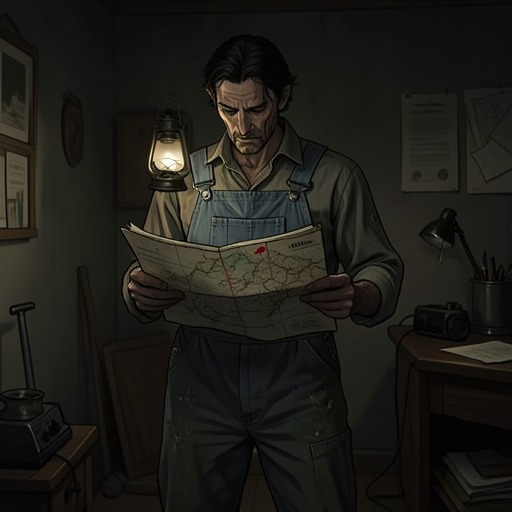
The Tigers of MompracemRevenge against European powers is the political and personal grievance Sandokan offers to explain his attacks on European settlements, forts, and ships. He presents his violence as retaliation for a conspiracy against his throne and the loss of his family, while his friend Yanez sets that account beside the devastation of Sandokan’s raids and his protection of people in need. The resulting conflict is not simply a declaration of hatred: it is a struggle over who may wield force, and whose account of that force will define it.
Origins of the grievance
Sandokan describes the source of his enmity as an assault on both his family and his position. He says Europeans conspired to take his throne because they considered him too powerful, and that they killed his mother, brothers, sisters, and others he loved. He insists that he had not threatened them before they moved against him. In his account, therefore, his later attacks answer an earlier act of dispossession; his vow of vengeance is tied to the memory of those losses rather than presented as an unprompted appetite for conflict.
That explanation is delivered in conversation with Yanez, not by an impartial account of the alleged conspiracy. Its force lies partly in the contrast between the losses Sandokan names and the scale of the retaliation he admits. He says he has been merciless with his enemies and intends to continue seeking vengeance against Europeans, including the Spanish, Dutch, British, and Portuguese. The breadth of that list turns a personal grievance into a general hostility toward European powers, even though the immediate cause he gives is the destruction of his own family and rule.
Raids, reputation, and restraint
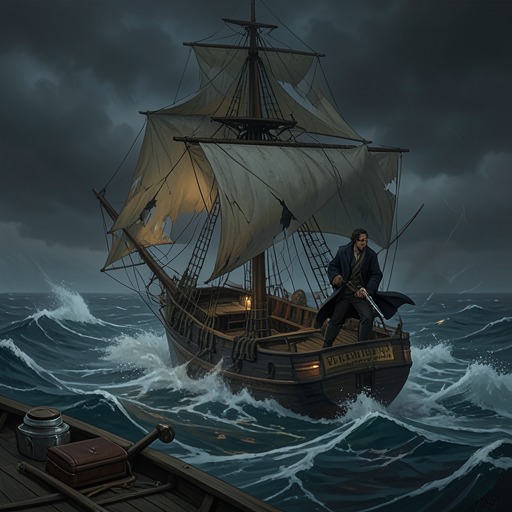
Yanez does not deny Sandokan’s record. He recalls years of raids across the coasts, the pillaging of villages and towns, damage to Dutch, Spanish, and British forts, and ships sunk at sea. These actions have made Sandokan a target: the British, Yanez reports, want his career ended and would gladly commit a fleet to capturing and executing him. The conflict thus has a public, military dimension as well as a private history. Sandokan’s revenge has produced the very reputation and enemy response that now threaten his stronghold.
But Yanez also challenges any account of Sandokan as only a destroyer. He says that Sandokan has defended poor communities against raids, returned captured women to enemy ports despite the danger from British cruisers, and rescued shipwreck survivors before giving them riches. The contrast does not erase the harm attributed to Sandokan’s campaigns; rather, it establishes a divided reputation in which ferocity toward enemies coexists with generosity toward the weak. Yanez’s testimony makes that generosity part of the same character whose raids have left traces along every coast, complicating the simple division between pirate violence and humane conduct.
Labuan and the contest for force
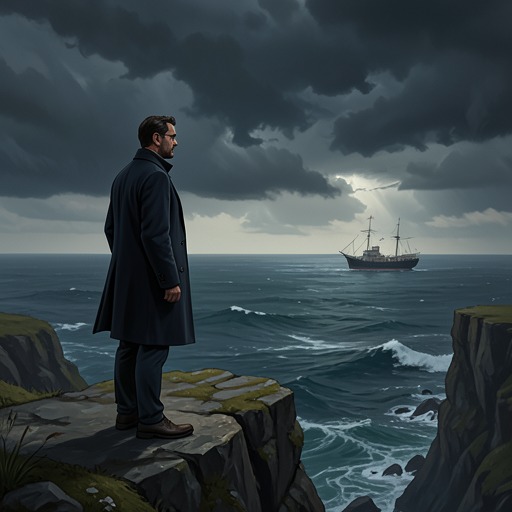
The danger becomes immediate when Yanez warns that England has set its sights on Mompracem. On his return, he has seen a cruiser carrying guns, weapons, and men moving through the surrounding waters. He fears that an attack on the island would bring further British forces: even if Sandokan defeated the cruiser, its crew’s deaths would carry news to Labuan and provoke others to move against him. Yanez’s warning is strategic as well as personal. A victory could intensify the conflict until Sandokan and his men were overwhelmed.
The British presence at Labuan gives this warning a concrete setting. The island had been occupied in 1847 by Sir Rodney Mundy, commander of the Iris, under a British government order to eradicate piracy in those waters. Its population was about a thousand, mostly Malay, with a small European community of roughly two hundred. The British had built a citadel named for Queen Victoria, with large bastions intended to protect it from the pirates of Mompracem, whose earlier raids had devastated the coast. The island’s fortifications and the cruiser at sea embody an organized effort to control the waters; against them stand Sandokan’s island base, its defenses, and his armed ships. The opposing forces therefore assert rival claims to security and authority through their ability to use force.
Revenge beside another motive
Despite Yanez’s warning, Sandokan says he will sail for Labuan the next day. His resolve is not explained solely by revenge: he describes an irresistible pull toward the island and a need to see a young woman with golden hair. The narrative places this personal longing beside the looming confrontation with British power without making them identical motives. Sandokan’s campaign is shaped by a vow rooted in loss, but his movement toward Labuan also follows a desire that Yanez cannot treat as a military calculation.
The episode leaves the revenge unresolved and turns it toward an approaching test. Sandokan has named the injuries behind his enmity, acknowledged his merciless retaliation, and heard Yanez set out the likely cost of provoking Britain. Yet he chooses to go to Labuan. His declared vengeance consequently functions both as an explanation of past attacks and as a force drawing him toward renewed danger, while the competing evidence of his generosity prevents his character from being reduced to the violence of his cause.