Sandokan
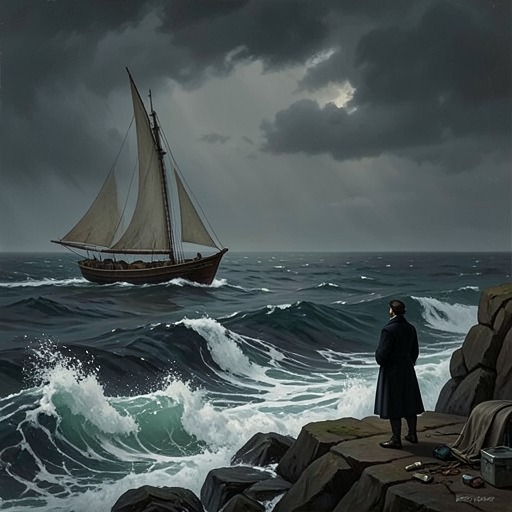
The Tigers of MompracemSandokan, the pirate captain known as the Tiger of Malaysia, is introduced as both a formidable opponent of European power and a leader capable of generosity toward people in need. On the stormy night of December 20, 1849, he waits at Mompracem, his fortified island base in the South China Sea, then turns from private longing to renewed defiance of the British. His movement toward Labuan brings these sides of his character together: an old grievance drives his hostility, while an intense desire to see the Pearl of Labuan draws him into danger.
Identity and Introduction
Sandokan is presented as tall and strongly built, with a bronzed face, long hair, a black beard, and dark, piercing eyes. When first seen, he sits alone in a large room, his hands clasped around his scimitar. His clothing includes a blue silk jacket and a red sash embroidered with gold; before rising, he places on his head a turban adorned with a large diamond. These details establish a captain whose personal appearance shares the display of wealth and authority found throughout his quarters.
The room stands within Mompracem’s defenses, beyond trenches, embankments, and ramparts. A red flag bearing a tiger’s head flies above the hut, while the interior holds the spoils of past raids: jewels, pearls, weapons, carpets, and other costly objects. This is not merely a private retreat. Its position and contents place Sandokan within a pirate stronghold shaped by both accumulated wealth and sustained conflict. The contrast between its rich furnishings and its fortifications anticipates the combination of personal splendor and military readiness that defines him.
The Captain and the Legend
A shift in Sandokan’s manner makes his public identity unmistakable. He first sits quietly, absorbed in thought, but a blast of wind interrupts him and he prepares to receive Yanez. Later, music briefly accompanies a lighter exchange between the two men. When the conversation turns to the British, however, Sandokan rises abruptly and strikes the table. The change is immediate: he is again the veteran pirate captain whose raids and battles have made him famous across the region.
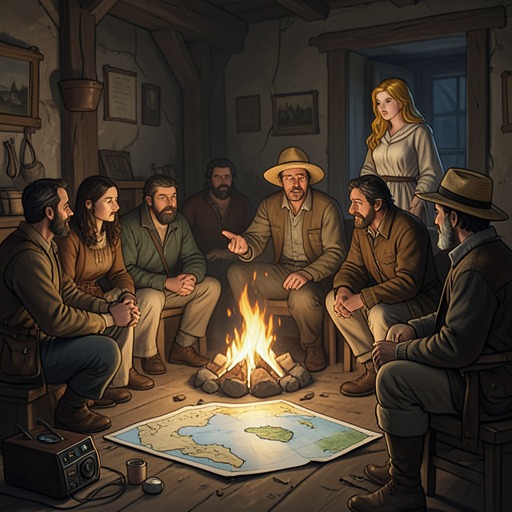
Yanez describes the reach of Sandokan’s campaign: coastal settlements have been raided, Dutch, Spanish, and British forts have been hit by cannon fire, and ships he has sunk lie beneath the sea. Sandokan does not deny the record. Instead, he disputes the idea that his violence began without cause. He says European powers conspired to take his throne because they feared his growing strength, and that his mother, siblings, and other loved ones were killed. He presents his vengeance as a vow made over his family’s bodies, one he intends to keep against Europeans of every nationality, including Yanez’s Portuguese countrymen.
That account does not make Sandokan’s self-understanding simple. He acknowledges that he has been merciless toward enemies, yet hopes that people may also remember him as generous. Yanez supports that claim with examples: Sandokan has protected vulnerable communities from raids, returned captive women to ports despite the danger from British cruisers, and rescued shipwreck survivors before giving them wealth. The contrast is central to his characterization. He defines his violence through the injuries he says were inflicted on his family, but he also recognizes obligations that extend beyond revenge.
Yanez and the Conflicting Pull of Labuan
Yanez is Sandokan’s trusted companion, addressed in terms of brotherhood. A European man in his early thirties, he has a strong build, pale skin, sharp grey eyes, quick wit, and a calm manner. He arrives at Mompracem in a wet cloak during the hurricane and is welcomed warmly. Their ease together is visible in their shared drink and music, and in the affectionate familiarity with which they speak. Yet friendship does not prevent Yanez from challenging Sandokan’s judgment.
When Sandokan asks whether Yanez has seen the golden-haired young woman, Yanez says that he has not, but has obtained the information Sandokan requested. The conversation soon shifts to British activity in Labuan. Yanez reports that the British are strengthening their defenses and may be plotting against Sandokan. He warns that England could attack Mompracem and says he has seen a heavily armed cruiser near their waters. His warning identifies a strategic danger that Sandokan understands: the island and its people may be threatened while the captain is away.
Sandokan nevertheless says he will sail for Labuan the next day. He describes a powerful attraction drawing him there and an insistence that he must see the young woman, later identified in the narrative as the Pearl of Labuan. The decision exposes a tension between his public responsibilities and a private desire he cannot set aside. Yanez calls him reckless and urges caution, but Sandokan’s attention remains fixed on Labuan. His impulse is not presented as a considered military plan; it is a personal longing that carries him into the territory of his enemies.
Leadership, Risk, and the British Conflict
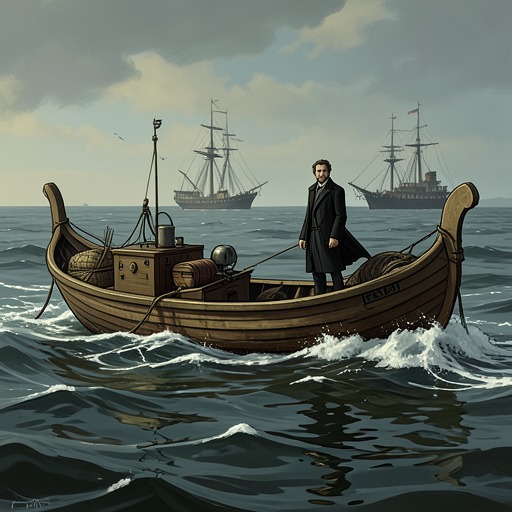
Sandokan’s authority rests on command as well as reputation. On the voyage toward Labuan, after two pirates have been killed, he orders them given a proper burial at sea. He then questions Patan about Pagkon’s death and asks where Patan is supposed to be when Sandokan boards an enemy ship. The exchange shows that the captain pays attention to the conduct of his crew and expects them to understand their roles. His stern scrutiny accompanies, rather than replaces, the respect his men show him.
Labuan presents a fortified British presence. The island had been occupied in 1847 as part of an effort to eradicate piracy in the surrounding waters. Its population is described as about a thousand people, mostly Malay, alongside a small European community of roughly two hundred. The British have built the Victoria Citadel with large bastions to guard against Mompracem’s pirates; beyond the settlement, much of the island remains jungle, with only a few farms. Sandokan’s approach is therefore directed toward a place whose defenses make the conflict between the pirate stronghold and British power concrete.
After the two prahus reach the open sea, a heavily armed cruiser blocks their route westward. It weighs fifteen hundred tons, lies six hundred metres from the coast, and carries a crew four times the size of Sandokan’s combined force. Sandokan studies the disparity and orders his men to the oars rather than withdraw. During the ensuing twenty-minute engagement, the pirate ships continue fighting despite severe damage and losses. Patan is killed at his cannon, and the other prahu’s cannon is disabled, but the crews maintain their attack. The cruiser eventually retreats a further six hundred metres to avoid being boarded. The encounter ends without a stated victory for either side, preserving the danger of the British conflict rather than resolving it.
Character and Narrative Role
Sandokan’s early trajectory is shaped by opposing claims on his loyalty. His memories of dispossession and family loss fuel a declared vendetta; his actions toward the vulnerable complicate any image of him as merely ruthless. His friendship with Yanez offers counsel and a counterweight to impulse, but it cannot stop him from pursuing Labuan. Once there, he brings the authority of a celebrated captain into direct confrontation with the island’s British defenses.
The narrative establishes Sandokan through reversals of scale and mood: the solitary man in a richly furnished room becomes the commander whose reputation reaches across the coasts; the man who shares music and drink with his closest companion turns abruptly toward the prospect of war; the avenger who speaks of crushing vengeance also values the memory of people he has helped. His advance toward Labuan joins the personal and political strands of the story without yet reconciling them. The battle demonstrates his courage and the loyalty of his crew, but its retreating cruiser leaves the larger struggle open.