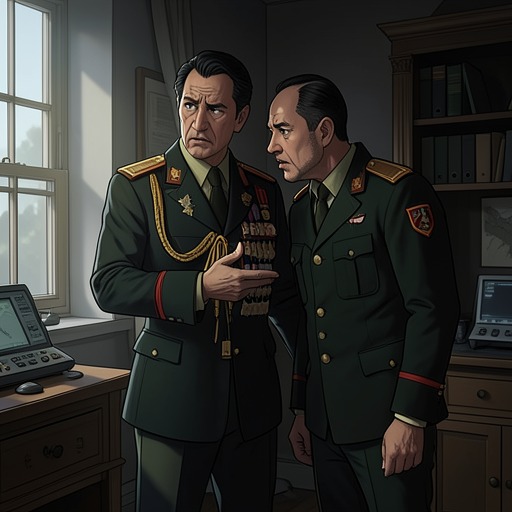
Sandokan and Yanez’s friendship
The Tigers of MompracemSandokan and Yanez’s friendship gives the story a personal counterweight to Sandokan’s public identity as a feared raider: Yanez is at once his affectionate companion, frank critic, and practical adviser. Their reunion is marked by an embrace and the language of brotherhood, while their conversation shows a bond strong enough to hold both loyalty and disagreement. Yanez can challenge Sandokan’s violence and caution him about danger, but Sandokan’s choices remain his own.
Recognition and Intimacy
Yanez’s arrival is anticipated with excitement. When the newcomer appears in a large wet cloak, Sandokan recognizes him and spreads his arms in welcome; Yanez answers with the same personal immediacy, calling Sandokan by name and greeting him as a little brother. Their reunion is not framed as a formal meeting between commander and visitor, but as the return of someone close. They share a drink and sit together at the table, where Sandokan quickly asks whether Yanez has seen the young woman whose golden hair has captured his attention. Yanez has not seen her, but has brought the information Sandokan wanted. The exchange establishes both their ease with one another and the practical role their friendship plays: Yanez is someone Sandokan turns to for help with a matter that occupies him intensely.
The narrative also supplies a few concrete markers of the men’s difference without making that difference a barrier. Yanez is European, Portuguese, and a little older than Sandokan; he is described as quick-witted and good-humoured. Their mutual address as brothers, repeated amid serious discussion, gives the relationship its emotional vocabulary. It suggests intimacy and allegiance, while the surrounding conversation shows that their closeness does not require agreement on every choice.
Candor, Grievance, and Generosity
Yanez speaks plainly about the scale of Sandokan’s raids: he recalls the marks they have left on coasts and forts and the ships sunk at sea. Sandokan does not deny that record. Instead, he explains it through the European seizure of his throne and the deaths of members of his family and other loved ones. He presents revenge as a vow made in response to those losses, and admits that his treatment of enemies has been merciless. Yet even as he defends that hostility, he hopes that some people may remember him as generous. Their conversation therefore lets the friendship hold two sides of Sandokan’s self-understanding at once: vengeance against Europeans and a wish to be recognized for mercy toward others.
Yanez answers not by dismissing Sandokan’s anger but by supplying evidence that complicates the image of him as only a ruthless pirate. He insists that many could attest to Sandokan’s generosity toward the weak. He recalls Sandokan defending poor tribes from raids, returning captured women to enemy ports despite the danger of British cruisers, and rescuing shipwreck survivors from wreckage during storms, then giving them riches. These are specific acts rather than a general expression of affection. Yanez’s praise carries the authority of someone who has known Sandokan for a long time and can answer his self-defence with remembered conduct. The friendship thus becomes a setting in which Sandokan’s violence is neither concealed nor treated as the whole of his character.
Reading and Challenging One Another
Yanez notices that Sandokan’s attention has turned inward. After Yanez asks why they are having this discussion, Sandokan paces with folded arms and lowered head. Even though the two men have known each other a long time, Yanez cannot read his thoughts; he waits, then asks what is troubling him. Sandokan looks steadily at him but remains silent. The scene gives their intimacy a limit: familiarity lets Yanez recognize that something is wrong, but it does not grant him access to everything Sandokan keeps to himself.
Yanez tests a possible explanation, suggesting that Sandokan may be upset by the British hatred directed at him. Sandokan still says nothing. Yanez’s attempt is significant because he is willing to name an uncomfortable possibility rather than merely soothe his friend. His concern is attentive but not omniscient; the silence leaves Sandokan’s inner state unresolved. This mixture of knowledge and uncertainty makes their friendship more than uncomplicated agreement: Yanez can read the signs of distress, but Sandokan retains the power to withhold its cause.
Warning, Choice, and the Relationship’s Role
When Sandokan finally tells Yanez that he wants to go to Labuan, Yanez reacts with alarm. He calls the plan reckless and warns that Sandokan may commit acts of madness in the den of his bitterest enemies. He also points to a danger beyond Sandokan’s personal impulses: England has set its sights on Mompracem, and a cruiser bristling with cannons and carrying arms and men has been sighted in their waters. Yanez’s warning joins an intimate judgment of his friend’s temperament to a concrete report about the threat around their home. His counsel is protective, grounded in both what he knows of Sandokan and what he has seen on his return.
Sandokan first responds in a flash of anger, then sits down again and accepts that Yanez is right. The concession does not change his decision. He says he will sail for Labuan the next day, describing an irresistible force drawing him there and a persistent inner voice urging him to see the Pearl of Labuan. Yanez’s warning has been heard, but it has not prevailed over Sandokan’s fixation. Their bond is shown in this divergence: Yanez can speak frankly and Sandokan can acknowledge the force of his advice, yet neither affection nor caution removes Sandokan’s agency. As a narrative relationship, their friendship makes that choice legible. Yanez’s knowledge of Sandokan’s generosity, anger, silences, and recklessness gives the reader a companion’s perspective, while Sandokan’s final resolve reveals the limits of what even his closest friend can alter.