Sandokan’s vendetta against the Europeans
The Tigers of MompracemSandokan’s vendetta against the Europeans is the political grievance behind his attacks and his defiance of British power at Labuan. He presents it as retaliation for the loss of his throne and the deaths of his family, yet his own account also makes room for generosity toward the vulnerable. The conflict is therefore not simply a contest between a pirate and a naval force: it turns on competing claims to authority, violence, and justice.
Origins and Rationale
In a confrontation with Yanez, Sandokan rejects the idea that his raids began without cause. He says European powers conspired to take his throne because they considered him too powerful, and that they killed his mother, brothers, sisters, and other loved ones. He insists that he had not threatened them before they moved against him. These are Sandokan’s stated grounds for vengeance; the evidence establishes his account as the motive he voices, not as an independently verified history of the events.
His vow reaches across national lines. He names the Spanish, Dutch, British, and Portuguese as targets, explicitly including Yanez’s countrymen, and describes his intended retaliation as fierce and lasting. The breadth of that list gives the vendetta a political cast: Sandokan treats European identity and power as a common enemy, rather than limiting his grievance to one opponent.
The Vow at Mompracem
The conversation takes place against the image of Mompracem as a defended pirate stronghold. A red flag bearing a tiger’s head flies above its large hut, beyond trenches, embankments, and ramparts. The setting gives physical form to Sandokan’s resistance: his vow is spoken from a base built to withstand attack, marked by the emblem of the force he commands.
When Sandokan asks what the British are doing in Labuan, Yanez answers that they are strengthening their defenses and suggests they may be plotting against him. Sandokan responds by warning them not to challenge Mompracem and threatening to make the waters run with their blood. His declaration is thus both a statement of past grievance and a response to a present military threat. The British presence becomes a fresh occasion for a conflict he understands as already begun.
Labuan and Competing Force
The island’s recent history supplies the immediate political setting. Labuan was occupied in 1847 by order of the British Government, which sought to eradicate piracy in those waters. The British had built Victoria Citadel with large bastions to protect the island from the pirates of Mompracem, whose earlier raids had devastated the coast. The fortifications make visible the British effort to establish and defend control; Mompracem’s ramparts and Sandokan’s defiance present a rival claim backed by an armed pirate community.
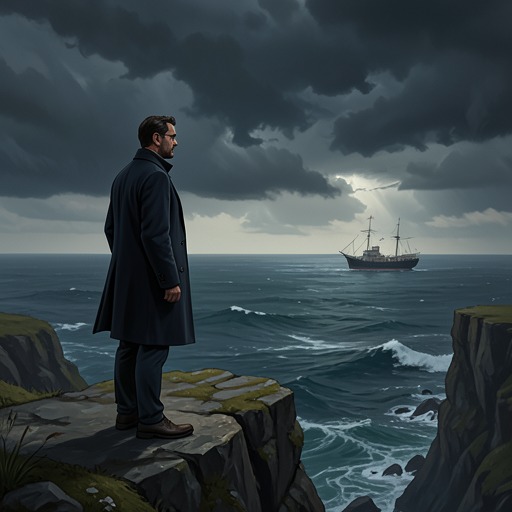
That rivalry is not only expressed in declarations. As Sandokan’s ships reach open water near Labuan, a large, heavily armed vessel of fifteen hundred tons patrols about six hundred metres from the coast and blocks their route westward. Orders summon its crew to battle, while Sandokan studies the ship and recognizes that its crew is four times the size of his own. The encounter shows the vendetta operating in a material balance of force: Sandokan’s resistance is undaunted, but the opposing power is formidable.
Vengeance and Generosity
Yanez’s account of Sandokan’s record complicates the pirate’s self-description as an avenger. He recalls raids across the coasts, attacks on Dutch, Spanish, and British forts, and ships sunk in the course of Sandokan’s campaigns. Those actions give the Europeans’ hostility a concrete context even as Sandokan attributes the conflict’s origins to their earlier violence against him.
The same exchange refuses to reduce Sandokan to retaliation alone. Yanez says that Sandokan has defended poor tribes from raids, returned captive women to enemy ports despite the danger of British cruisers, and rescued shipwreck survivors before giving them riches. Sandokan himself hopes that some people will remember him as generous, even while admitting his mercilessness toward enemies. The contrast does not cancel the vendetta; it shows the moral distinction Sandokan draws between those he considers responsible for his losses and people who are vulnerable or in need. The evidence leaves that distinction in tension with the scale of his promised revenge, without showing the vendetta resolved.