Abyssal food chain
The TrenchThe Abyssal food chain is the predatory order of the hydrothermal gorge, where Angel’s survival depends on hunting amid the Kronosaurs and the warm waters of the vent field. It is not a settled hierarchy: prey, rivals, and offspring can each become the next target, and the epilogue makes that instability central to the natural world the story depicts.
The Gorge as a Predatory Habitat
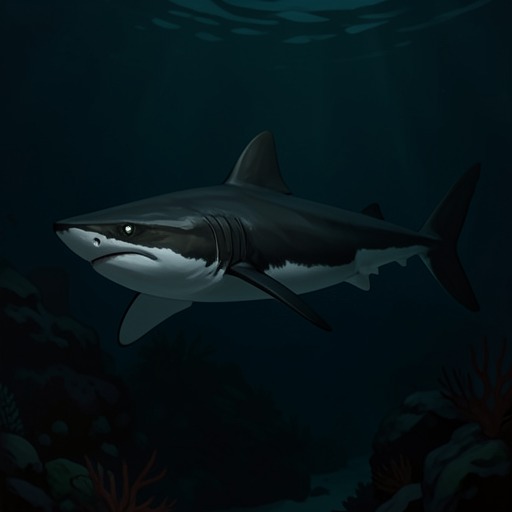
The gorge’s food web is presented through encounters shaped by both animal senses and the conditions of the deep. When Angel enters a conflict involving three challengers, her ampullae of Lorenzini register the Kronosaurs’ heartbeats, while her lateral line detects the vibrations of the Abyss Glider’s twin thrusters. She registers both sources of information but chooses neither as her immediate target. Instead, she homes in on the largest and slowest-moving challenger within her domain. The scene gives her the ability to distinguish among competing signals and prey, making her actions part of an animal-centered process rather than merely a response to the humans’ predicament.
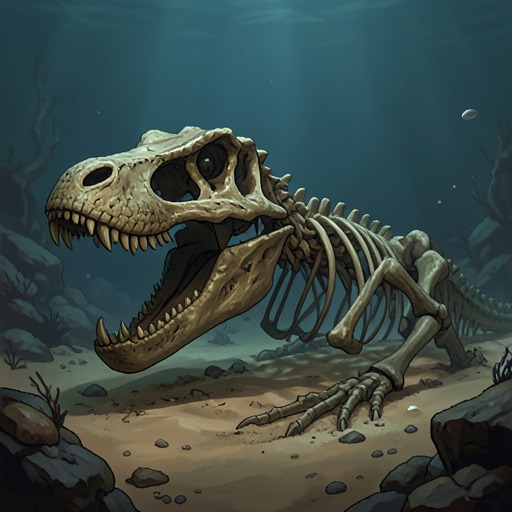
Kronosaurus also occupies a shifting position in this order. An adult male circles the perimeter near Celeste, while a large female later rises into the fray, opening her jaws to take the meal Angel is pursuing. The female’s intervention changes the immediate contest: the food that Angel is closing on is also an opportunity for another predator. The sequence presents the gorge as a place where a hunt can be interrupted and redirected by a rival, rather than as a simple chain in which each species has one fixed place.
Competition and Changing Targets
Angel’s selection of the slowest challenger and the female Kronosaurus’s arrival both show how quickly the struggle over food can change. Angel is not simply attacking whatever she detects; after sensing the Kronosaurs and the Abyss Glider, she concentrates on the largest, slowest target. The female Kronosaurus then approaches from below to seize the same prospective meal. Together, these actions make the food web visible as a contest over access, with multiple animals responding to the same vulnerable prey.
The Benthos’s destruction briefly interrupts Angel’s presence near the human activity. After the massive implosion drives her away, she returns beneath the hydrothermal ceiling and intercepts a solitary object rising from the seafloor. The interruption does not erase her predatory role: once back in the vent field, she again follows movement that may provide food. The contrast between the human vessel’s catastrophic end and Angel’s return to hunting places human technology within, rather than above, the gorge’s ecological order.
Birth, Pursuit, and Confinement
The epilogue extends the food web into Angel’s relationship with her young. As she glides through rising warm-water plumes among chimney stacks, the surviving offspring of an adult Kronosaurus she had attacked months earlier remain somewhere ahead. Before reaching the edge of the vent field, Angel is forced off course by labor. She gives birth to two male pups: the first is twelve feet long and weighs one thousand pounds; the second, born moments later, is nine feet long. Both immediately swim away, the first disappearing into a dark gorge and the second following its sibling north.
After the birth, Angel pursues the pups. The narration describes her as intent on killing the life she has just produced, so the relation between parent and young does not offer protection from the food web’s violence. The pups respond to the vibrations of their pursuing mother, accelerate, and gradually separate while moving among black smokers and tube worms. Their survival depends on avoiding Angel as well as the packs of Kronosaurs. Their first moments of independent movement are therefore also an immediate test of whether they can evade predators, including their own parent.
Angel cannot catch the faster pups. She slows and struggles to breathe in the oxygen-poor environment. Although she has become accustomed to the shallows, the narration says that her species is bound by nature to the gorge’s warm waters; she can remain there only if her hunger is satisfied. This constraint links the food web to habitat: the gorge sustains Angel, but it also limits where she can continue to live and hunt.
An Unclosed Ecological Cycle
Unable to catch her pups, Angel resumes her southerly course and homes in on a young Kronosaurus. The final movement returns the predator to the pursuit of prey, rather than resolving the food web through the birth of a new generation. Angel’s pups have escaped her for the moment, but they remain vulnerable to both her and the Kronosaurus packs; Angel, meanwhile, continues to depend on hunting within the gorge.
The closing possibility is that Angel might eventually kill the last of the pliosaurs. That would end the abyssal food chain that had sustained her kind for more than one hundred thousand years. The consequence would not be a simple victory: without that prey, Angel would be forced back toward the surface by the need to survive. The food web thus determines both her present confinement and the possible loss of the conditions that have supported her species. Its final image is not a balanced ecosystem but an unresolved cycle of pursuit, dependence, and scarcity, in which the predator’s survival may ultimately undo the ecological order on which it relies.