Facing fear and nightmares
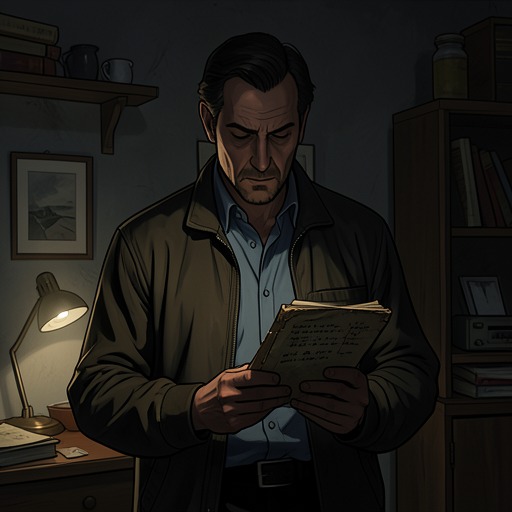
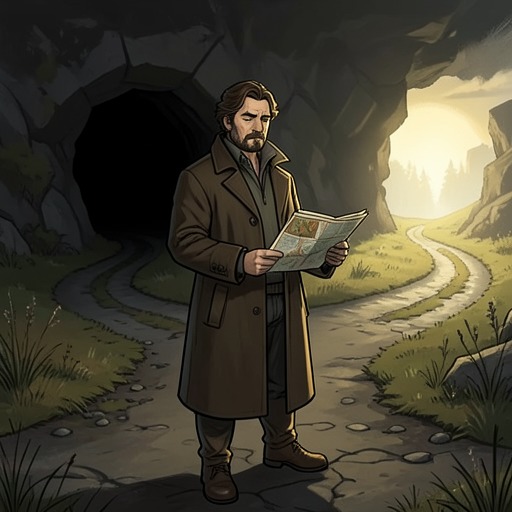
The TrenchFacing fear and nightmares is the inner struggle that makes Jonas Taylor's return to Devil's Purgatory possible. His dreams revive the terror of a past encounter and seem to forecast the danger ahead, but they do not simply paralyze him or provide a route around danger. The decisive change is in how he responds: he accepts fear as real, listens to what the dreams may prepare him for, and proceeds toward Terry Taylor despite the possibility that the images will come true.
Courage as a Practice
Before Jonas enters the AG-2, Masao Tanaka takes his trembling hands and recognizes how difficult the rescue will be. His counsel defines courage not as the absence of fear but as doing what one fears most; succeeding in battle requires moving beyond fear rather than pretending it is not there. He recalls that Jonas found this capacity four years earlier, offering the past as evidence of a strength Jonas may not currently feel.
Jonas asks what to do about his dreams. Masao does not dismiss them as meaningless, nor does he endorse surrendering to them. He advises Jonas to use them to prepare, while refusing to make them an enemy, and places the decisive battle within the self. This distinction governs the concept throughout the sequence: preparation is useful, but fear becomes destructive if Jonas treats it as an opponent that must be defeated before he can act. His task is to carry it with him and still choose his course.
The advice is immediately tested through physical action. After Masao embraces him, Jonas crawls into the AG-2 and seals himself inside its LEXAN escape pod. Strapped into the body harness, he signals through the clear nose cone; the sub is lowered into the sea and rolls in the swells while he waits for the divers to release its cable. These details make courage concrete and bodily. Jonas is not already calm when he commits: the trembling hands and unstable craft accompany the choice rather than disappear before it.
Return to the Trench
As the sub descends steeply, Jonas recognizes Devil's Purgatory as the place where he cheated death eleven years before. He imagines that the Trench has summoned him back to settle the score. That sense of return gives the descent the shape of a confrontation with a wound that has remained active over time: the present rescue brings him back to the scene associated with his earlier survival, while the years since have not prevented the place from recurring in his nightmares.
The dreams carry a specific image of danger. In the abyss, Jonas stares into darkness until a glow circles below; he struggles to turn the sub, and a rising head with hyperextended jaws appears. Then the image vanishes. He tells himself that he is hallucinating and must stay focused and awake. The scene holds two possibilities in tension: his perception may be distorted by fear, but the dream imagery is also connected to the actual predator he fears. The instruction to focus does not resolve that uncertainty. It is an effort to keep acting when he cannot yet know whether the threat is present.
A deafening explosion and shock wave overturn the AG-2, forcing Jonas to regain control while his ears ring. He identifies the blast as an implosion and fears that the Benthos has imploded. The moment shows how danger multiplies rather than arrives in a single, manageable form: the imagined predator, the violent disturbance, and the possibility of catastrophe aboard the vessel converge in the darkness. Jonas continues toward the bottom even before the ringing stops and he can hear again. Fear is not shown yielding to reassurance; action continues amid incomplete information and immediate physical disorientation.
Dreams, Knowledge, and Terror
When Jonas tells Terry that the Megalodon is in the Trench, she recognizes the significance of his dreams. He explains the threat they have shown him: as they approach the hydrothermal ceiling, Angel will detect them, follow them upward, and rise through the layer to engulf the pod. The dream is therefore more than a recurring picture of his own death; it offers a sequence of anticipated events. Yet it cannot guarantee that the sequence will unfold exactly as imagined. Terry suggests that Angel might not see them, and Jonas acknowledges that possibility. Their exchange preserves uncertainty instead of turning a nightmare into certain knowledge.
Terry's response also changes the emotional conditions in which Jonas faces the vision. His body is shaking; she strokes his hair to soothe him and asks what happens next. The exchange places care alongside fear without making care a cure for it. Jonas can describe the nightmare while still unable to see Terry in the pitch darkness, and can explain the danger without claiming mastery over it. His apology for the damage to their marriage further brings the threatened rescue into relation with their relationship: the risk is not abstract bravery but the possibility of losing the person beside him before he can repair what he believes he has damaged.
As the pod rises through the hydrothermal layer, Jonas hyperventilates. More than six miles of ocean remain above them. He knows what he expects to see, yet feels compelled to look: the Megalodon has appeared in his dreams repeatedly, and the approaching moment recalls the encounter eleven years earlier. He squeezes Terry's hand and waits. The gesture is important because it makes the confrontation shared even though the dread belongs to him; Terry holds on to him and turns to face the depths as well.
The Feared Image and Its Reversal
The Megalodon emerges from the mist, its ghostly white skin visible against blackness, its jaws opening to reveal rows of serrated teeth. Jonas trembles, struggles to draw breath, and cannot turn away. The dream has prepared him for an image of death, but preparation does not make the actual sight painless. The scene confirms the persistence of his terror while also distinguishing facing fear from being unafraid: he remains frightened at the very point where he has to look directly at what he most dreads.
The encounter then departs from the nightmare's expected pattern. An adult Kronosaurus charges at the pod, opening its jaws at the same moment the Megalodon threatens them. The danger is not simply the predicted image repeated; another predator interrupts the expected confrontation. That reversal limits any sense that Jonas's dreams give him control over events. They have trained his attention on a real threat, but reality remains capable of exceeding or altering the vision.
When the escape pod continues to rise and Jonas embraces Terry, his joy gives way to a quieter resolution. He lies with her safely in his arms, looking into the black sea above, and feels at peace for the first time in eleven years. For the first time, he no longer feels afraid and can imagine having a future. The ending makes clear that the fear has been tied to the long aftermath of his earlier encounter, but it does not claim that every nightmare has been explained or erased. Instead, the return to the Trench has brought him through the confrontation he dreaded and back into a future he had not felt able to claim.
Narrative Significance
The sequence develops courage through a progression of contrasts: shaking hands and deliberate entry into the pod; a dreamlike glow and the command to stay focused; a prediction that seems to govern events and a sudden reversal by the Kronosaurus; terror at the Megalodon's appearance and peace after survival. Each contrast refuses an easy definition of mastery. Jonas's victory is not that he can prevent fear, guarantee the future, or make the abyss safe. It lies in continuing to choose and act while fear remains present, and in allowing the return to the place of past trauma to end in connection rather than isolation.
Masao's advice also gains its full meaning only in retrospect. Jonas uses the dreams as preparation, but does not let their worst outcome dictate his actions. At the same time, the narrative gives the dreams enough accuracy to make his dread more than a mistaken belief: Angel does return, and the expected ascent becomes an immediate peril. The tension between preparation and uncertainty is essential to the concept. Facing the nightmare means looking at what it shows, recognizing what cannot be known, and continuing toward another person despite the possibility of loss.