Fear of the Abyss
The TrenchFear of the Abyss is the persistent dread Jonas Taylor feels toward the Mariana Trench, a fear founded in a real catastrophe rather than an abstract aversion to deep water. It shapes his nightmares, ends his work as an argonaut, and keeps him from returning to the place where he believes he is destined to die. The novel also gives that fear a wider reach: the same shark that haunts Jonas’s past has taken Terry Taylor’s brother, while Masao argues that killing the creature cannot by itself free Jonas from what happened.
The Trench in the Nightmare
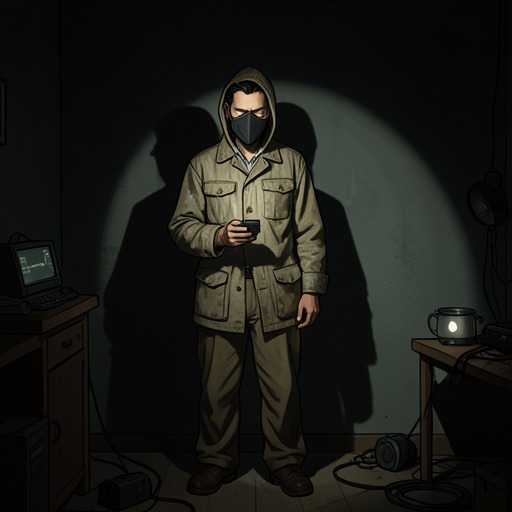
The fear first appears as a bodily ordeal. In Jonas’s recurring nightmare, he plunges into the void, unable to draw breath, his chest constricted and throat burning. He presses his hands against a LEXAN pod as the ocean darkens and he spirals down into a gorge. Searching the blackness, he sees a second pod rise through a muddy current. Inside lies a woman whose long black hair floats around her; her dark eyes are vacant. The image makes the abyss more than an empty setting: it becomes a depth that returns the dead to Jonas’s sight and leaves him trapped with what he cannot rescue.
The nightmare is not presented as a vision of the future or as evidence of anything supernatural. It is identified as the same dream of being back in the Trench, and Jonas confirms that it has not stopped. After waking, he lies beside his wife, Terry Taylor, who asks whether the dream has returned and urges him to see a doctor before his condition gives her a heart attack. The domestic scene brings the terror into the bedroom: the deep is physically absent, but the dream’s aftereffects are intimate and immediate. Jonas cannot simply leave the nightmare behind by surfacing into ordinary life.
The Encounter That Made Fear Enduring
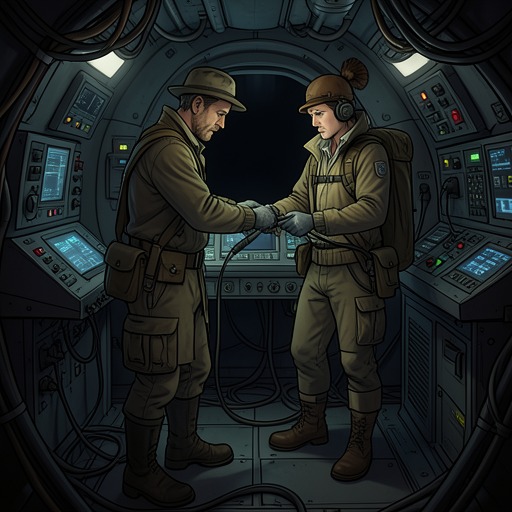
Eleven years before the present action, Jonas encountered a Megalodon nearly seven miles down in the Mariana Trench while piloting the United States Navy’s three-man submersible Seacliff. On the final top-secret dive, he stared into the pitch-black water below and saw an unearthly white glow. What first seemed an aberration became a sixty-foot shark rising toward the sub, its torpedo-shaped head illuminated and its seven-inch teeth visible as its mouth opened. The encounter joins the creature’s scale and appearance to the darkness that already defines Jonas’s remembered descent.
Primordial panic overtook him. Disregarding protocol, Jonas jettisoned Seacliff’s ballast and raced toward the surface. The rapid ascent caused the submersible’s pressurization system to malfunction, killing both scientists aboard. Jonas survived, but his career as an argonaut ended. His fear therefore carries the weight of more than the predator itself: it is bound to the decision he made in terror, the malfunction that followed, and the deaths for which the escape could not compensate. His later nightmares repeatedly return him to the depths where that sequence began.
Refusal, Fixation, and the Cost of Return
For seven years after the encounter, Jonas devoted himself to proving that the creature existed. He returned to school, earned advanced degrees in paleobiology, and developed a theory about the disappearance of Megalodon. He proposed that prehistoric great white sharks had migrated to the warmer abyssal waters of the Mariana Trench to escape the cold surface temperatures of the last ice age. Despite the scientific basis he believed his research had, colleagues dismissed it as fantasy and some institutions banned his papers. His attempt to make the abyss intelligible thus brought professional rejection as well as renewed attention to the source of his fear.
In the four years before Masao’s request, Jonas refused at least a dozen opportunities to return to the Mariana Trench. Some would have required him to pilot submersibles; others would have placed him aboard a surface ship for documentaries. Even a meeting with Benedict Singer aboard a surface vessel seemed beyond what he could face. Psychiatric help, medication, and hypnosis had not subdued his ongoing nightmares. Jonas was convinced that his destiny was to die in the Trench, and, miserable as his life had become, he would not test that belief. Fear operates here as both a reaction to past danger and a prediction that makes a future encounter seem already fatal.
When Masao urges him to stop living in fear, Jonas answers by imagining the lagoon drained and the shark killed so that it cannot escape. The response exposes the difference between removing an external threat and confronting an inward wound. Masao insists that the demons in Jonas’s dreams come from his past and that killing the shark is not the answer. When Jonas still refuses the journey, Masao decides to go in his place. His choice shows that Jonas’s fear has consequences beyond his own paralysis: it redirects another person toward the danger he will not face.
A Shared History of Loss
Terry’s grief gives the fear a family history. Four years earlier, her brother D.J. descended into the Trench with Jonas and was devoured by a shark of the species the family now makes its living exploiting. Terry remembers how close she and D.J. had been, and the loss sits beside her anger at what has happened to her family. Her father’s dream of a lagoon large enough for whales to swim freely has failed; financial difficulties over the Megalodon’s capture forced him to hand control of his organization to Benedict Singer. At the same time, Terry recognizes that her love for Jonas has grown cold and that she still blames him for her stillborn child and her father’s declining health. The abyss’s violence therefore persists in relationships and livelihoods as well as in Jonas’s dreams.
The fear is not simply shared in identical form. Jonas is haunted by the encounter and convinced that returning will fulfill his death; Terry carries the loss of D.J. and the consequences of the family’s entanglement with the shark. Her question about whether their relationship can be salvaged shows how the past continues to shape the present even when she is not herself describing a nightmare. The Trench connects their losses, but does not make them interchangeable.
The Abyss as Human Limit
Benedict Singer’s speech aboard the Goliath places Jonas’s personal dread within a larger contrast between exploration and fear. Benedict surveys humanity’s voyages across the world and into space, then stresses how little of the ocean has been penetrated. He presents the deepest sea as a place where life’s origins may be found, while acknowledging that people remain terrified by its dark secrets and primal chaos. The speech does not erase Jonas’s specific history; instead, it makes his fear an instance of a broader limit that exploration repeatedly approaches without mastering.
Across these scenes, the abyss is at once a physical depth, the setting of a lethal encounter, and the place to which memory returns Jonas against his will. His scientific theory tries to explain what lives there, while his refusals and nightmares show that explanation has not given him command over what he experienced. Masao’s insistence that the past must be faced, and Terry’s continuing grief over D.J., keep the concept from resolving into a simple choice between courage and cowardice. Fear of the Abyss names the enduring human cost of an encounter that survival alone could not end.