Grays Harbor
The TrenchGrays Harbor becomes the story’s crucial meeting point between a vulnerable whale calf and the Megalodon pursuing it. For Tootie, the bay offers food and shelter; for the humans trying to protect her, its shallow depth and narrow inlet suggest a trap. That double function turns a place of refuge into a site of imminent danger and a proposed confrontation.
Setting and Refuge
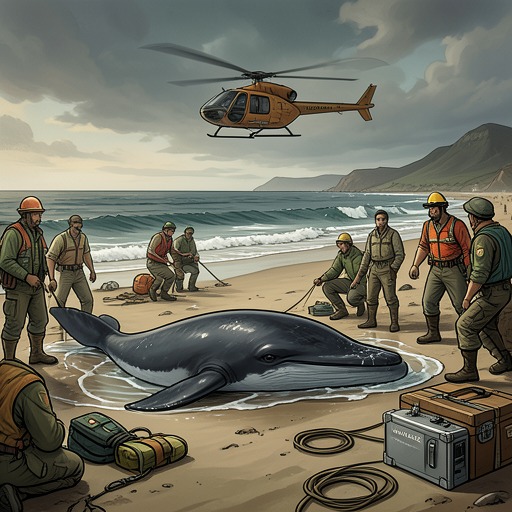
The gray whale calf Tootie has fallen behind the migrating whales and taken shelter in Grays Harbor, where food is plentiful along the seabed. She feeds by drawing in turbid water and filtering sandhoppers and other bottom-living organisms from the silt through her baleen. After several minutes, she rises to the surface to blow and breathe, then returns to forage along the muddy bottom. The bay sustains her precisely because it offers an abundant, sheltered feeding ground.
The Megalodon’s Approach
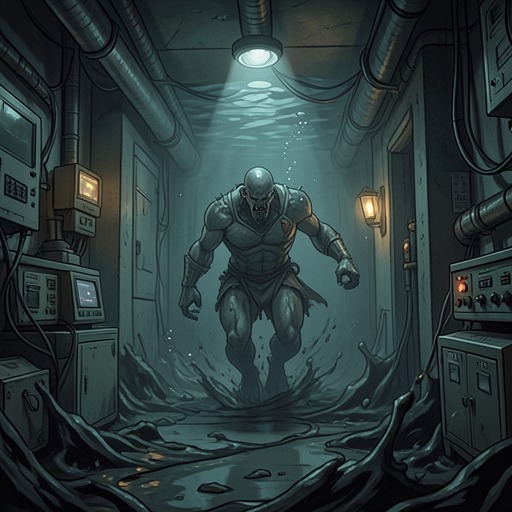
That refuge lies within reach of a predator being tracked by Jonas Taylor aboard the William Beebe. Jonas reports that the Megalodon could reach Grays Harbor within three hours, raising the prospect that it will detect Tootie and attack her. As the calf continues feeding below, the predator moves silently along the seafloor, its bioluminescent skin casting a dull glow while its cataract-gray eyes search for the object its senses tell it is nearby. The contrast between the calf’s routine feeding and the predator’s search makes the bay’s apparent safety precarious.
The Proposed Trap
Sea World’s plan is to have Jonas follow the Megalodon into the bay, where the harbor master would lower gill nets across the inlet. Hanging vertically like curtains, the nets would close off the entrance and confine the shark within the harbor. The plan depends on the local geography: the water is only fifty to sixty feet deep, and the inlet is about three miles across. These dimensions make containment seem practicable, but the strategy also depends on drawing the predator into the same confined waters where Tootie has sought shelter.
The proposal carries financial and operational conditions as well as biological risk. Before moving fishing vessels into position to spread the nets, Westport Marina requires Geo-Tech to guarantee payment for any damages and provide an additional ten thousand dollars for labor and expenses. Grays Harbor is therefore not just the setting for an urgent rescue plan; its working harbor and fishing fleet are part of the means by which that plan might be carried out.
Entry into the Bay
The danger becomes immediate when coordinates show that the Megalodon has just entered Grays Harbor. Jonas responds by grabbing the radio and calling for a contact, turning the bay from a place under threat into the location of the approaching encounter itself. The planned enclosure has not yet been established in the available scene: the decisive fact is that the predator is inside, while Tootie’s presence gives it a target. Grays Harbor’s central tension lies in that reversal—the place that shelters the calf is also the narrow arena in which the shark may reach her.