Helium-3 and deuterium fusion fuel
The TrenchHelium-3 and deuterium fusion fuel is the hidden resource that transforms the manganese nodules of the Mariana Trench into a prize with scientific, commercial, and geopolitical consequences. The fuel’s importance lies not simply in its rarity but in its capacity to sustain fusion inside a tokamak reactor: what begins as a geological secret becomes the basis of a technological breakthrough and a contest over who will control it.
Composition and geological origin
Benedict Singer explains to Terry Taylor that helium-3 is extraordinarily scarce on Earth, where scientists believe there is only enough to fill several cups, although much more has been found on the Moon. Lunar extraction, he notes, would be an enormous undertaking. The nodules offer a different source. According to his account, primordial gases vent from hydrothermal systems in the Pacific, and helium-3 has escaped from the Earth since the planet formed. As manganese, other minerals, and superheated water are drawn from the vents, nodules form and can trap inert gases inside the rock.
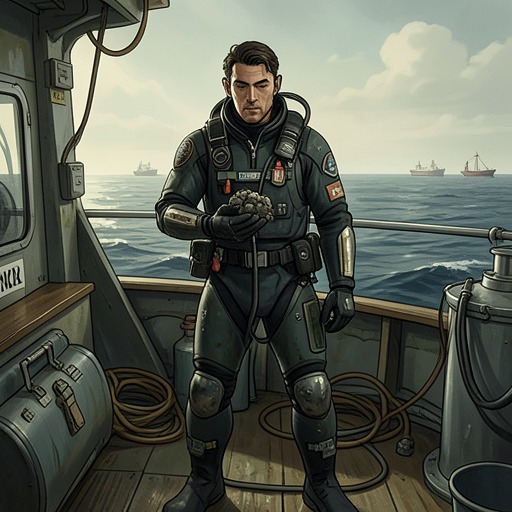
The decisive discovery is not helium-3 alone but a particular combination. Professors Dick Prestis and Michael Shaffer applied a process to manganese nodules recovered by the H.M.S. Challenger in the 1870s and found a unique mixture of helium-3 and deuterium. Their tests showed that this blend was compatible with a long-burning fusion reaction. In the novel’s account, the nodule is therefore more than a mineral deposit: it is a naturally formed container for an unusual fuel mix whose value conventional measures of manganese, nickel, and cobalt cannot explain.
Discovery and the Mariana Trench operation
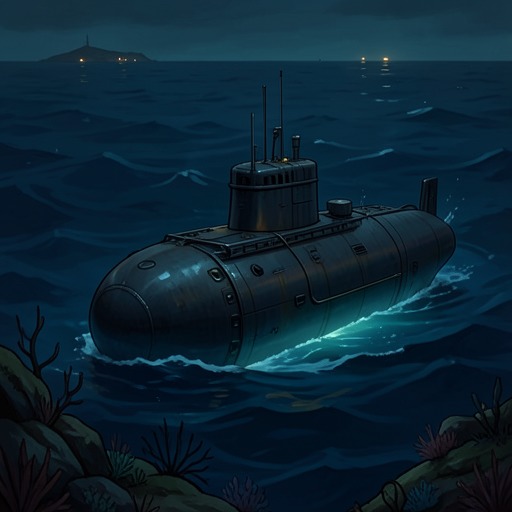
The fuel’s known deposits come from a precise, remote site in the Mariana Trench, which Prestis and Shaffer nicknamed Devil's Purgatory. For their secret dive, the physicists used the Seacliff, equipped with a long suction device to gather nodules from the seafloor. Singer suspects that vibrations from its vacuum pump attracted the Megalodon that attacked the submersible. The distinction matters: the novel links the machine used to collect the nodules to the danger, while presenting the fuel itself as the object of the expedition rather than establishing that the fuel attracted the animal.
Prestis managed to retrieve half a dozen nodules before the attack. The Navy confiscated them without recognizing their value. Years after the physicists’ deaths, Singer obtained several of these particular rocks and tested them in his own laboratory, where he uncovered their contents. His account makes the fuel’s history one of interrupted knowledge: the original samples were seized, their significance went unrecognized, and their scientific potential became legible only when Singer examined them again.
The resource also gives a hidden purpose to activity in the trench. Terry recognizes that the Mariana Trench lies within the boundaries of Exclusive Economic Zone laws and deduces that Singer is using the UNIS deployment as cover for illegal manganese-nodule mining. When Singer asks why the expense would be justified if he wanted only manganese, nickel, or cobalt, she infers that the nodules must contain something connected to fusion. He confirms that she has identified the real prize. The energy source thus changes the meaning of the operation: scientific systems and mineral extraction are entangled, but the stated research activity does not disclose what the mining is really meant to obtain.
Fusion breakthrough and political stakes
Singer describes helium-3 as the key to fusion energy, whose central technical obstacle is containing plasma at temperatures of about one hundred million degrees. He credits Prestis and Shaffer with the breakthrough rather than claiming to have made the discovery himself. In the later explanation given to Masao Tanaka, the fuel’s significance becomes more specific: within the shifting magnetic fields of Singer’s tokamak reactor, the new source stabilized and produced a sustained output of fusion energy. The breakthrough, in that account, overcomes the barrier that had kept fusion from becoming a sustained power source.
The scale of the advantage is measured against the International Thermonuclear Experimental Reactor, or ITER. The United States, Russia, Japan, and the European Union have spent years working toward that project; Singer’s discovery is said to place him thirty years ahead of ITER and the rest of the world. The fuel consequently carries power beyond the laboratory. Commander Adams argues that the United States cannot allow factions associated with the coalition financing Singer to monopolize fusion. The struggle is not merely over access to a rare substance but over the political control that could follow from controlling a viable source of sustained fusion energy.
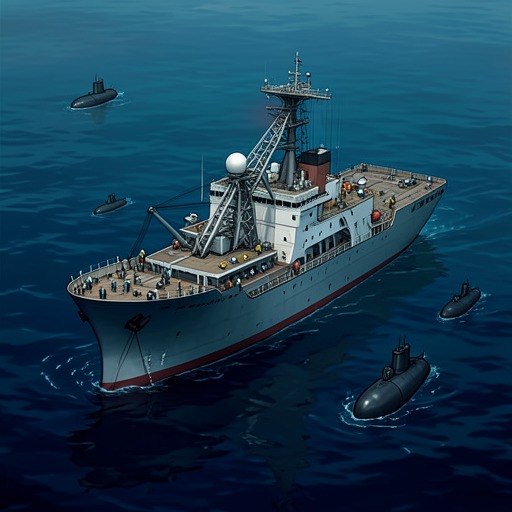
Ross’s briefing connects that struggle to the construction of the Benthos, Prometheus, and Epimetheus. He says that a secret meeting in Sudan between Singer and a small group of Islamic terrorists was learned about by Israeli intelligence, and that construction of the three vessels began six months later, financed through funds discreetly channeled into Geo-Tech Industries from Osama bin Laden’s organization. Ross further reports that an intercepted communication revealed Singer’s fusion discovery. These claims place the fuel at the center of a wider network of covert financing, research infrastructure, and international concern; the vessels and the trench operation are not presented as separate from the energy project.
Concealment and narrative significance
The fuel’s importance also helps explain why accounts of the Proteus disaster become contested. Terry’s official report to JAMSTEC states that no other vessels or predatory life-forms were involved and attributes the loss of hull integrity to piloting error, possibly after the starboard bow plane struck a black smoker. The report asks that deployment of the UNIS array continue and says the Tanaka Institute will consider the matter closed unless further information is requested. Later, Terry tells Benedict that she believes people aboard the Benthos and Goliath knew creatures had attacked the Proteus and that sonar records were altered so she would submit a clean accident report. Her accusation is presented as her belief, but it exposes how the supposedly technical record can shape what institutions accept as the cause of a disaster.
The fusion fuel binds those pressures together. Its geological origin makes the trench an extraction site; its performance in the tokamak makes the nodules strategically valuable; and its secrecy gives the operation consequences that extend beyond scientific discovery. Against that hidden resource, the sonar record, accident report, and official explanations become part of a struggle over what can be known and whose account will stand. The fuel is both a material discovery and the concealed fact around which the novel’s scientific ambition, illegal mining, and political conflict converge.