Mac Mackreides
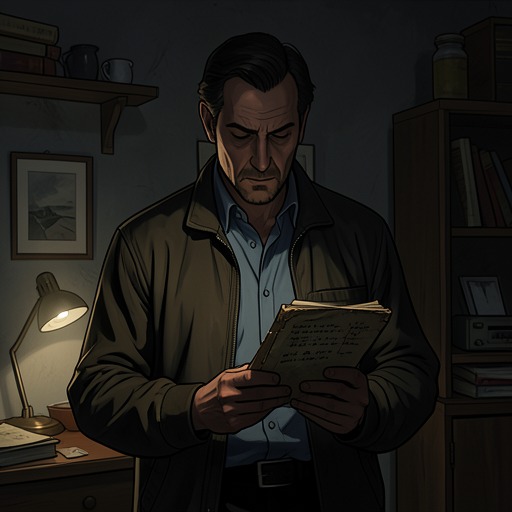
The TrenchMac Mackreides is the helicopter pilot and one of Jonas Taylor’s most direct allies, serving as both a field operative and a blunt counterweight to Jonas’s self-destructive fixation on the Megalodon. His counsel comes from personal experience: Mac has lived through combat, loss, and recurring nightmares, and he recognizes in Jonas a grief that has turned into a private war. He does not remain only a voice of warning, however. When a rescue or a recovery becomes urgent, he acts quickly, and his loyalty is clearest when Jonas is at risk.
Identity and Role
Mac’s position is established in a tense discussion about the shark’s expected route. When Mike Maren dismisses Jonas’s judgment as guesswork and presents a forecast based on SOSUS data and calculations of the predator’s movements and feeding, the captain identifies Mac as the chopper pilot. Mac has already backed Jonas’s warning about the dangerous waves, placing him on the side of caution even as Maren argues that the Megalodon will be well-fed and sluggish by the time it reaches Cape Disappointment. The disagreement reveals a practical divide: Maren trusts his predictive model and plans to capture the animal, while Mac supports Jonas’s concern about the conditions in which that plan will be carried out.
Mac’s work in the air gives that caution a concrete purpose. He pilots the helicopter during searches and recovery attempts, judging the aircraft’s position against changing swells while Jonas handles the exposed work. The partnership depends on complementary skills rather than identical temperaments: Mac can be sardonic and forceful, but in the field he communicates urgency plainly and keeps the operation moving.
Combat Trauma and Counsel to Jonas
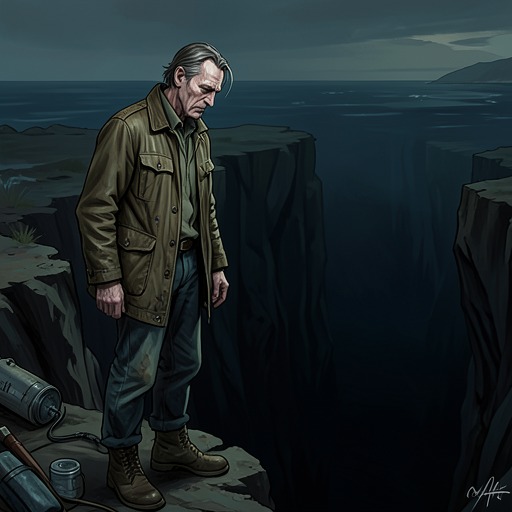
Mac’s most consequential personal disclosure comes when he tries to stop Jonas from treating the hunt as a way to settle his own past. He tells Jonas that he once led his platoon into an ambush during his third week in the jungle and lost more than half his men. He blamed himself and repeatedly relived the night in dreams. When Jonas asks whether the dreams still occur, Mac says they return only occasionally and no longer wake him screaming. He puts an arm on Jonas’s shoulder as he explains the comparison: Jonas has declared war on an animal that is merely trying to survive, and his obsession has gathered his losses and years of pain around the creature.
The scene makes Mac’s advice more than a general warning. He speaks as someone who has also carried responsibility for the dead and been caught in a cycle of blame, but whose nightmares have eased with time. He urges Jonas not to throw his life away simply because he cannot yet see a way through his grief. Mac’s own recovery is not presented as complete or effortless; the dreams still visit him. What he offers is evidence that their intensity can diminish, and an insistence that Jonas’s present despair need not dictate what he does next.
Earlier, Mac tries to push Jonas toward the immediate task rather than let fear govern the mission. He tells Jonas that he knows what must be done and will do it, and argues that allowing the fish expert to attempt the capture could put the Megalodon in Jonas’s sights. Jonas rejects the intervention and tells Mac and Richard Diefendorf to leave the boat. The exchange exposes the limit of Mac’s influence: his confidence in his friend does not make Jonas receptive, and the urgency of his encouragement can meet an equally absolute refusal.
Friendship in Action
When Mac arrives by helicopter aboard the William Beebe, he greets Jonas by assessing his recovery and teasing him about the private nurse who has been looking after him. The remark is pointed, but the familiar banter establishes a friendship in which concern and provocation coexist. Later, at 7:35 a.m., Mac confronts Jonas about a late night and questions whether his attention is on avenging Richard Diefendorf’s death or on Celeste Singer. The accusation is severe, but it continues the same pattern: Mac challenges Jonas when he thinks grief or distraction is taking precedence over the danger at hand.
That frankness is matched by action during a search for people in kayaks. After a rescued woman reports two more kayaks half a mile northwest, Mac turns the helicopter toward the indicated area. Once they spot a kayak, he brings the aircraft down to hover just above the water and tells Jonas to move quickly. Jonas opens the cargo-bay door and reaches for an unconscious man; Mac’s piloting makes that dangerous recovery possible. The scene shows their roles working in tandem, with Mac holding the aircraft steady while Jonas reaches beyond it.
Mac’s commitment becomes still more decisive when Jonas believes he is about to be eaten. As Harry and Mike Maren wait by the winch, Mac leaves the cockpit, runs to the mechanism, and reverses it. The action interrupts Jonas’s expectation of death and turns Mac’s loyalty into a direct intervention. Elsewhere, Mac also forcefully restrains Mike Maren inside a helicopter compartment. The episode shows that Mac’s willingness to act is not confined to protecting Jonas; he is prepared to confront a fellow participant when circumstances bring them into conflict.
The Hunt and Its Unresolved Course
After the loss of Richard Diefendorf, Mac’s concern sharpens into an explicit demand that Jonas remain focused on avenging his friend rather than become distracted by Celeste Singer. His language frames the hunt as a test of attention and purpose, even as his earlier counsel warns that revenge against the Megalodon may be consuming Jonas. Mac thus occupies a productive tension in Jonas’s life: he supports the effort against the predator while questioning the personal fixation driving it.
In a later scene, Jonas and Mac stand at the stern of the damaged William Beebe, 625 nautical miles northeast of Devil’s Purgatory. Plywood nailed across the deck serves as a temporary barrier where the normal rail has been damaged. Against that improvised repair and the ship’s wake, Mac asks when the Megalodon will enter the Trench. Jonas answers that Angel attacked a sperm whale off the coast of Japan and, given her rate of travel, may arrive within a couple of hours. The exchange returns Mac to the practical business of tracking the animal, but the damaged ship and the uncertain approach keep the threat immediate.
The supplied scenes do not settle Mac’s ultimate fate or the outcome of the hunt. They establish instead what he repeatedly contributes: skilled piloting, blunt scrutiny, a hard-earned account of surviving guilt, and action when Jonas’s life is in immediate danger. His friendship does not erase Jonas’s resistance or resolve their differences over the hunt. It gives Jonas a companion willing both to challenge his obsession and, when necessary, to pull him back from its consequences.