Masao Tanaka
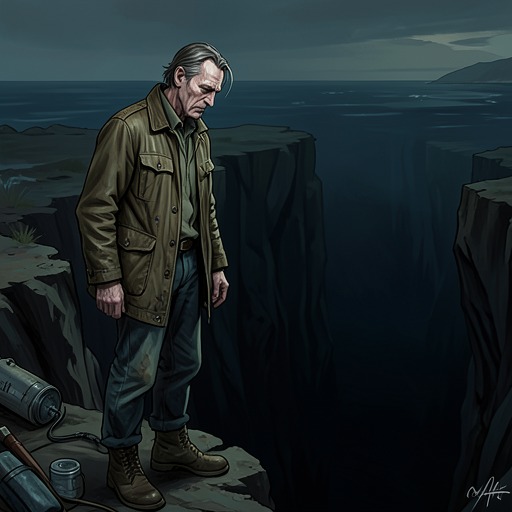
The TrenchMasao Tanaka is the founder of the Tanaka Oceanographic Institute, a marine-research leader, and the father of Terry Taylor. His decision to bring Jonas Taylor back to the Mariana Trench sets the new expedition in motion; later, as his daughter is endangered and his institute collapses into the interests of Geo-Tech Industries, he discovers that the research contract he helped secure was also used as bait in a covert operation.
Identity and Scientific Ambition
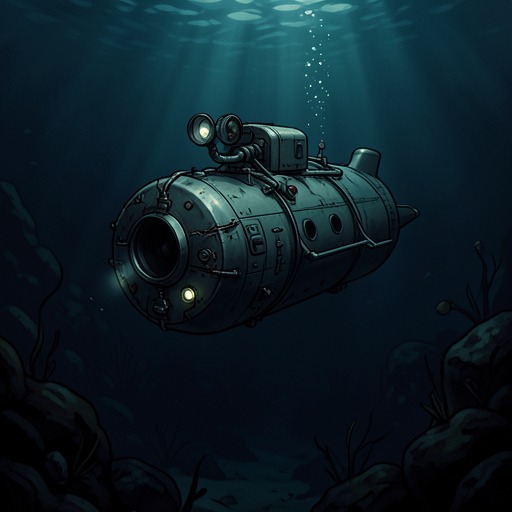
Masao founded the Tanaka Oceanographic Institute and pursued research and infrastructure on a scale that joined scientific inquiry to substantial financial and political commitments. He was building an artificial lagoon off the coast of Monterey, California, as a man-made habitat for the study of whales. To finance the project, he entered a joint venture with the Japanese government to deploy an array of seismic-detection robots on the floor of the Mariana Trench. Those instruments, known as the UNIS array, gave the institute a reason to return to the trench when several devices malfunctioned and one needed to be retrieved.
The expedition was not prompted by Masao’s belief in Jonas’s Megalodon theory. Jonas was an old friend and mentor, but Masao had not been interested in the possibility that the prehistoric sharks still existed. He needed an experienced pilot to recover an instrument, and Jonas was the person whose knowledge could serve that immediate purpose. That distinction makes Masao’s offer both practical and consequential: in extending a professional opportunity to a man whose career had been damaged by his earlier trench disaster, he also reopened a part of Jonas’s past that Jonas had tried to leave behind.
Masao’s institute tied scientific work to institutional survival. The lagoon required financing; the UNIS project required cooperation with the Japanese government and JAMSTEC; and continued access to the trench depended on keeping the agreement in good standing. His later actions show how exposed that arrangement left the institute to forces it did not control.
Jonas, Terry, and the Return to the Trench
Masao’s invitation helped Jonas return to the Mariana Trench after years of professional discredit and fear. The mission ended in a violent encounter with a Megalodon: Masao’s son died, Jonas killed the creature, and a female pup was captured in the Tanaka lagoon. Jonas’s actions brought him back into public favor, and Masao made his new son-in-law a partner at the institute. A year later, the lagoon opened, with the captured pup becoming its most popular live exhibit. The family’s success and the institute’s public profile were therefore bound to the very creature Jonas had once been mocked for believing in.
That success did not protect them from the costs of the capture. Eight months after the lagoon opened, Jonas and the institute became defendants in a $200-million class-action lawsuit brought by relatives of people killed by the Megalodon. The suit placed Masao’s institution under pressure at the same time that his family faced an intense public dispute over the expedition. Later, when Jonas came to the pier limping and carrying a duffel bag, Masao sat with him and asked why he was going back. Jonas’s injured leg made the danger visible; Masao’s question registered his concern without turning it into a command.
Terry’s choices sharpen that concern. Against Masao’s wishes, she entered the Mariana Trench and remained aboard the Benthos. A fax from the Goliath informed him that she had entered the trench nearly a week earlier; later, he learned that she had decided to stay aboard the Benthos for another week. When Jonas prepared to leave, Masao wished he would reconsider. Jonas insisted that he and Mac were a team and that he would not go without him. Masao did not approve, but he did not try to prevent the departure. He told Jonas that he and Terry would be waiting for him to come home in one piece, making the expedition’s personal stakes plain: for Masao, the mission was not an abstraction about exploration or contracts, but a danger to the people he loved.
Institutional Pressure and a Father's Alarm
Masao’s responsibilities converged when JAMSTEC required the institute to investigate the Proteus accident. The requested work was specific: Jonas was to board the Goliath and analyze the sonar records. Masao understood that failing to deliver the report on time could terminate the UNIS contract. The inspection and report were thus linked: the institute needed to examine the wreckage, but its continued ability to conduct the wider project depended on answering to its Japanese partners.
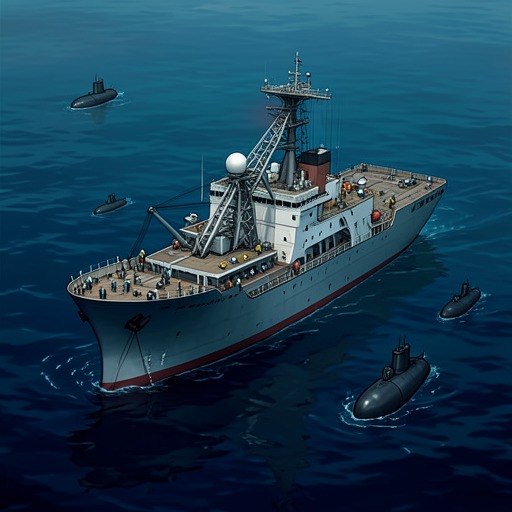
In discussions with Benedict Singer, Masao presented the request as a demand for a more thorough investigation, not an attempt to insult or challenge Geo-Tech Industries. He stressed that the Mariana Trench area lay within an exclusive economic zone under American jurisdiction and that the institute had been permitted to reenter through its ongoing JAMSTEC contract. When Singer objected that his organization had invested more than a billion dollars in the Benthos and its fleet, Masao remained conciliatory. He acknowledged the value of Singer’s work and explained that JAMSTEC could terminate its agreement if the request was refused. His diplomacy reveals how little leverage the institute had: Masao could relay the consequences, but he could not make the partnership secure by goodwill alone.
At the same time, Masao learned that Terry had gone into the trench against his wishes. While overseeing the recovery of the damaged canal door, he imagined the force the creature must have used against it. The strain was followed by dizziness, numbness in his left arm, shortness of breath, and a crushing pain in his chest; he fell to the floor during a heart attack. The sequence brings the danger of the deep world into his own body. He had been managing a damaged structure and worrying about his daughter, but the physical consequences abruptly stopped him from acting.
Afterward, Masao was still in a private room at Valley Memorial Hospital when Sadia Kleffner found him sitting up in bed with a nurse attending him. He asked whether anyone had heard from Terry and was told she remained on the Benthos. Learning that Celeste had specifically requested the AG-Two, he asked Sadia to contact Commander James Adams at the naval base in Guam and arrange for him to travel there. When Sadia pointed out that the doctor had not discharged him, Masao removed his IV and discharged himself. His recovery is shown not as a return to safety but as a refusal to remain a passive observer while his daughter was still in the trench.
The Buyout and the Hidden Design
At the naval base in Guam, Masao met Commander James Adams and Dave Ross. Their explanation exposed the political purpose behind the expedition. The Central Intelligence Agency had feared that Geo-Tech would move the Benthos into international waters and enter the Mariana Trench without detection. Through informants, Mossad learned that Benedict Singer was seeking a scientific expedition that would provide a legitimate reason to enter the trench, while allowing the Goliath to shadow the Benthos on the surface as a safety precaution. The UNIS project, Masao realized, had supplied precisely that opportunity.
Ross confirmed that the new UNIS project and its lucrative JAMSTEC contract had been used to give Benedict a legitimate route into the trench. Masao then connected this plan to the institute’s financial ruin. He accused the officials of arranging the class-action lawsuits, the excessive monetary awards, and the court’s refusal to allow an appeal in order to bankrupt his company. He understood the buyout as part of the same design: the institute had been used to entice Geo-Tech into acquiring it, giving the company a legal pretext for entering the trench. Commander Adams tried to calm him and said the Central Intelligence Agency had assured him that reparations would be made, but the promise did not undo what Masao had just learned.
This revelation recasts Masao’s earlier effort to preserve the JAMSTEC agreement. The contract he defended to Benedict was not only a scientific partnership or an institutional lifeline; it had also been useful to officials who wanted Geo-Tech to enter the Mariana Trench under an acceptable cover. Masao had negotiated as though the main danger were the loss of the contract. He learns instead that the contract, the lawsuits, and the institute’s sale belong to a larger scheme in which his organization and its financial vulnerability were instruments.
Narrative Role and Significance
Masao’s trajectory connects the expedition’s intimate and institutional consequences. He brings Jonas back for a practical mission, welcomes him into the institute and family, and later watches both relationships become entangled with the trench’s danger. His concern for Terry is expressed through questions, attempts to make contact, and the urgent decision to seek help even while recovering from a heart attack. His conduct with Jonas is similarly personal but not possessive: he warns him, wishes he would reconsider, and then leaves the decision to him while asking him to return alive.
The contrast between Masao’s stated obligations and the concealed motives of powerful organizations gives his discovery its force. He tries to keep a research partnership intact through tact and candor, while Geo-Tech’s ambitions and the Central Intelligence Agency’s plan make the institute’s position vulnerable to manipulation. His final confrontation turns the story’s scientific infrastructure into evidence of political design: the UNIS array and its contract were genuine research tools, but they also helped furnish the cover that brought Geo-Tech to the trench. Masao’s importance lies in seeing that his institution did not merely suffer the consequences of the expedition; it was made part of the machinery that set it in motion.