Megalodon capture operation
The TrenchThe Megalodon capture operation was Jonas Taylor’s return to the Mariana Trench, where a mission to retrieve a damaged seismic robot became a fatal encounter with two Megalodons and a turning point in his public life. The operation joined scientific recovery to Jonas’s hope of redemption, but its consequences were divided: a member of the Tanaka family died, Jonas’s career was restored, and his decision to pursue capture rather than simply kill the female remained a source of guilt.
Causes and Background
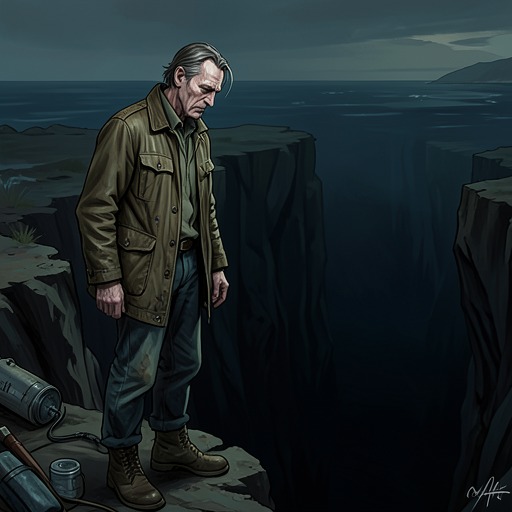
Years before the operation, Jonas had encountered a Megalodon in the trench and fled upward in disregard of protocol. The rapid ascent malfunctioned the submersible’s pressurization system, killing both scientists aboard and ending Jonas’s career as a deep-sea pilot. He spent the next seven years trying to establish that the creature existed, giving up piloting to study paleobiology. Although he developed a theory that Megalodons had migrated to the warmer abyssal waters of the Mariana Trench during the Last Ice Age, colleagues dismissed his work and institutions barred his papers. This history made the proposed return more than a technical assignment: it tested whether Jonas could go back to the place associated with both his terror and his professional failure.
The opportunity came from Masao Tanaka, Jonas’s old friend and mentor and the founder of the Tanaka Institute. Masao was developing an artificial lagoon off the Monterey coast as a habitat for whale research, with a joint venture with the Japanese government helping finance the project. Several UNIS seismic-detection robots deployed on the Mariana Trench floor had malfunctioned, and Masao needed Jonas to help retrieve one. Jonas initially refused, unable to face the trench. With his first marriage deteriorating and his career in disarray, however, the possibility of redemption became difficult to resist. He later acknowledged that Masao had persuaded him to go, but that he had also wanted to return.
Terry’s involvement sharpened the decision. Masao’s daughter was prepared to take her brother’s place on the mission if Jonas would not accompany him. Jonas therefore went down in a one-man submersible to escort Masao’s son and recover the damaged robot. His later account did not present this choice as sound judgment: he recognized that ego and emotion had impaired his decision-making, and that entering the abyss alone had been reckless even if the Megalodon had not been there.
The Encounter in the Trench
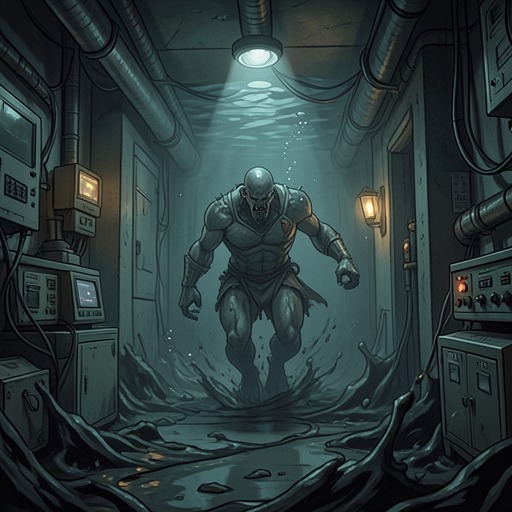
The danger came not from one animal but from two. The first Megalodon attacked the mission and killed Masao’s son. During the attack, the animal became tangled in the submersible’s cable. The surface ship, unaware of what had happened below, began hauling the cable upward, drawing the entangled creature toward the surface. The recovery operation had thus turned into an unintended ascent of a living predator, with the people at the surface not knowing what the cable was bringing up.
A second animal appeared: a larger female. She began feeding on the helpless male and ascended through the cold water. The encounter overturned the premise of a controlled scientific retrieval. The robots and the one-man submersible had taken Jonas back to the trench for a defined task; the animals’ movements instead dictated the crisis, while the ship’s unwitting haul brought the first creature out of the depths. Jonas later identified the female as Angel’s mother, connecting this earlier operation to the animal encountered in the later events of the story.
The operation ended with Jonas forced to kill a Megalodon he had wanted to save. In recounting the decision, he singled out his attempt to capture the female rather than kill her as his greatest mistake. The evidence presents both the immediate loss and the ethical conflict: Jonas had spent years arguing that the creature existed, yet the encounter placed him in a position where preserving it and protecting people could no longer be treated as the same objective. His later remorse also reached beyond the mission’s immediate casualties, as he associated his choices with the deaths of other innocent people.
Consequences and Aftermath
The operation transformed Jonas’s standing. Once ridiculed for his research, he was suddenly celebrated as the man who had killed a Megalodon, and his career was vindicated almost overnight. Talk shows, television specials, and reporters followed; the encounter became public spectacle as well as scientific proof. The story’s reversal is stark: the same animal that had made Jonas’s claims seem impossible made him internationally famous when its existence could no longer be denied.
The return also reshaped Jonas’s private and working life. He and Terry married, and Masao made Jonas a partner at the Tanaka Institute. A year later, the lagoon in Monterey opened, with a captured female Megalodon pup as its most popular live exhibit. The scientific success and public attraction were inseparable from the danger that had produced them. Eight months after the lagoon opened, Jonas and the Institute became defendants in a $200-million class-action lawsuit brought by relatives of people killed by Megalodons. Terry was four months pregnant when the trial began, and the proceedings drew intense media attention. Thus the operation’s fame did not settle its moral consequences: it helped establish an exhibit and a celebrity, while also making the human cost a public legal and personal burden.
Narrative Significance
The operation is a reversal of Jonas’s first descent. His earlier panic ended his piloting career and left the existence of the Megalodon unproven; this return confirmed his theory and restored his professional reputation, but it did so through another death and a choice he later regretted. The sequence resists a simple triumph narrative: vindication arrives alongside bereavement, and the successful capture enterprise grows from an encounter Jonas himself associates with preventable harm.
The event also establishes the tension between scientific discovery and control. The damaged UNIS robot gives the descent a practical purpose, while Jonas’s wish to save the Megalodon invests it with a larger ambition. Yet the cable, the unknowing ship, and the female’s arrival expose how little control the mission has over what it brings upward. The lagoon’s later popularity extends that tension into a public attraction: the animal becomes a spectacle, while the lawsuit recalls the people killed in the same chain of events. In Jonas’s recollection, the defining outcome is therefore not fame alone, but the lasting gap between what he hoped to protect and what his decisions cost.