Pacific Ocean
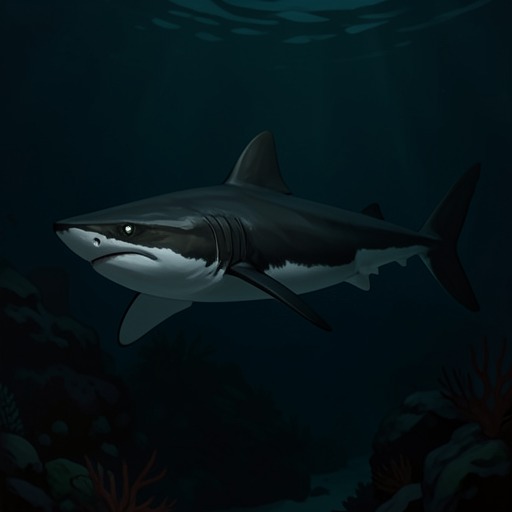
The TrenchThe Pacific Ocean is both the vast natural setting beyond the novel’s constructed environments and the medium through which its characters encounter danger and pursue knowledge. At the edge of the Pacific, the artificial Tanaka Lagoon turns ocean life into public spectacle; beneath its surface, Jonas Taylor enters the water and approaches the barrier separating the lagoon from the open sea. Farther along the coast, signals carried through a monitoring network make the ocean a field for tracking a Megalodon.
Setting and Built Boundaries
The Pacific meets the man-made Tanaka Lagoon, an oval aquarium encircled by a concrete arena. A channel at the lagoon’s western midpoint links it to the ocean: the passage is eighty feet deep and a thousand feet long, formed by parallel concrete seawalls. At its ocean end, mammoth double doors of reinforced steel hold back the lagoon’s star attraction. The arrangement makes the Pacific more than a backdrop: it is the open water beyond a carefully engineered boundary, and the force against which that boundary is defined.
Encounters at the Water’s Edge
The ocean appears as a calm surface viewed from the arena and, elsewhere, as a view through windows. Looking out at its glasslike expanse, Terry Taylor says she is looking forward to meeting Benedict Singer. The scene places a conversation about a powerful, manipulative man against the Pacific’s stillness, without making the sea itself part of their exchange.
For Jonas Taylor, the water becomes immediate and physical. He steps from a boat and plunges feetfirst into turbid water; bubbles briefly blind him as he descends. At thirty feet, he keeps close to the seawall, carried through the channel by a strong current until he reaches the sealed steel doors. The dive moves from open water into a human-made passage and ends at the immense barrier, making the boundary between lagoon and ocean something Jonas must confront underwater.
Tracking Across the Pacific
At Monterey, California, the research vessel William Beebe is fitted with a twenty-five-foot satellite communications antenna designed to connect it to SOSUS, the United States Navy’s network of undersea microphones. The system detects low-frequency signals from a transmitter attached to the Megalodon. Fiber-optic cable carries those sounds to processing stations along the Pacific coast; from there, the new antenna allows the information to be sent by satellite to computers aboard the vessel.
This network turns the Pacific into a connected tracking environment. The signal can help the crew follow the animal nearly anywhere in the world, extending the story’s oceanic scale beyond the lagoon and any one coastal location. The ocean is at once the real water that Jonas enters, the expanse beyond the lagoon’s steel doors, and the medium through which the hunt becomes legible to the people aboard the William Beebe.