Second chance and redemption
The TrenchSecond chance and redemption names the change Jonas Taylor claims after coming close to death: he reinterprets his survival as an opportunity to stop letting guilt, anger, and the pursuit of Megalodons govern his life. The idea is both a personal reckoning and a disputed turning point. Jonas declares himself reborn and retires from the hunt, but Celeste Singer reminds him that the escaped shark and the deaths connected to the operation remain unresolved. His decision marks a break with his former obsession, not proof that every responsibility has disappeared.
Recognition at the Bedside
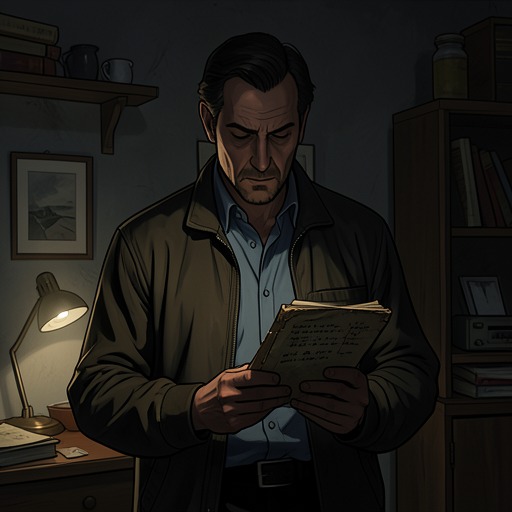
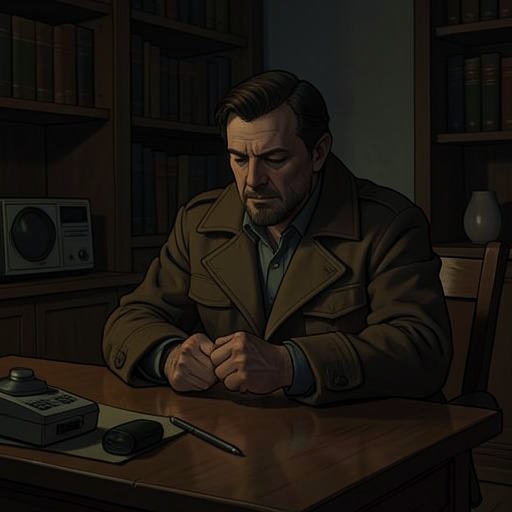
Three days after the events that nearly killed him, Jonas learns from a nurse that his friends are back aboard their boat in the Bering Sea and have been kept informed by radio. Once she leaves him alone, he closes his eyes and lets the news sink in. His first response is not triumph at having survived but a sudden, overwhelming sadness. He thinks back over the eleven years since he first escaped death in the Mariana Trench, making the stretch of his life that follows part of the reckoning.
The bedside scene gives the concept its decisive trigger. Jonas understands his survival not as a return to the same life but as a chance to reconsider what that life has become. He privately frames the moment in religious terms, thinking that God is giving him another chance. That belief supplies meaning to a survival he cannot treat as merely physical: he has to decide what to do with the time he has been given. The change begins as a recognition of the damage already done, before it becomes a declaration about what he will do next.
The History He Reinterprets
Jonas’s retrospective account connects his career and his private losses to a single burden of guilt. He says that guilt pushed him into becoming a paleobiologist because his ego needed to prove to the world that his actions aboard the Seacliff had been justified. His work on prehistoric creatures was therefore more than a scientific preoccupation in his own explanation; it became a means of defending his past. The need to vindicate himself kept the old event present in his life.
He also acknowledges the cost of that preoccupation. Jonas says his fixation on the creatures destroyed both of his marriages, and that blind hatred brought him to the brink of death. These admissions revise the story he has told himself about the Megalodons: they cannot account for every failure or loss when his own anger and guilt have helped shape the course of his life. The recognition does not erase what happened aboard the Seacliff or the consequences of the shark’s escape. Instead, it changes where Jonas locates responsibility for his choices and what he believes he must do next.
Confession and Retirement
In his conversation with Celeste, Jonas turns this private recognition into an admission. He tells her that his friendship with her mattered, but rejects the idea of a romantic future while Terry Taylor remains part of his life. More consequentially, he accepts Celeste’s charge that he is obsessed. Terry and Mac had told him the same thing for years, he says, but he ignored them until he nearly died. He also accepts Mac’s comparison of him to Ahab: Jonas had been prepared to throw his life away merely to kill an oversized fish. He apologizes for having misled Celeste, linking redemption to honesty as well as to the decision to stop hunting.
Jonas then announces that he is finished with Megalodons and has officially retired. He describes his hatred and guilt as having died with him on the table three days earlier, and calls himself a new Jonas Taylor, reborn. The language makes his recovery a dividing line: the man who pursued the shark to settle the past is not, he insists, the man who will continue living. His resolution is explicit, but it is also made while he is recovering in bed, in conversation with someone whose immediate interests conflict with his withdrawal.
Responsibility and the Unfinished Change
Celeste challenges the retirement by invoking Jonas’s responsibility to the Institute and to those who died. Her appeal exposes the difference between his personal understanding of a second chance and the obligations others believe remain. Jonas rejects the idea that he must keep pursuing the creature simply because he has been involved in the crisis. He points out that he had already helped capture one Megalodon and kill another, and argues that his involvement has gone far enough. His refusal is not based on believing the danger has ended: he says the escaped shark has not been recaptured.
He further tells Celeste that he had warned her to drug the creature until the gateway could be sealed permanently. In his view, the failure to follow that advice matters to the question of who must now act. He says Michael Maren can handle the situation, judges Angel too large to capture, and warns that her estrus makes her more dangerous. His practical advice is to keep searching the Bering Sea, where he expects her to turn up eventually. Thus he withdraws from direct action while still assessing the threat and offering guidance.
The episode leaves redemption deliberately short of a clean resolution. Jonas’s declaration establishes a genuine change in how he understands his past: he no longer wants hatred and guilt to dictate his life, and he refuses to make another hunt the measure of his worth. Yet Celeste’s plea, the uncaptured shark, and the deaths she invokes keep the external consequences in view. A second chance here is a choice to live differently, not a claim that the past has been repaired or that others must accept his decision. The tension between personal release and continuing responsibility is what gives his promised rebirth its force—and leaves its durability to be tested.