Terry's JAMSTEC report
The TrenchTerry Tanaka-Taylor’s JAMSTEC report turns the loss of the Proteus into an official-sounding case of pilot error. Its significance lies in the gap between what it claims and what the crew experienced: a document intended to secure Terry’s release also gives Benedict Singer a written account he can use to confront her about the deaths and risks aboard the expedition.
Form and Contents
Terry rereads the report and its technical data for the fourth time while considering whether to email them to the Japanese marine science organization. The draft is addressed to Dr. Tsukamoto, its director, and identifies the matter by the reference number MT-052201-023. These formal details lend the message the appearance of a considered institutional assessment rather than an improvised excuse.
The report says that a review of the May 22 accident in the Mariana Trench found no evidence of other vessels or predatory life-forms. It invokes sonar records from both the Benthos and its surface vessel, Goliath, and gives a specific interval for those records: 10:34:17 through 10:56:04. According to Terry’s stated evaluation, nothing unusual appeared before the Proteus lost hull integrity. The report attributes the accident to piloting error, most likely because the starboard bow plane struck a black smoker, and refers to photographs of the debris field as supporting material.
The account also manages the institutional consequences. It says Geo-Tech Industries has begun restitution for the four victims’ surviving families, asks that deployment of the UNIS array continue, and indicates that the Tanaka Oceanographic Institute will consider the matter closed unless JAMSTEC requests further information. Technical evidence, compensation, and a request to continue the project are thus assembled into one compact conclusion: the accident is explained, its victims are being addressed, and the larger mission should proceed.
Contradiction with the Accident
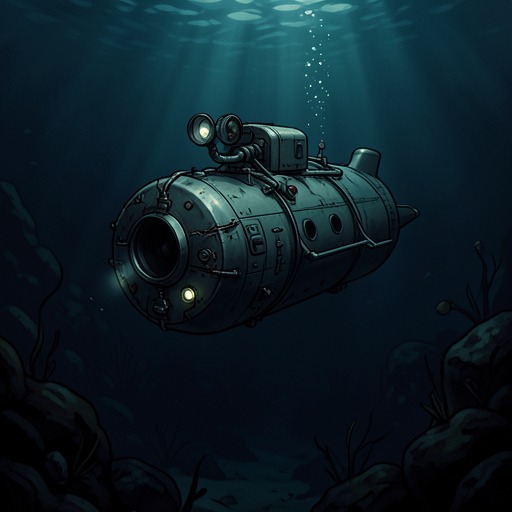
The report’s central denial conflicts with the events aboard the Proteus. During the voyage, the submersible pitches violently after being struck; Barry Leace says that the crew did not hit anything and that they were hit. As he tries to regain control, Linda warns that a plate is loosening. The crew hears metal grinding, and Barry detects seawater at a rivet. Later, he identifies the immediate danger as a loss of plate integrity, while another strike throws the crew across the cabin.
Against those events, the report’s assertion that no predatory life-forms were involved is not a cautious interpretation of ambiguous sonar data. It suppresses the danger the crew encountered. Its alternative explanation—the starboard bow plane striking a black smoker—recasts a violent external attack as a navigational mistake. The divergence is especially stark because the document presents sonar records and debris photographs as the basis for its conclusion: the report’s technical form does not make its account true, but makes the false account administratively legible.
Purpose and Transmission
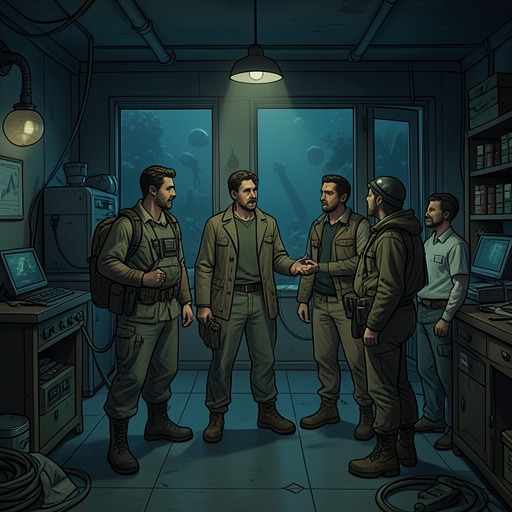
Terry’s actions reveal the report’s immediate practical purpose. She prints a copy for Benedict, enters JAMSTEC’s email address, and sends the report through Goliath. As she does so, she recognizes that the account is a lie and sees it as the only way Benedict will let her off the ship. The report is therefore not simply a retrospective explanation of the accident. It is a calculated submission to an institution and a maneuver within Terry’s confinement aboard the Benthos.
Those purposes pull in different directions. Sent to JAMSTEC, the report asks for the UNIS deployment to continue and offers an official resolution of the accident. Prepared for Benedict, it is part of Terry’s effort to leave his vessel. Its language serves both by making the accident appear settled, even though the explanation depends on withholding what happened. The copy printed for Benedict also makes the report available within the very relationship it is meant to help Terry escape.
Reuse and Significance
Benedict later invokes the report during an argument about the expedition’s human cost. He reminds Terry that her submission to JAMSTEC attributed the Proteus loss to pilot error, challenging her when she asks how many lives the mission may consume. The document thus returns as more than a private deception: its official version of events becomes part of Benedict’s case for continuing the work and of his confrontation with Terry over responsibility.
That reuse sharpens the report’s irony. Terry writes that the accident should be considered closed, but the report does not close the moral dispute. Instead, it preserves a version that can be cited against her while the expedition’s dangers continue. The gap between the document’s orderly findings and the Proteus crew’s experience exposes how technical authority can help contain inconvenient evidence, protect an ongoing project, and shift blame onto a pilot even when the reported cause contradicts what happened aboard the submersible.