Court offices
The TrialThe Court offices in Franz Kafka's The Trial are the bureaucratic and physical heart of the legal apparatus that ensnares Josef K. Housed in the attics of tenement buildings in poor suburbs, these offices are cramped, airless, and labyrinthine, staffed by a hierarchy of officials who operate under a system of secret proceedings and unassailable authority. Their squalid, makeshift appearance belies their immense power, and they serve as the primary setting for K.'s encounters with the court's lower functionaries, revealing the organization's paradoxical nature: simultaneously shabby and omnipotent, arbitrary and inescapable.
Location and Physical Description
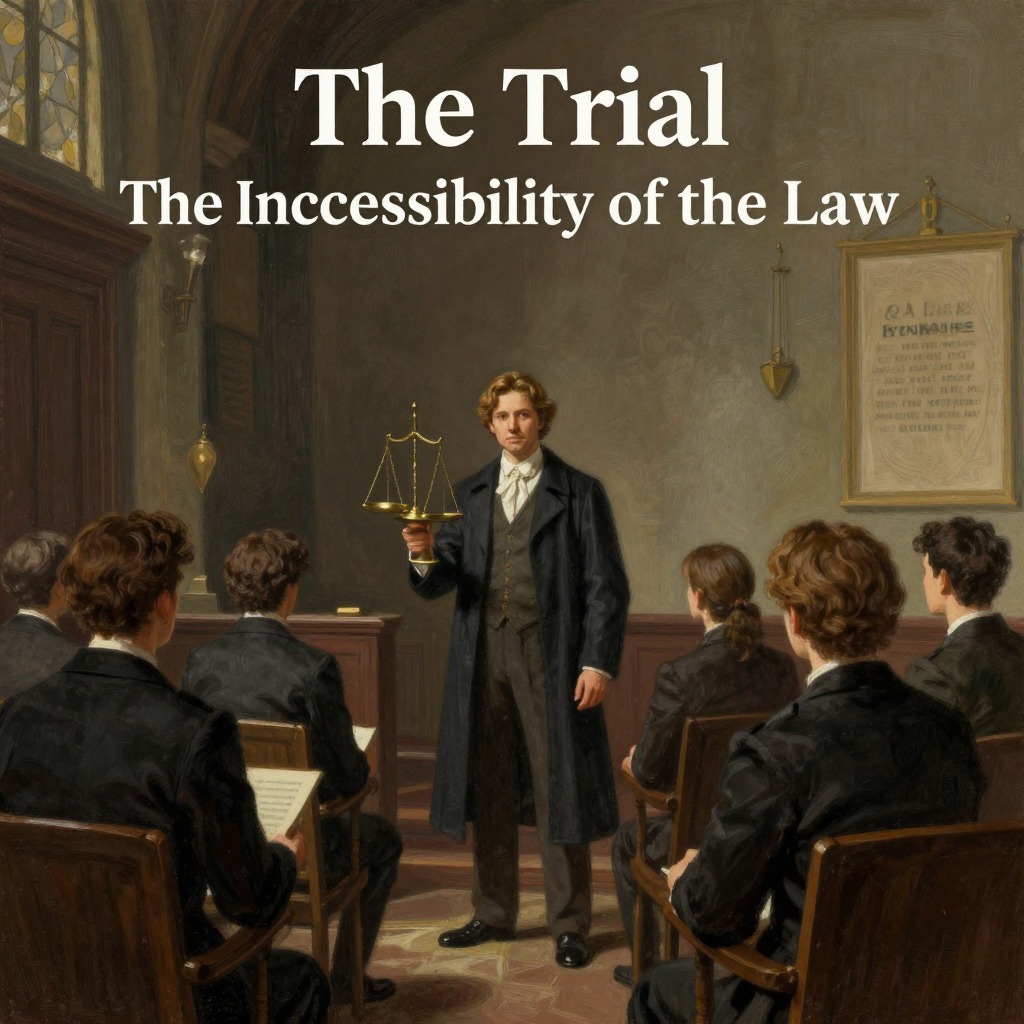
The Court offices are not located in a grand, imposing building but in the attics of tenement blocks in the poorest districts of the city. K. first discovers them on Juliusstrasse, a street of monotonous, grey buildings occupied by poor people, where the entrance is a tall gateway intended for delivery wagons. The offices themselves are reached by narrow, steep stairways, and the rooms are constructed of rough wood, with gaps between the planks. The air is stifling and oppressive, heated by the sun beating down on the roof, and the only light comes from small, high windows or from candles. In one such attic, the offices consist of a long corridor with roughly made doors leading to separate departments, separated from the corridor by wooden bars rather than solid walls. The waiting area is furnished with two rows of long wooden benches, where defendants sit, their hats placed under the bench for lack of coat hooks. The overall impression is one of decay and neglect, a stark contrast to the immense power the court wields.
The Court's Bureaucratic Culture
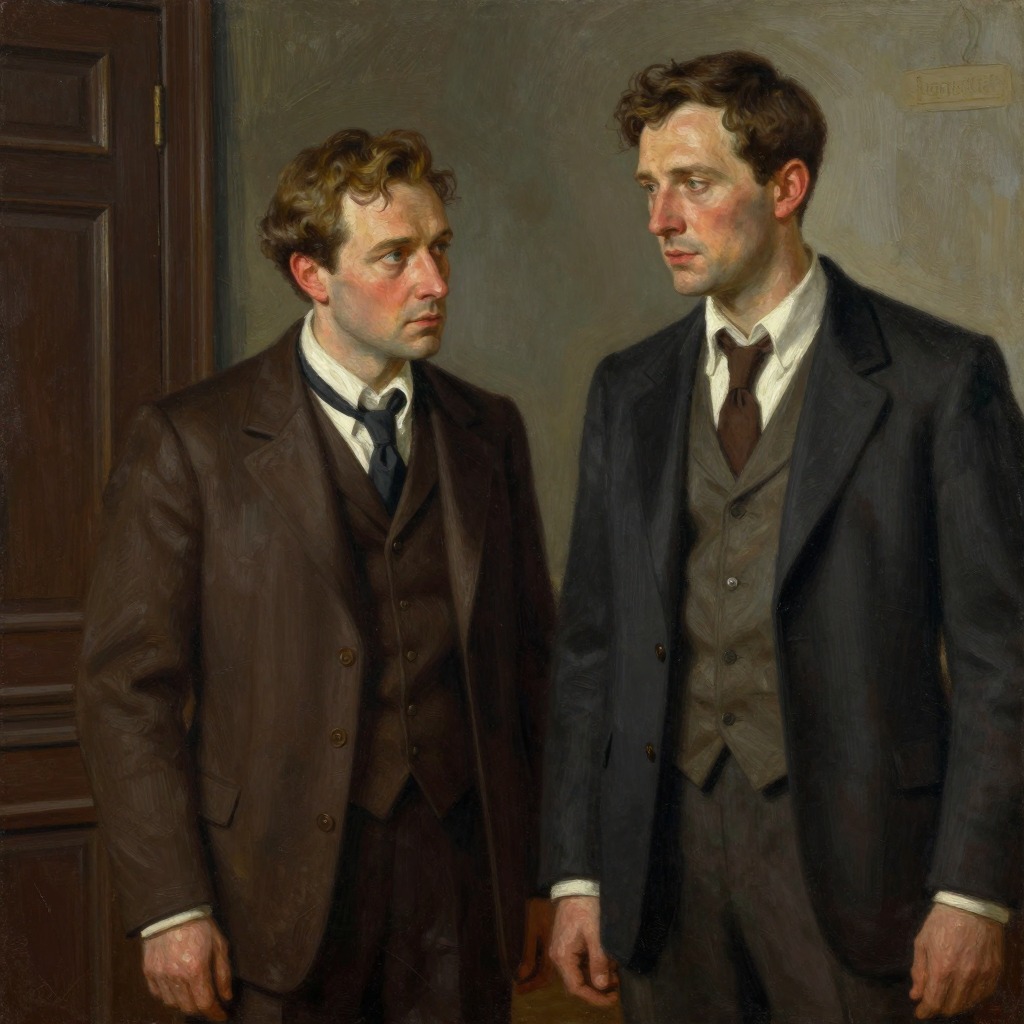
The offices are the domain of a vast, hierarchical bureaucracy. The officials, identifiable by the gold buttons on their civilian coats, are overworked and irritable, often appearing in a state of exhaustion. The information-giver, a man elegantly dressed to make a good first impression on litigants, explains that the officials rarely leave the offices, even sleeping there. The atmosphere is one of constant, low-level tension; the air is thick with dust and the smell of unwashed bodies, and the heat is oppressive. The court's procedures are shrouded in secrecy: the accused have no access to the court records, and the defence is merely tolerated, not recognized by law. The offices themselves are a testament to this secrecy, with their cramped, hidden spaces and the constant, hushed movement of officials and defendants.
K.'s Visits and Their Significance
K. visits the Court offices on two significant occasions. The first is during his initial search for the interrogation room, when he wanders through the building on Juliusstrasse, asking for a joiner named Lanz. This search reveals the chaotic, overcrowded living conditions of the building's inhabitants, a world far removed from K.'s orderly life at the bank. The second visit occurs after his first cross-examination, when the court usher leads him to the offices proper. There, K. encounters a corridor full of defendants, all of whom stand up as he passes, a gesture of deference he initially mistakes for respect but later learns was directed at the court usher. The visit culminates in K. suffering a severe attack of dizziness and nausea, a physical manifestation of the court's oppressive power. He is led out by the information-giver and a young woman, who explain that such attacks are common for first-time visitors due to the stifling air. This experience underscores the court's ability to overwhelm and disorient even the most rational individual.
Connection to Other Spaces
The Court offices are not confined to a single location. K. later discovers that they exist in almost every attic, including the building where the painter Titorelli lives. Titorelli's studio, which is itself a former court office, has a second door that leads directly into a long corridor lined with benches, identical to the one K. visited earlier. This ubiquity reinforces the idea that the court is not a specific place but a pervasive, inescapable system. The offices are also connected to the lawyer Dr. Huld's house, where K. meets the court usher's wife and the student Berthold, and where the office director, a high-ranking official, visits the lawyer. The spatial continuity between these locations blurs the boundaries between the court and the outside world, suggesting that the court's influence permeates every aspect of life.
Thematic Significance
The Court offices embody the central paradox of The Trial: a system that is both absurdly shabby and terrifyingly powerful. Their location in attics, among the poorest of the poor, suggests a court that is both humble and omnipresent. The oppressive atmosphere, the labyrinthine layout, and the secretive procedures all contribute to the sense of an inescapable, irrational authority. The offices are a physical manifestation of the court's logic: a place where the accused are kept in a state of perpetual uncertainty, where the rules are unknown and the verdict is always deferred. They represent the ultimate failure of reason and order, a space where the individual is reduced to a state of helplessness and despair.