The Parable of the Doorkeeper
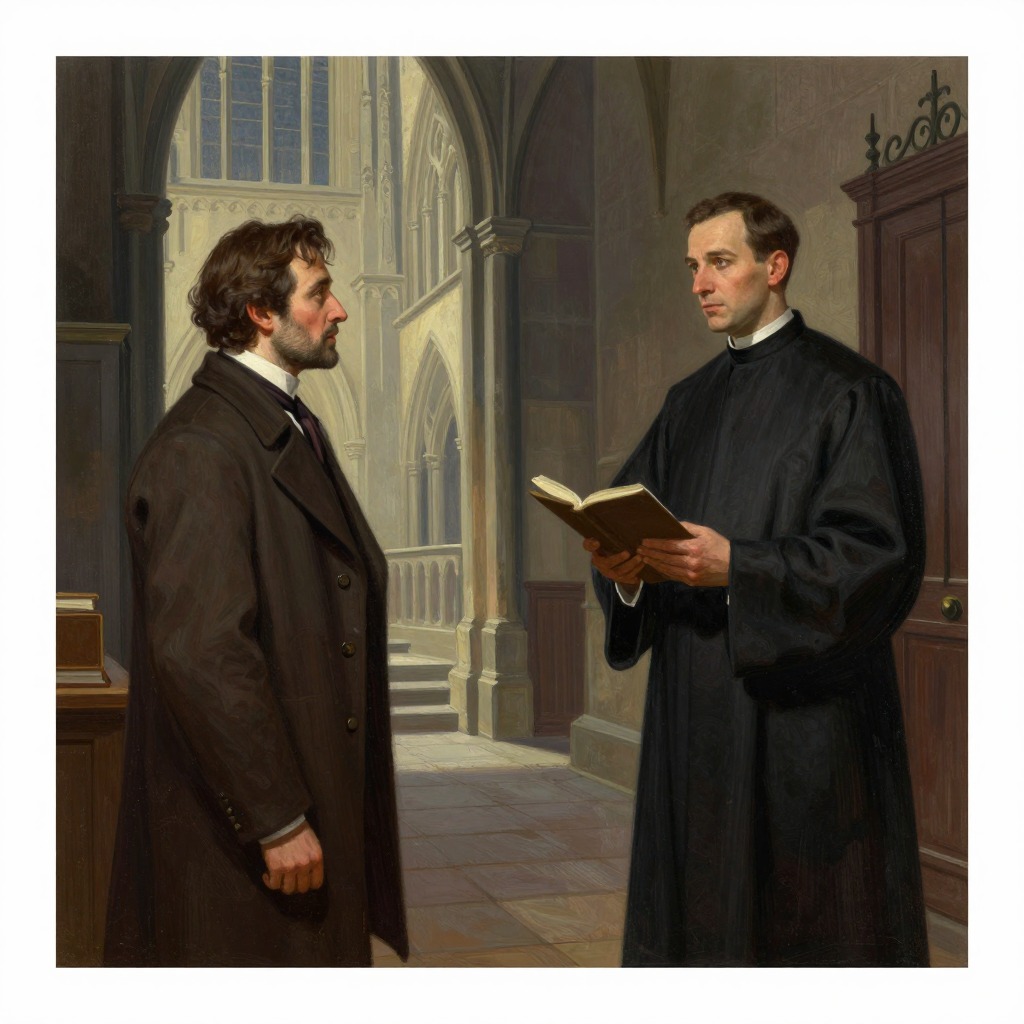
The TrialThe Parable of the Doorkeeper is the most famous and thematically dense allegory in Franz Kafka's The Trial, a story-within-a-story that the prison chaplain recites to Josef K. in the cathedral. It crystallizes the novel's central concerns: the inaccessibility of justice, the opacity of legal authority, and the way the accused colludes in his own condemnation. The parable generates an extended interpretive debate between K. and the priest, a debate that mirrors the novel's own refusal to yield a single, stable meaning and that ultimately leaves K. more entangled in the court's logic than before.
The Story Itself
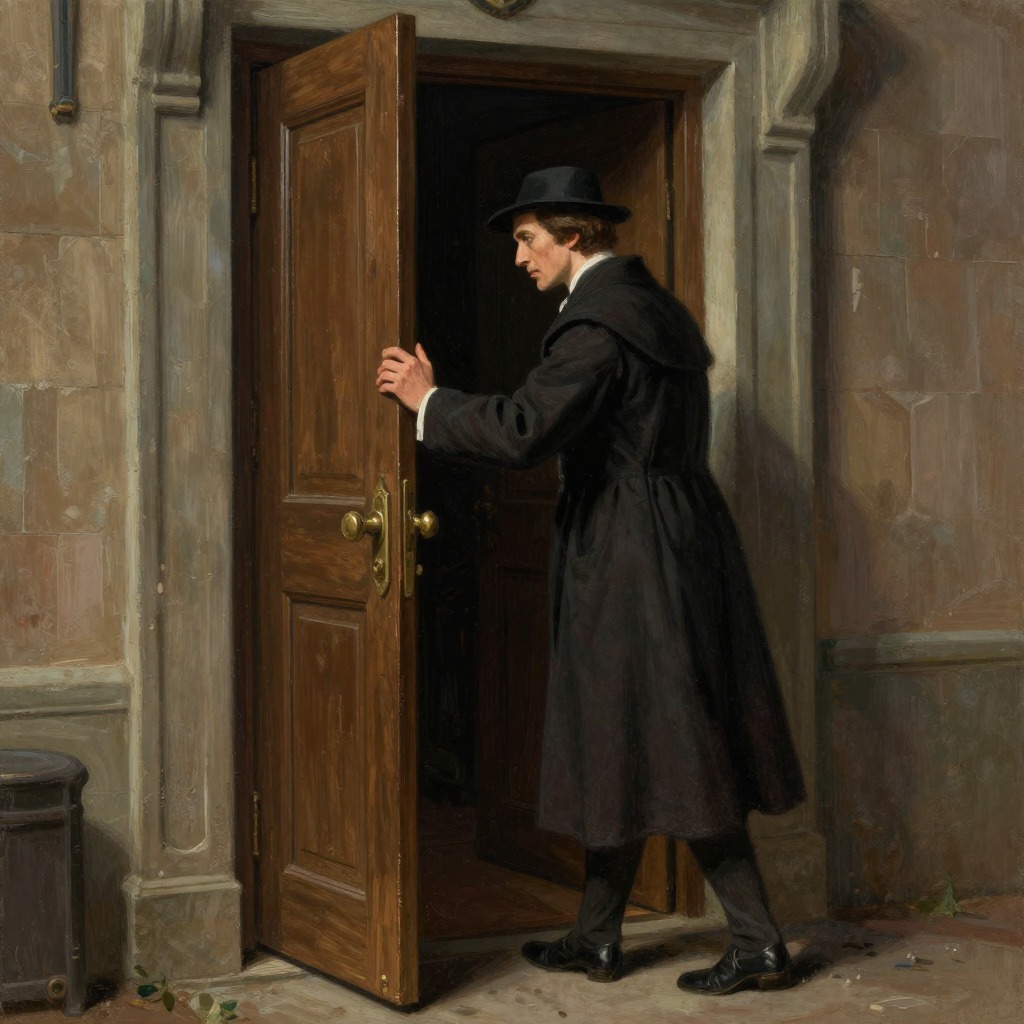
The parable, as the priest tells it, begins with a man from the countryside who arrives at the open gate of the law and asks the doorkeeper for entry. The doorkeeper tells him he cannot enter "now," though he adds that it may be possible later. The man, intimidated by the doorkeeper's power and by the mention of even more fearsome doorkeepers beyond, decides to wait. He sits on a stool beside the gate for days and years, bribing the doorkeeper with everything he owns, growing old and senile, and eventually learning even the fleas in the doorkeeper's fur collar. At the end of his life, he asks why, in all those years, no one else has sought entry. The doorkeeper shouts, "Nobody else could have got in this way, as this entrance was meant only for you. Now I'll go and close it."
K.'s Interpretation and the Priest's Correction
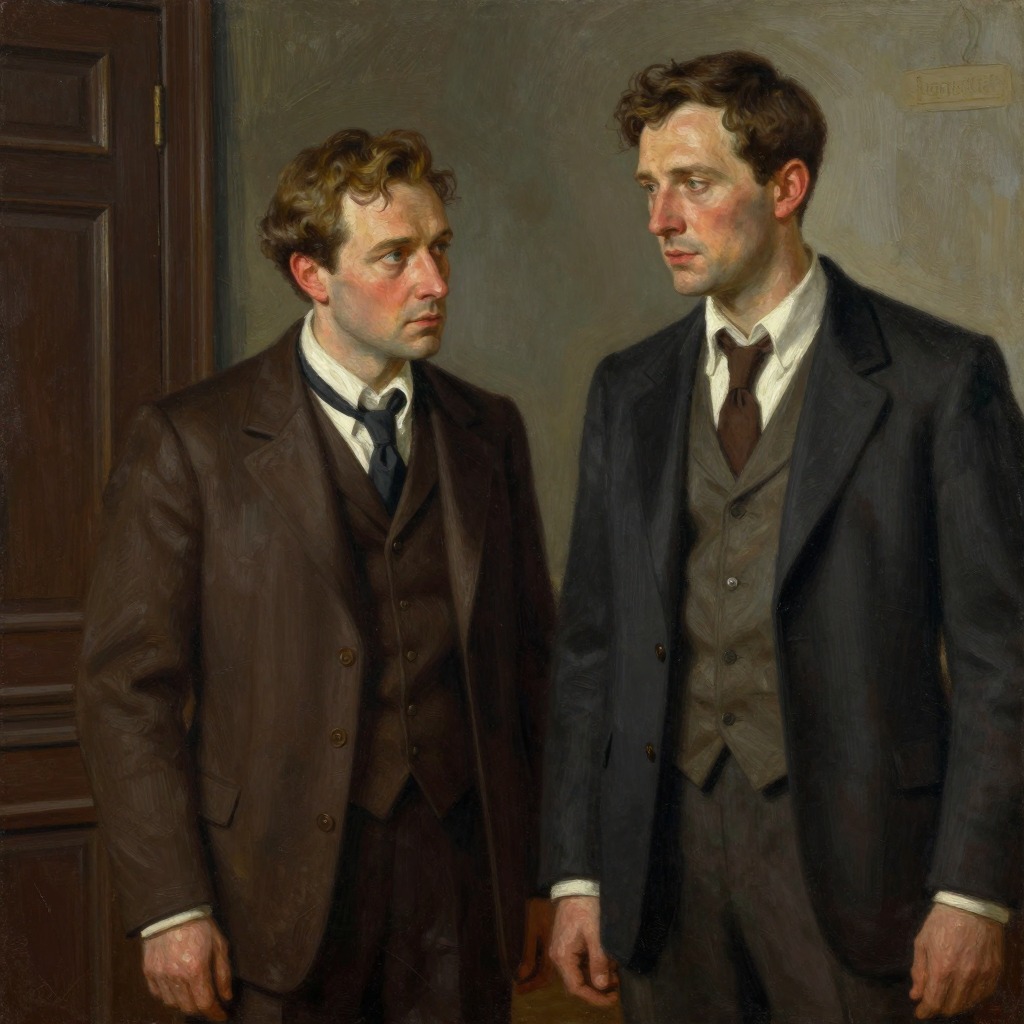
K. immediately declares that the doorkeeper cheated the man, since he withheld the crucial information—that the door was for him alone—until it was too late to be of any use. The priest sharply warns K. not to be too quick, insisting that the story as written contains no mention of cheating. He then offers a detailed, multi-layered commentary that systematically dismantles K.'s reading. The doorkeeper, the priest argues, was faithful to his duty: he told the truth at both the beginning and the end, and the two statements do not contradict each other. The priest points to the doorkeeper's simplicity, his arrogance, his friendly nature, and his willingness to accept bribes as signs of a character that is not merely an official but also a human being with defects. He cites commentators who argue that the doorkeeper himself may be the one who is deceived, since he serves the law without understanding it and remains subordinate to the man from the country, who is free to leave at any time. The priest concludes that the story does not permit a single judgment: "You don't need to accept everything as true, you only have to accept it as necessary."
Thematic Significance and Connection to K.'s Trial
The parable functions as a compressed model of K.'s own experience with the court. Like the man from the country, K. spends the entire novel seeking access to a justice that remains perpetually out of reach, blocked by a hierarchy of officials whose authority he can neither confirm nor deny. The doorkeeper's claim that the door was intended only for the man echoes the court's paradoxical logic: the law is universally accessible yet individually barred. K.'s immediate, indignant reading—that the doorkeeper is a cheat—reflects his earlier confidence that the court is a mere bureaucratic farce, but the priest's correction forces him to confront a more disturbing possibility: that the system's opacity is not a flaw but its essence, and that the accused's own efforts to understand it only deepen his entanglement. The parable thus prefigures K.'s final realization in the quarry, where he acknowledges that "the logic cannot be refuted, but someone who wants to live will not resist it."
The Parable as a Mirror of the Novel's Method
The debate between K. and the priest enacts the novel's own refusal to resolve its central questions. The priest offers multiple, conflicting interpretations—the doorkeeper as faithful servant, as simpleton, as deceived subordinate—without endorsing any of them. The story itself, he insists, "cannot be altered," and the various opinions are "no more than an expression of despair over it." This interpretive openness mirrors the court's own procedures, which are never fully explained and which generate endless speculation among the accused. The parable thus becomes a mise en abyme of the novel as a whole: a narrative about the impossibility of definitive interpretation, told within a narrative that systematically frustrates the reader's desire for clarity. K.'s final, weary response—"The lie made into the rule of the world"—is not a solution but a surrender, acknowledging that the court's power lies not in its truth but in its necessity.