The doorkeeper and the man from the country
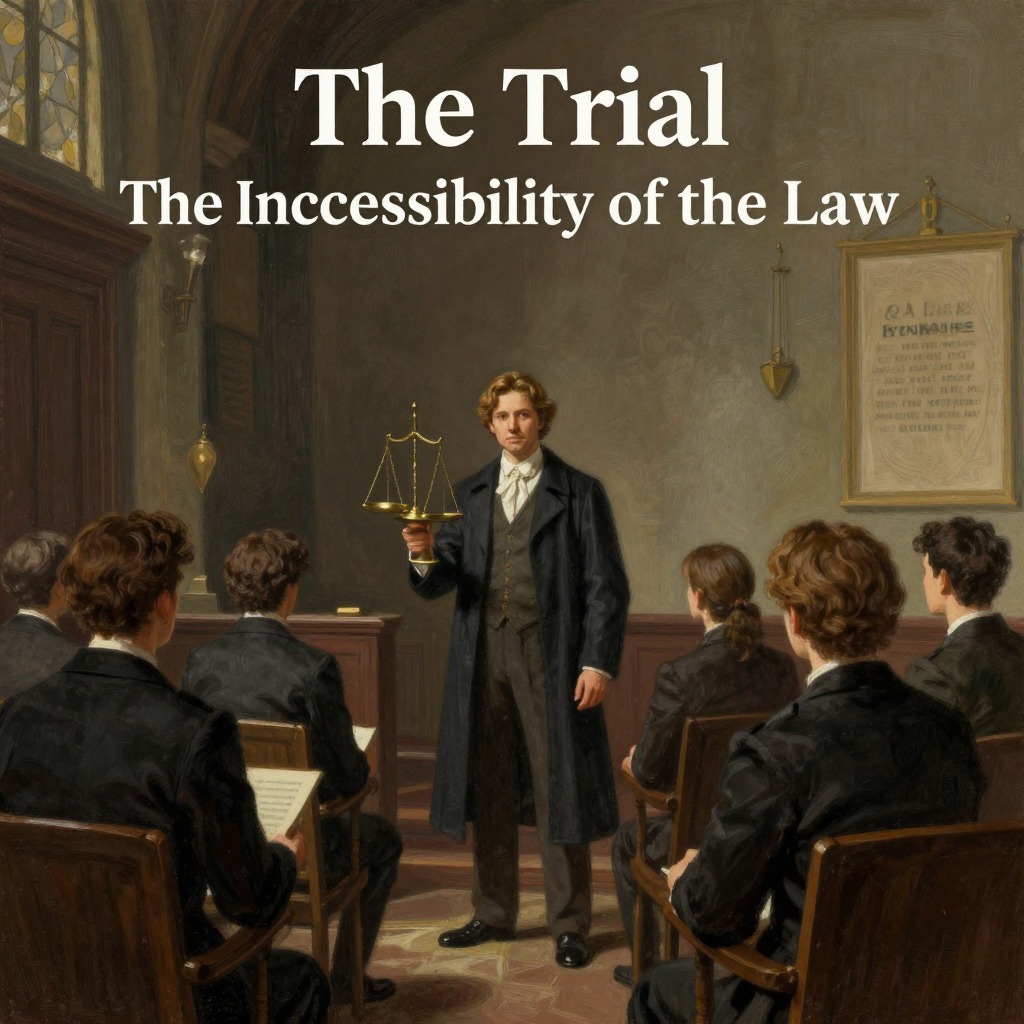
The TrialThe doorkeeper and the man from the country is a parable told by the prison chaplain to Josef K. in the cathedral, which serves as a central allegory for the nature of the law, guilt, and the human condition within the novel. The story depicts a man from the country who spends his entire life seeking access to the law, only to be blocked by a doorkeeper who, at the end, reveals the entrance was meant only for him. This parable becomes the interpretive key to K.'s own trial, generating a complex debate about deception, necessity, and the inscrutable logic of the court.
The Parable's Narrative
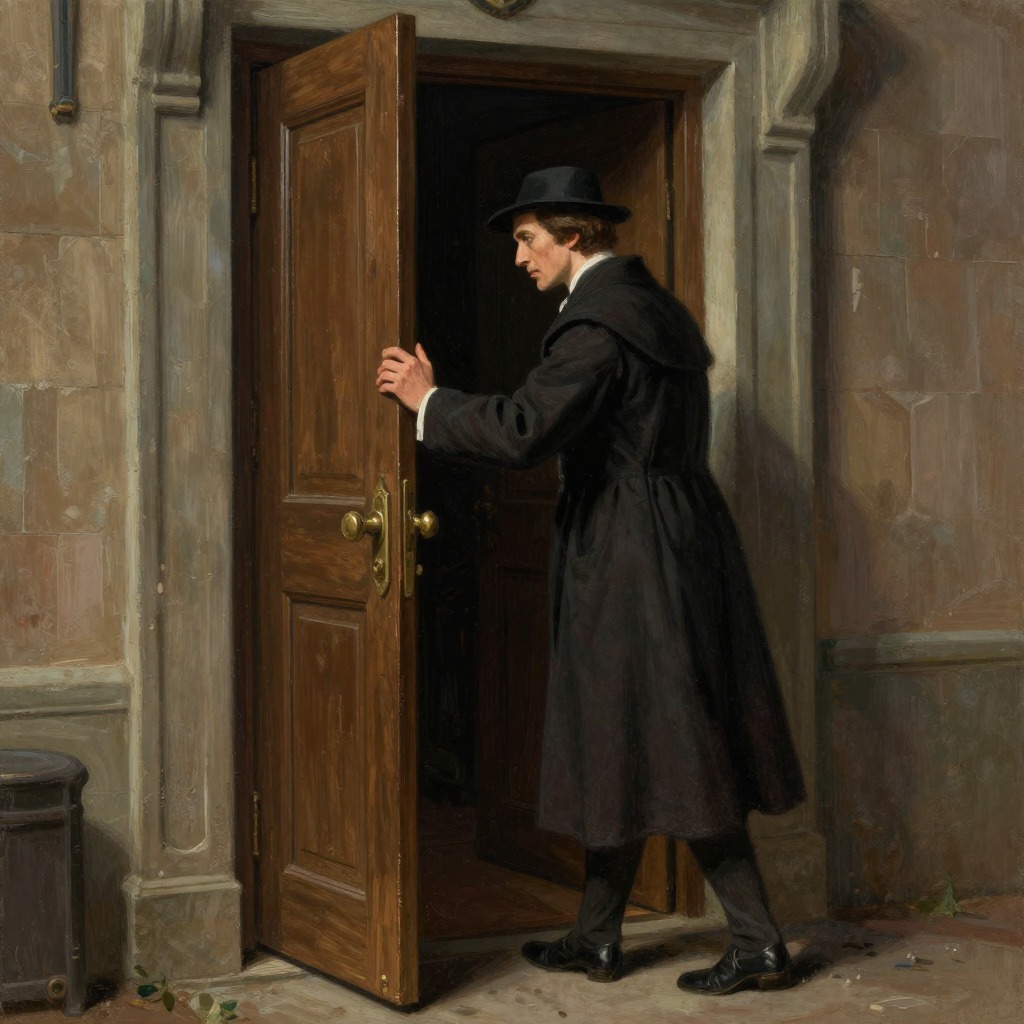
The prison chaplain narrates the parable in response to K.'s assertion that he is innocent. In the story, a man from the country comes to the door of the law and asks for entry. The doorkeeper tells him he cannot be admitted "now." The man, seeing the gateway open and the doorkeeper step aside, bends over to try and see inside. The doorkeeper warns him that he is powerful, though only the lowliest of doormen, and that each subsequent doorkeeper is more powerful than the last, so that the sight of the third is more than he himself can bear. The man decides to wait for permission. The doorkeeper gives him a stool and lets him sit by the gate. The man waits for days and years, making repeated requests and tiring the doorkeeper. The doorkeeper asks him disinterested questions and always ends by saying he cannot let him in. The man uses everything he has to bribe the doorkeeper, who accepts the gifts only so that the man will not think he has failed to do something. Over the years, the man watches the doorkeeper almost without a break, forgetting the other doormen and coming to see this one as the sole obstacle. He curses his fate, then grumbles to himself. He becomes senile and even studies the fleas in the doorkeeper's fur collar, asking them for help. As his eyes grow dim, he perceives an inextinguishable light shining from the darkness behind the door. Just before his death, he asks the doorkeeper why, over all these years, no one else has come to seek entry. The doorkeeper, seeing the man is at his end, shouts to be heard: "Nobody else could have got in this way, as this entrance was meant only for you. Now I'll go and close it."
K.'s Interpretation and the Chaplain's Correction
K. immediately declares that the doorkeeper cheated the man, because he gave the information that would have released him only when it could no longer be of use. The chaplain warns K. not to be too quick and not to take someone else's opinion without checking it, insisting the story contains nothing about cheating. K. argues that the doorkeeper's duty was to let the man in, since the door was intended for him. The chaplain counters that K. is not paying enough attention to the text and is changing the story. He points out that the doorkeeper's two key statements—that he cannot let the man in "now" and that the entrance was meant only for him—do not contradict each other; the first even hints at the second. The chaplain argues that the doorkeeper may have gone beyond his duty by offering the man a prospect of future admission. He describes the doorkeeper as faithful, pedantic, and simple-minded, with defects of character that weaken his function but do not make him a cheat. The chaplain presents a range of scholarly opinions on the parable, including one that claims it is the doorkeeper who is deceived, as he is subordinate to the man from the country and does not know it. K. eventually finds this view well substantiated but also sees that the two interpretations are not entirely incompatible. The chaplain concludes that one need not accept everything as true, only as necessary. K. calls this a "depressing view" and declares it "the lie made into the rule of the world."
Thematic Significance
The parable functions as a direct commentary on K.'s own situation. The chaplain tells K. that his case is going badly and that he is considered guilty. The story of the man from the country mirrors K.'s own futile attempts to penetrate the opaque workings of the court. The doorkeeper's refusal to give a clear answer parallels the court's refusal to tell K. the nature of his crime. The parable's central ambiguity—whether the doorkeeper is a deceiver or a faithful servant, whether the man is a victim or a fool—reflects the novel's own refusal to offer a single, stable interpretation of justice. The chaplain's final statement, that the court demands nothing from K. and accepts him when he comes and lets him go when he leaves, echoes the parable's theme of a law that is both always open and perpetually inaccessible. The parable thus becomes the novel's most concentrated expression of its central concerns: the nature of guilt, the opacity of authority, and the human need to find meaning in a system that may be fundamentally absurd.