Cheltenham
The Unlikely Pilgrimage of Harold FryCheltenham marks the decisive turning point in Harold Fry's pilgrimage, the place where the retired brewery representative stops being a man walking to post a letter and becomes something closer to a true pilgrim. It is here that he gives away almost everything he carries, keeps only what is not his to surrender, and articulates the philosophy of one foot in front of the other that will sustain him across the remainder of England. The town functions in the novel as a threshold: the last significant settlement before the landscape opens into the Cotswolds and middle England, and the point at which Harold's private errand begins to acquire the character of a public, even sacred, undertaking.
The Arrival and the View from Above
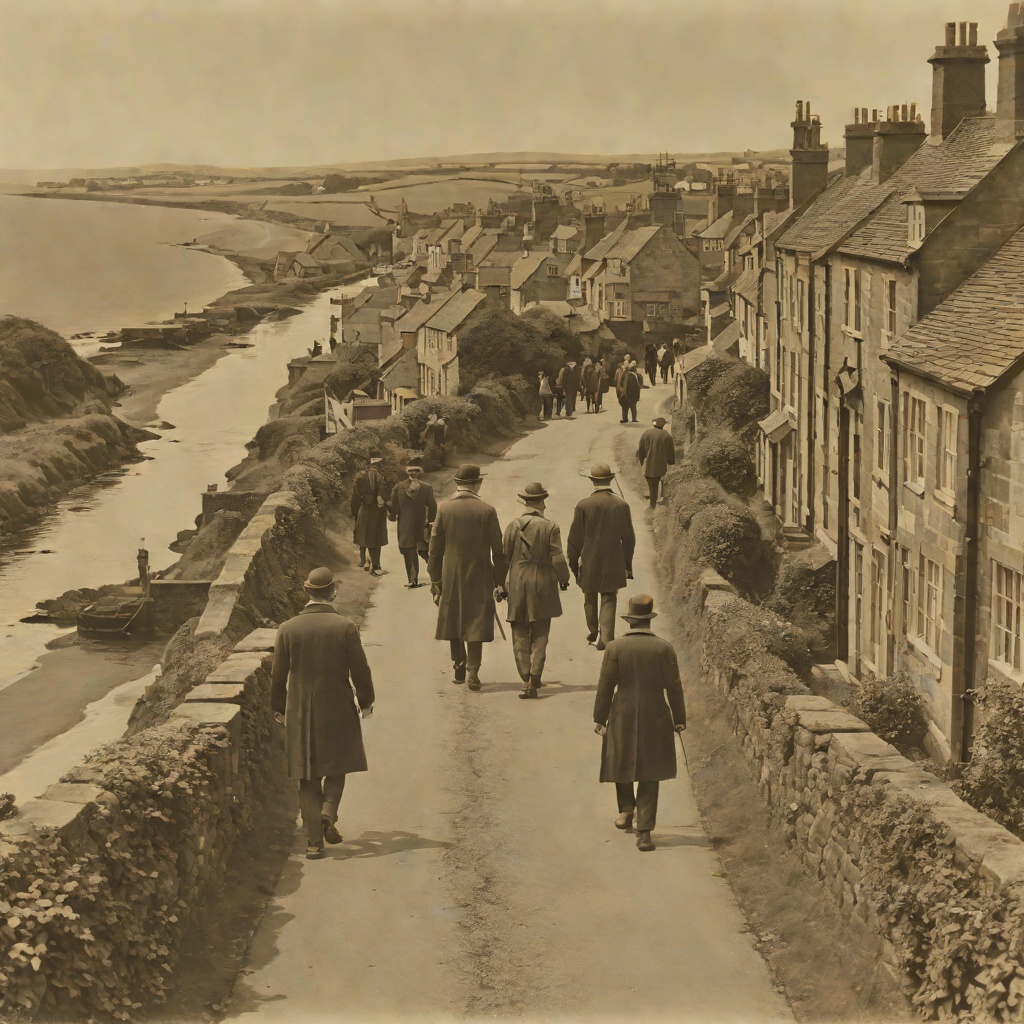
Harold reaches Cheltenham after his second night sleeping in the open, having spent the first night of his journey in a barn and the second in an empty woodshed. The approach is described from a high vantage point, with the Vale of Gloucester falling away to his left like a giant bowl, and far off the Black Mountains and the Malvern Hills straddling the horizon. From this elevated position he can make out the roofs of factories, the hazy outline of Gloucester Cathedral, and the tiny shapes of people's houses and cars. The scene provokes in him a profound sense of being both inside and outside what he sees, both connected to the world and passing through it, and he comes to understand that this is also the truth about his walk: he is both a part of things and not. The view from above Cheltenham crystallizes his realization that he must remain true to the feeling that inspired him in the first place, that it does not matter that others would do the journey differently, and that he has a different map from any road atlas — the one in his mind, made up of all the people and places he has passed.
The Renunciation of Possessions
In Cheltenham, Harold enacts the most radical gesture of his journey: he gives away nearly everything he owns. He donates his washing powder to a student going into a laundrette, offers his wind-up torch to a woman from Prestbury who cannot find her key in her bag, and gives his plasters and antiseptic cream to the mother of a distressed child with a bleeding knee, along with his comb by way of distraction. The guide to Britain he hands to a bewildered German couple lost near Cleeve Hill, and since he knows the plant dictionary by heart, he suggests they might like that too. He rewraps the gifts he has been carrying for Queenie — the pot of honey, the rose quartz, the glittering paperweight, the Roman key ring and the wool hat — and parcels up the recent souvenirs intended for Maureen, taking them to a post office. The brass compass and the rucksack he keeps, because they are not his to give away; they belonged to Martina's partner, and Harold understands that some objects carry obligations that cannot be transferred. Two days later, Maureen is called to the gate of Fossebridge Road to receive a parcel containing a new selection of gifts, along with Harold's wallet, his watch, and a postcard showing a woolly Cotswold sheep.
The Philosophy of the Walk
The renunciation at Cheltenham is not mere asceticism but the practical expression of a philosophy Harold has been forming since he left Kingsbridge. He reflects that when a person becomes estranged from the things they know and becomes a passer-by, strange things take on a new significance, and it seems important to allow himself to be true to the instincts that make him Harold, as opposed to anyone else. He has learned from the kindness of the woman with food and from Martina that it is as much a gift to receive as to give, requiring both courage and humility. The peace he found lying in the sleeping bag in a barn teaches him what he must do to reach Berwick. After Cheltenham, he continues to sleep outside, choosing dry places and being careful not to upset things. He washes in public lavatories, fountains and streams, rinses his clothes where no one is watching, and thinks of that half-forgotten world lived in houses and streets and cars, glad that others are safe in it and glad too that he is at last outside them.
The Road North from Cheltenham
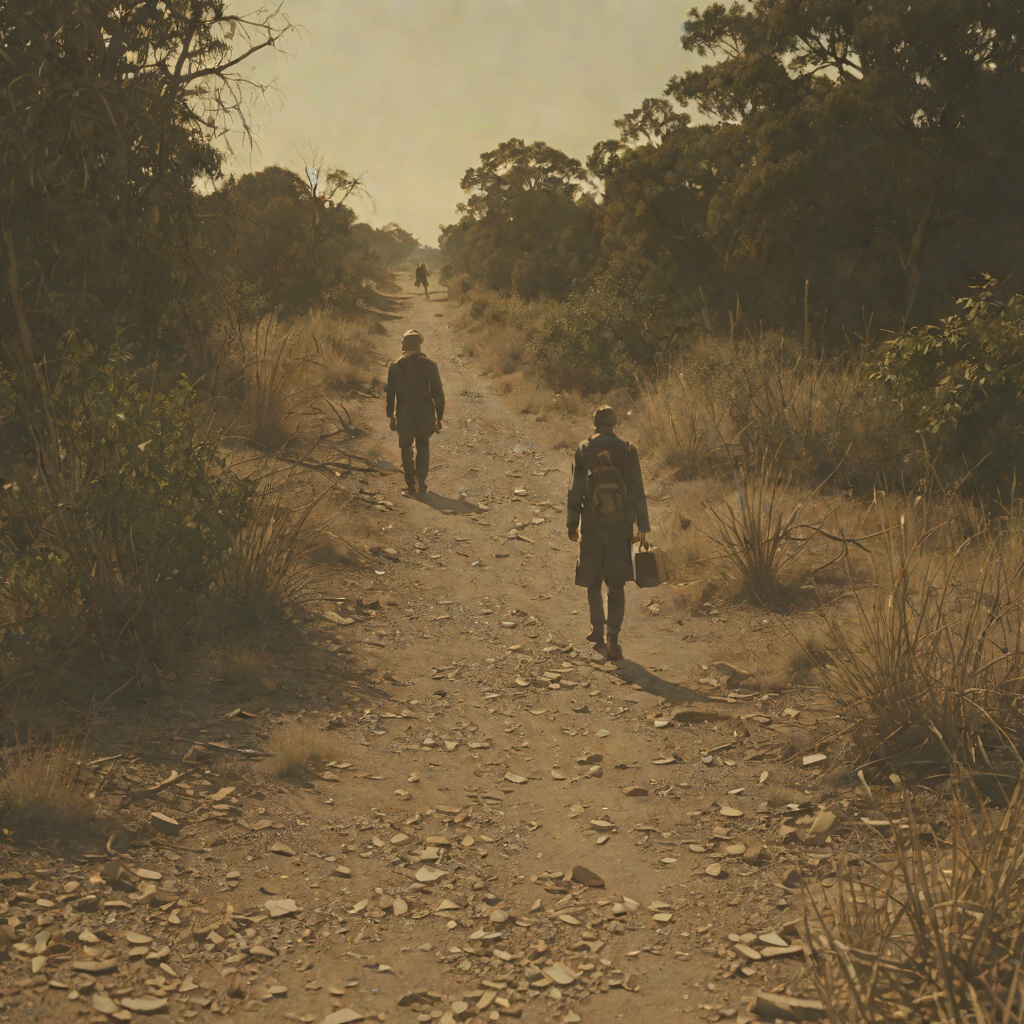
From Cheltenham, Harold makes his way to Broadway via Winchcombe, then on to Mickleton, Clifford Chambers and Stratford-on-Avon. He takes the A-roads, B-roads, lanes and tracks, following the compass as it quivers northwards, going by day or by night as the mood takes him, mile after mile. When the blisters are bad, he binds them with the blue duct tape Martina gave him. He sleeps when the need for it comes and then returns to his feet and walks again, under the stars and the tender light of the moon when it hangs like an eyelash and the tree trunks shine like bones. The pale Cotswold stone becomes the red brick of Warwickshire, and the land flattens into middle England. He feels a beard growing in thick tufts and knows that Queenie will live. The strangest part, he reflects, is that a driver might overtake him and briefly observe an old fellow in shirt and tie, perhaps a pair of yachting shoes, and see no more than another man off down the road — so funny, and he so happy, so much at one with the land beneath his feet, that he can laugh and laugh with the simplicity of it.
Narrative Significance
Cheltenham stands in the novel as the place where Harold's pilgrimage acquires its definitive form. Before it, he is still a man who has spent a night in a hotel, who inspects his feet with quiet pride and applies plasters, who imagines the nurse telling Queenie he is walking. After it, he is a figure who has renounced wallet and watch, who sleeps under the sky, and who tells the story of Queenie and the garage girl to strangers, asking them to help and listening in return. The town is also the pivot between the private and public phases of the journey: it is shortly after Cheltenham, south of Coventry, that Harold meets Mick, the young man who photographs him and whose report in the Coventry Telegraph will turn the walk into a national story. The renunciation at Cheltenham thus prepares Harold for the fame that will later threaten to overwhelm his purpose, grounding him in the principle that he must remain true to the feeling that inspired him, whatever others make of it. The town is where the pilgrim is made, before the world learns his name.