David Fry's death
The Unlikely Pilgrimage of Harold FryDavid Fry's death is the novel's hidden epicenter, a suicide that fractures the Fry family so completely that the rest of their lives become a slow, painful aftermath. It is the event Harold has spent twenty years trying to avoid, the memory he most fears, and the reason he ultimately walks the length of England. The death is not merely a plot point but the gravitational force around which Harold's pilgrimage, Maureen's grief, and their eventual reconciliation all orbit. It is the wound that the walk is meant to heal, and the truth that must finally be spoken aloud before any peace is possible.
The Death and Its Discovery
The circumstances of David's death are revealed gradually, in fragments, as Harold's walk forces him to confront what he has buried. David hanged himself in the garden shed, using rope tied to one of the hooks Harold used for garden tools. He was depressed and addicted to mixing alcohol with pills, and he could not get a job. The coroner's verdict was suicide, and the detail that haunted Harold most was the coroner's observation that, so full of alcohol and pills, David must have taken a long time to tie the noose. It was Harold who discovered him, lifting him down from the hook, but there was no life left. In that moment, Harold, who has told the garage girl he is not a religious man, prayed anyway, saying, "Dear God, please let him be OK. I will do anything." He was too late. The memory of that afternoon, twenty years before, surges back to him on the road to Taunton with unbearable vividness: his hand reaching for the wooden door, the warmth of the sun on his shoulders, the smell of mouldering, heated-up air, and the stillness of a silence that was not what it should be. He shouts "No" at the rain, but the memory will not be denied, and his body gives way, his calf exploding as if sliced open, his knees buckling as he lurches to the ground.
The Aftermath for Harold and Maureen
The death cleaves Harold and Maureen apart, plunging them into separate darknesses. Maureen took it terribly, refusing to leave the house and putting up net curtains because she did not want the neighbours prying. Gradually the neighbours moved away, and no one knew about them or what had happened. But every time Maureen looked at Harold, he knew she saw David dead. She began talking to David as if he were still with her, and she kept his room exactly as it was the day he died. Harold understands this is what his wife wants, that she cannot let David be dead, and that it is too much for a mother to bear. The day they went to the funeral director's to see David one last time in his coffin remains seared into Harold's memory. Maureen had packed a red rose, a teddy bear, and a pillow to go beneath David's head. In the car she asked Harold what he was going to give, knowing he had nothing. The sun shone very low, torching his eye as he drove, and they both wore sunglasses; even at home, she did not take them off. At the funeral director's, Maureen surprised Harold by saying she wanted to say goodbye to David alone. He sat outside with his head in his hands, waiting his turn, until a passer-by stopped to offer a cigarette, which Harold took even though he had not smoked since his days on the buses. His fingers shook so hard the passer-by used three matches to light it. From inside the funeral parlour came Maureen's scream, "No! No! No!", so animal in its intensity that Harold was struck still, braced over a rubbish bin, where he heaved a white spume of foam. When Maureen came out, she caught his eye once, then her hand shot to her sunshades; she had been crying so hard her whole being seemed liquid. Harold realized with shock how thin she had grown, her shoulders like a hanger inside her black dress. He wanted to walk to her, to hold her, and be held, but he smelt of the cigarette and his vomit, so he hovered beside the bin, pretending he had not seen her, and she walked straight past him to the car. The space that set them apart shone against the sun like glass.
Harold's Guilt and the Path to Atonement
In the wake of David's death, Harold began drinking. It started as just one drink to keep him steady before the coroner's report, but soon he was keeping bottles in paper bags under his desk, and he does not know how he drove home at night. He just wanted to stop feeling. When he was really out of it one night, he dismantled the garden shed, but even that was not enough. So he broke into the brewery and did something terrible, an act for which Queenie Hennessy took the blame and was fired on the spot. She then disappeared, warned to get out of the South West if she knew what was good for her. Harold let her go, let her take the blame, but he gave up drinking. The guilt of this compounded the guilt of David's death, and it is this double burden that his pilgrimage is meant to expiate. He tells the garage girl, in a letter that becomes the novel's confessional core, that people think he is walking because there was a romance between himself and Queenie all those years ago, but it is not true. He walked because she saved him, and he never said thank you. The death of David, and Harold's failure to save him, is the original sin that the walk seeks to redeem.
The Walk as Reckoning with the Past
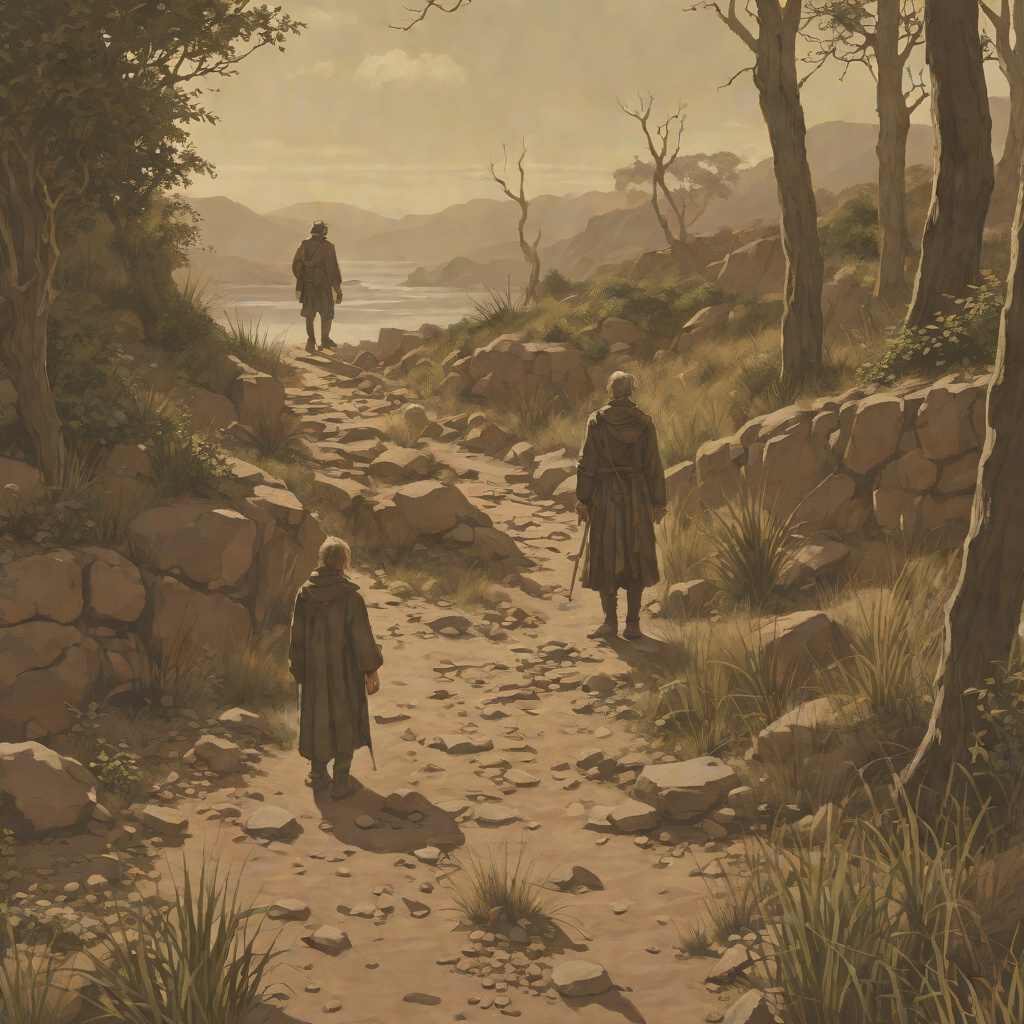
Harold's pilgrimage is, in essence, a slow and painful reckoning with David's death. Before he begins walking, he has spent twenty years seeking to avoid the past, but in walking he unleashes it, and it chatters and plays through his head with a wild energy that is its own. He no longer sees distance in terms of miles; he measures it with his remembering. Passing allotments, he sees Maureen in the front garden of Fossebridge Road, and he recalls with splintering tenderness the fragility of David's head when he was born. He hears the hollow cackle of a crow and is suddenly lying in his bed as a teenager, overwhelmed with loneliness. The walk forces him to confront not only David's death but the whole pattern of loss and abandonment that preceded it. He comes to understand that in order to succeed he must remain true to the feeling that inspired him in the first place, and that he must allow himself to be true to the instincts that make him Harold, as opposed to anyone else. The walk is not a flight from the past but a journey into it, a way of finally meeting the grief he has carried for two decades.
Reconciliation and the Meaning of David's Death
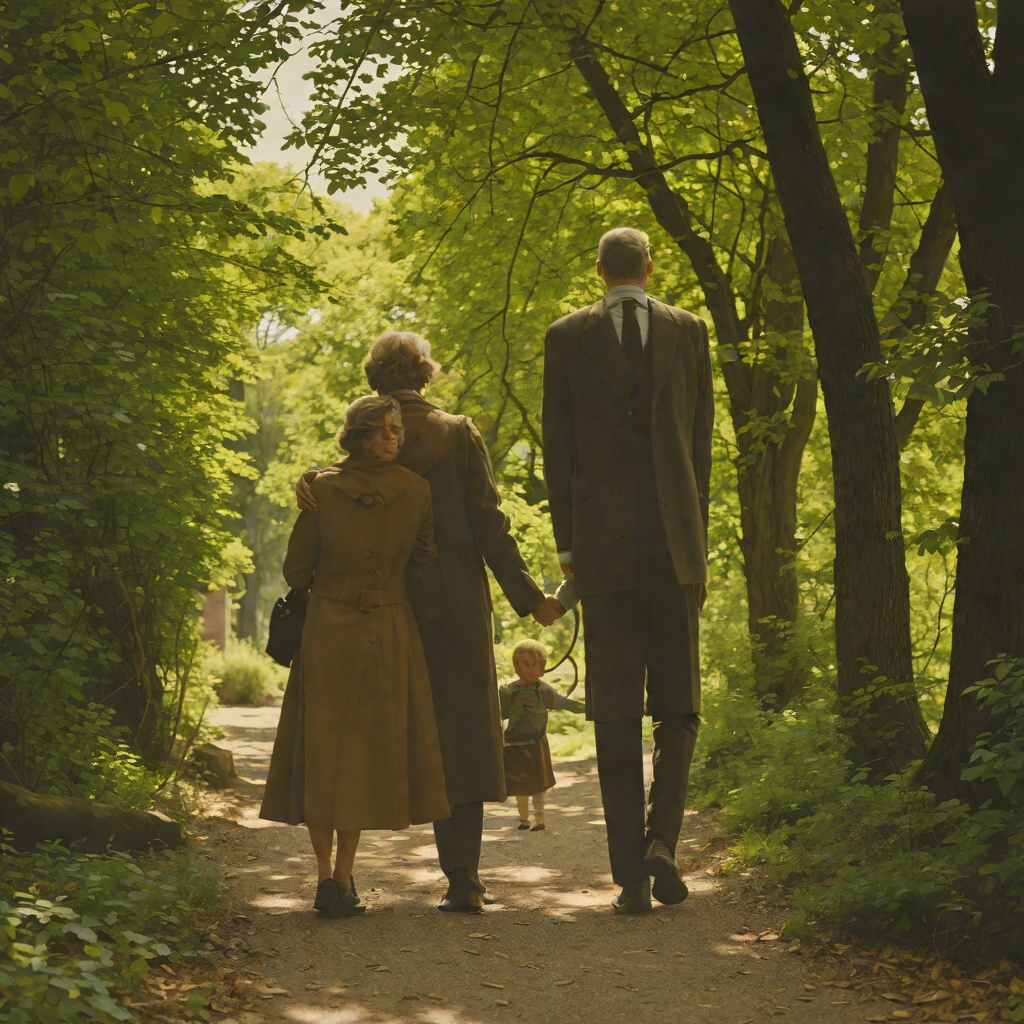
At the end of the novel, after Queenie's death, Harold and Maureen stand together in the dimming room of the hospice, and Maureen finally speaks the words that have been locked inside her for twenty years. "There was nothing more you could have done," she says, and she is thinking now not only of Queenie but of David too. Though it had cleft them apart and plunged them into separate darkness, their son had after all done what he wanted. "I was wrong. I was very wrong to blame you." Her fingers squeeze on his. This is the moment of release, the acknowledgment that David's death was not Harold's fault, and that the blame Maureen has carried and projected has been a kind of prison for them both. She thinks of the waves again, and how a life is not complete without meeting its closure. She will stand at Harold's side as long as he wants, and when he moves, she follows. David's death, which destroyed their marriage and their family, becomes the occasion for their reconciliation, the wound that, once finally spoken and shared, allows them to begin again. The novel does not offer easy comfort about David's suicide, but it suggests that the only way through such a loss is to meet it together, to accept what cannot be understood, and to keep walking, one foot in front of the other.