Exeter
The Unlikely Pilgrimage of Harold FryExeter stands as the first great obstacle and proving ground on Harold Fry's improbable pilgrimage. Having set out from Kingsbridge with nothing but his yachting shoes, a plastic carrier bag, and a promise to save Queenie Hennessy, Harold reaches the city as his second major destination, following the A38 from South Brent. It is a place that threatens to undo him, a maelstrom of traffic, buildings, and crowds that overturns the slow inner rhythm he had developed on the open road. Yet it is also a place of profound reckoning, where the past he has spent twenty years avoiding begins to surface, and where he makes the first concrete renunciations that will define his journey. Exeter is where the pilgrimage nearly ends before it has truly begun, and where it is instead reforged into something stranger and more powerful.
The City as a Test of Resolve
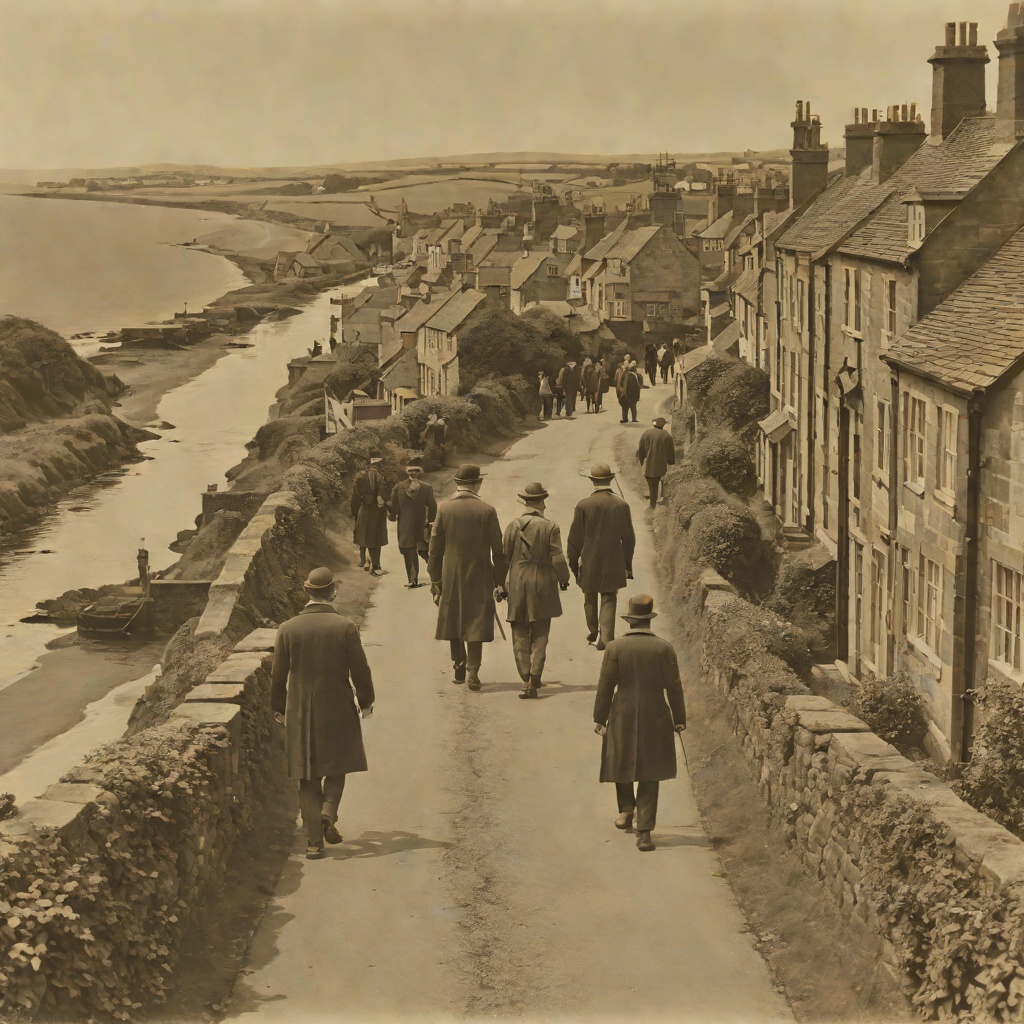
Harold's arrival in Exeter is marked by a sudden and disorienting shift. He had felt comfortable in the security of open land and sky, where everything took its place and he felt himself to be part of something bigger than simply Harold. In the city, with its short-range sight, he feels anything might happen, and that whatever it is, he won't be ready. The fury of the city threatens to overturn the slow inner rhythm he had developed, and he is alarmed by everything: the traffic, the buildings, the crowds that push past shouting into their mobile phones. He smiles at each face, and it is exhausting, taking in so many strangers. The land beneath his feet has been replaced with paving stones and tarmac, and he can find no trace of the earth that had humbled him with its many shades of green. He loses a full day, simply wandering, each time he resolves to leave, something distracts him and another hour passes. He deliberates over purchases he hadn't realized he required, considering a new pair of gardening gloves for Maureen before remembering she had long since abandoned her vegetable beds. He stops to eat and is presented with such an array of sandwiches that he forgets he is hungry and leaves with nothing, overwhelmed by the abundance of choices and streets and glass-fronted shopping outlets. What had been so clear to him when he was alone, two feet on the ground, becomes lost.
The Near-Abandonment and the Wind-Up Torch
The crisis comes to a head when Harold finally has the opportunity to buy proper walking equipment. He spends an hour with an enthusiastic young Australian man who produces not only walking boots but also a rucksack, a small tent, and a talking pedometer. Harold apologizes profusely and buys only a wind-up torch. He tells himself that he has managed perfectly well with his yachting shoes and his plastic bag, and that with a little ingenuity he can carry his toothbrush and shaving foam in one pocket, and his deodorant and washing powder in the other. This moment of refusal is a quiet but decisive act of self-definition. He is choosing to remain the man who set out from Kingsbridge, not to become a properly equipped hiker. The decision is made not out of pride but out of a strange, growing faith in the sufficiency of his own two feet. Instead of buying equipment, he goes to a café close to the railway station, a choice that will prove significant.
Memory and Queenie's Shadow
It is in Exeter that Harold's thoughts, which had stopped in the city, begin to flow again once he is back on the open land. He measures distance not in miles but with his remembering. The city itself, however, holds a specific and painful memory. Twenty years ago, Queenie must have made her way to Exeter St David's station. Had she gone straight from here to Berwick? Had she family there? Friends? She had never mentioned either. Once, a song had come on the car radio and she had wept. 'Mighty Like A Rose'. The male voice filled the air, steady and deep. It reminded her of her father, she said between gulps; he had died only recently. 'I'm sorry, I'm sorry,' she whispered. This recollection, triggered by the station, connects Harold's present pilgrimage to Queenie's own past journey, suggesting that she too had passed through this city on her way to the place where she now waits to die. The city becomes a hinge between their two journeys.
The Telephone Call to Maureen
Nearly a week after he had gone, Harold rings from a phone box to tell Maureen he is staying a second night in Exeter, and will head early the next morning towards Tiverton. It is a call that reveals the deeper purpose of his walk. He says, 'Sometimes I think I'm doing this for David … Did you hear me, Maureen?' She has heard, but she cannot speak. He continues, 'I think of him a lot. And I remember things. About him being a boy. I think it might help.' This is the first time Harold articulates that his pilgrimage is not only for Queenie but also for his dead son. The city of Exeter, which had threatened to overwhelm him with its chaos, becomes the place where he names the grief that has driven him onto the road. It is a confession that Maureen cannot yet receive, but it marks a turning point in Harold's understanding of his own journey.
Departure and Transformation
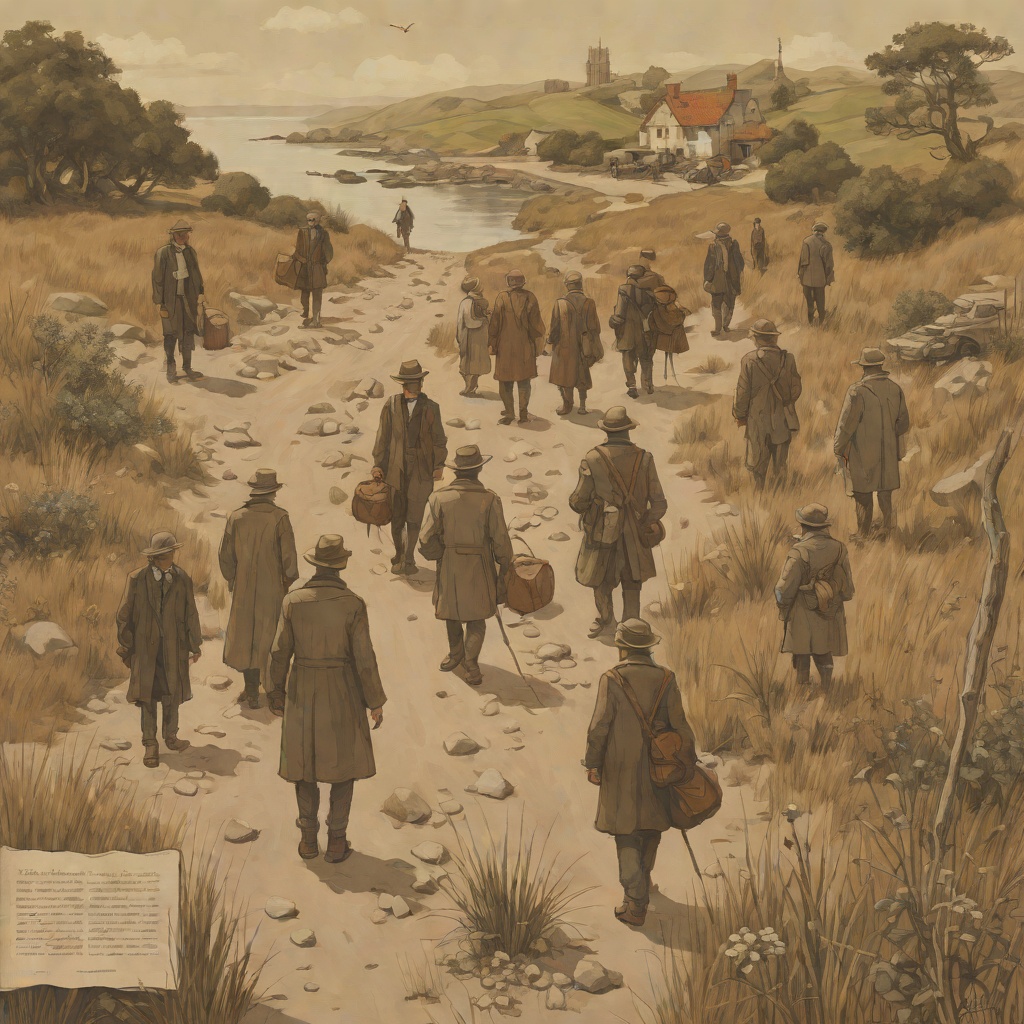
Harold leaves Exeter early the next morning, after purchasing a second-hand dictionary of wild flowers and a visitor's guide to Great Britain. These he keeps in his plastic bag, along with the two presents for Queenie. He also carries replenished supplies of water, biscuits, and, on the advice of a chemist, a tube of petroleum jelly for his feet. The shopkeeper warns there is bad weather coming. As he walks, the past that he had spent twenty years seeking to avoid is unleashed, chattering and playing through his head with a wild energy that is its own. He sees Maureen in the front garden of Fossebridge Road, wearing an old shirt of his, her hair tied back against the wind and her face smutched with dirt, as she digs in French-bean plants. He sees a bird's broken egg and recalls with splintering tenderness the fragility of David's head when he was born. He hears the hollow cackle of a crow in the silence, and suddenly he is lying in his bed as a teenager, hearing that same cry, and overwhelmed with loneliness. Exeter, the city that had nearly stopped him, is left behind, and Harold is transformed, walking not as a man off to the post box but as a pilgrim, beginning again.