Fossebridge Road
The Unlikely Pilgrimage of Harold FryFossebridge Road is the suburban street in Kingsbridge where Harold Fry and his wife Maureen have lived for forty-five years, and it is the place from which Harold's transformative pilgrimage begins. The road and the house at number 13 serve as the novel's symbolic anchor of ordinary, stagnant domestic life — the world of net curtains, clipped lawns, and unspoken grief that Harold must leave behind to walk to Berwick-upon-Tweed. Its steep gardens, closeboard fencing, and the post box on the corner mark the threshold between Harold's old life of quiet despair and the open road that will carry him across England.
Setting and Domestic Life
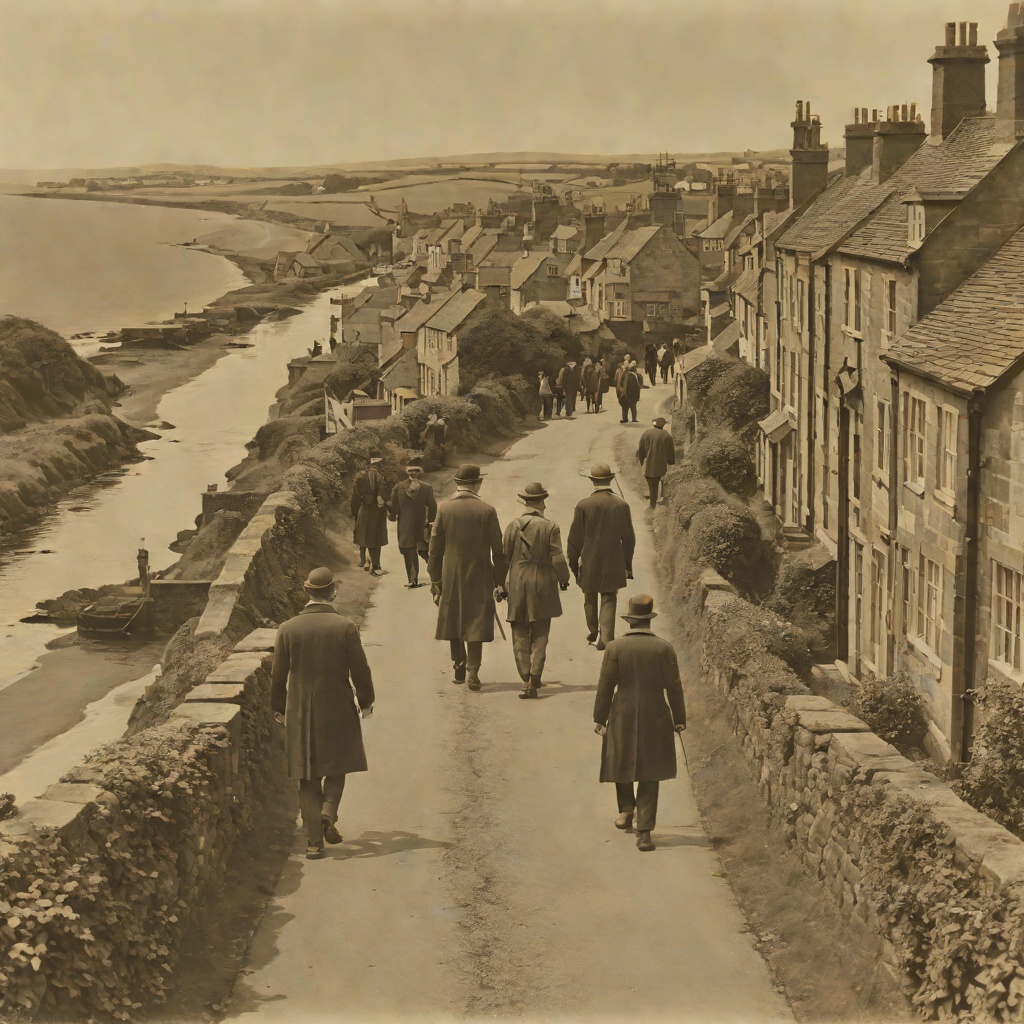
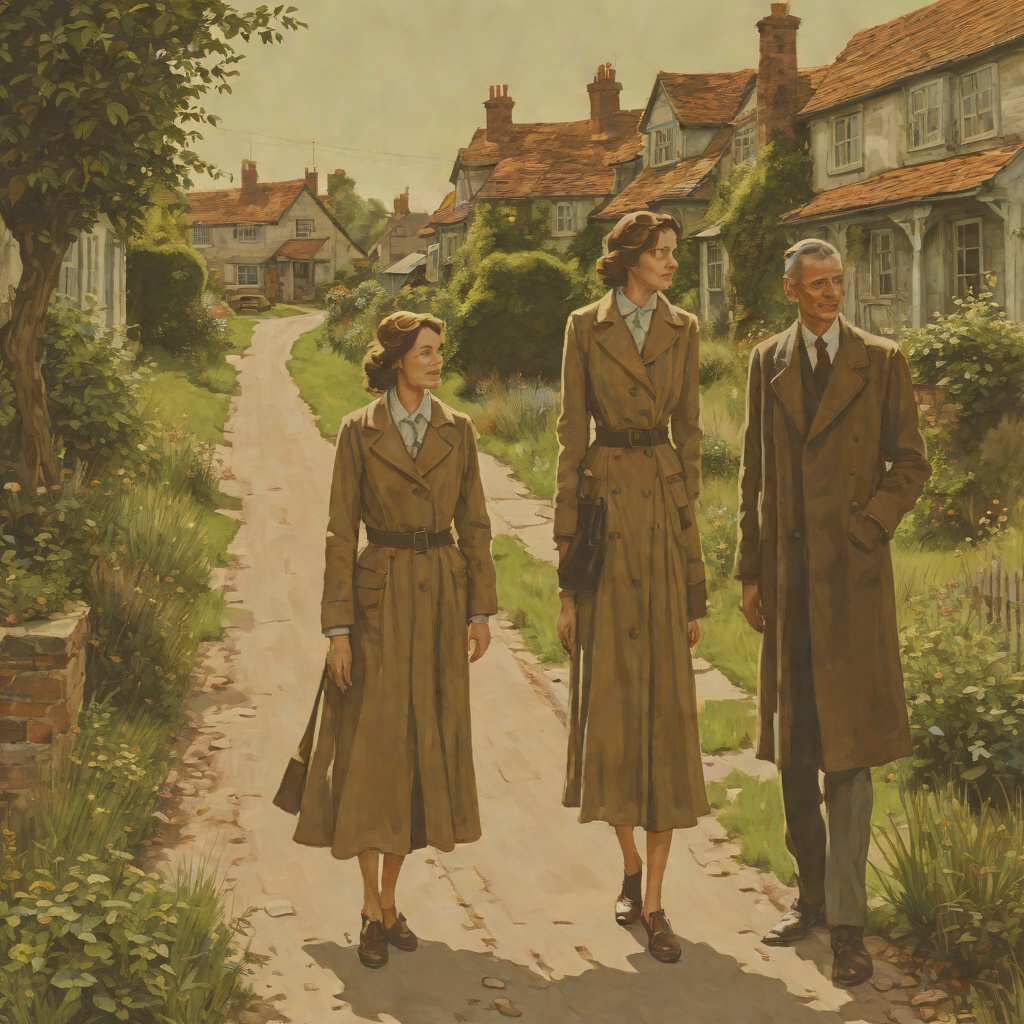
Fossebridge Road is built on a hill above Kingsbridge, enjoying what estate agents call an elevated position with far-reaching views over the town and countryside. The houses are stuccoed and washed in shades of yellow, salmon, and blue, some retaining their pointed fifties roofs with decorative beams shaped like a half-sun, others with slate-clad loft extensions, and one completely rebuilt in the style of a Swiss chalet. The front gardens slope at a precarious angle towards the pavement below, with plants wrapped round bamboo stakes as if hanging on for dear life. Harold and Maureen's house at number 13 is trapped on three sides by the neighbours' closeboard fencing, and the front garden is spiked in the middle by Maureen's telescopic washing line. The clipped lawn, which Harold mowed the day before the letter arrived, is a measure of the routine emptiness of his retirement days.
Harold and Maureen moved to Fossebridge Road just after they were married, forty-five years before the novel opens. It took all of Harold's savings to pay the deposit, leaving nothing for curtains or furniture. They kept themselves apart from others, and over time neighbours came and went while only Harold and Maureen remained. The house once had vegetable beds and an ornamental pond; Maureen made chutneys every summer, and their son David kept goldfish. Behind the house there had been a potting shed that smelt of fertilizer, with high hooks for hanging tools and coils of twine and rope. But these things were long since gone by the time of the novel. Even their son's school, which had stood a stone's throw from his bedroom window, had been bulldozed and replaced with fifty affordable homes in bright primary colours and street lighting in the style of Georgian gas lamps.
The Threshold of the Pilgrimage
The letter that would change everything arrived at 13 Fossebridge Road on a Tuesday, an ordinary morning in mid-April that smelt of clean washing and grass cuttings. Harold sat at the breakfast table, freshly shaved, in a clean shirt and tie, with a slice of toast he wasn't eating, gazing beyond the kitchen window at the clipped lawn. The envelope was a delicate Turkish Delight pink, addressed in clumsy biro letters that collapsed into one another as if a child had dashed them off in a hurry: Mr H. Fry, 13 Fossebridge Road, Kingsbridge, South Hams. The letter was from Queenie Hennessy at St Bernadine's Hospice, and it set in motion the walk that would define the rest of Harold's life.
When Harold left the house, he told Maureen he was only going to the end of the road, and shut the front door between them, taking care not to let it slam. He strode down the steep concrete path a little faster than he might have wished, noticing five new dandelions and thinking that maybe this afternoon he would get out the Roundup. The next-door neighbour Rex spotted him and steered his way towards the adjoining fence, eager to talk about how hard life was since his wife Elizabeth's death six months earlier. Harold glanced in at people's windows as he walked, sometimes seeing empty rooms, sometimes people staring right back, and sometimes an unexpected object — a porcelain figure, a vase, even a tuba — the tender pieces of themselves that people staked as boundaries against the outside world. He tried to visualize what a passer-by would learn about himself and Maureen from the windows of 13 Fossebridge Road, before he realized it would be not very much, on account of the net curtains.
The Post Box and the Point of No Return
For the first time in his life, it was a disappointment to find that the post box cropped up sooner than expected. Harold tried to cross the road to avoid it, but there it was, waiting for him on the corner of Fossebridge Road. He lifted his letter for Queenie to the slot, and stopped. He looked back at the short distance his feet had travelled. Arriving more promptly than he expected at a pillar box, he paused again; he had started something and he didn't know what it was, but now that he was doing it, he wasn't ready to finish. Beads of perspiration sprouted over his forehead; his blood throbbed with anticipation. He turned the corner of Fossebridge Road before he could change his mind, saying out loud, though nobody was looking, that it was a nice day and he might as well walk to the next post box.
The road thus becomes the point of no return. From his hotel room the next morning, Harold peered at the road below during rush hour, traffic speeding in the direction of Kingsbridge, and thought of his wife making breakfast at 13 Fossebridge Road, wondering if he shouldn't go back. He could fetch his mobile, pack a few things, look up the AA map on the internet, order walking essentials. But planning his route would involve both serious consideration and waiting, and there was no time for either of those things. Besides, Maureen would only give voice to the truth he was doing his best to avoid. If he went home now, if he even consulted a map, he knew he would never go to Berwick.
The Map on the Kitchen Wall
While Harold walked, Fossebridge Road became the site of Maureen's own vigil. Rex made her a giant-sized map of England mounted on a pinboard, with two small mirror hooks on the back so it could be hung from the wall. He pointed to Kingsbridge, where a drawing pin wound with blue thread stretched to Loddiswell, then crept to South Brent and on again to Buckfast Abbey, marking Harold's route to date and ending at Bath. At the top of England, Berwick-upon-Tweed was marked with fluorescent-green highlighter pen and a small homemade flag. There was even a separate box of drawing pins so that Maureen could display Harold's postcards on parts of the country he wasn't visiting, like Norfolk and South Wales. Rex put up nails in the kitchen and they hung the map above the table, a little lopsided because he had difficulty with the drill and the first Rawlplug was swallowed into the wall. But as Maureen told him, it didn't matter about things not being perfect.
The house on Fossebridge Road also holds the suppressed grief that Harold's walk forces into the open. In his confession letter to the garage girl, Harold reveals that after David's suicide, Maureen wouldn't leave the house and put up net curtains because she didn't want the neighbours prying. Gradually those people moved away and no one knew about them, or what had happened. Maureen keeps David's room exactly as it was the day he died, and she began talking to him as if he were still with her, always waiting for him. The net curtains that once hid Harold and Maureen from the world become the emblem of their isolation — the same curtains Harold noticed from the street as he set out, realizing that a passer-by would learn almost nothing about the lives behind them.
The Road Left Behind
Once Harold is on the open road, Fossebridge Road recedes into the past he is walking away from. Passing allotments, he sees Maureen in the front garden of Fossebridge Road, wearing an old shirt of his, her hair tied back against the wind and her face smutched with dirt, as she dug in French-bean plants. The memory is tender but distant, part of the ordinary life he has left. He measures his journey not in miles but with his remembering, and the house on the hill becomes one of the commonplace things — roads, hills, houses, fences, shopping centres, streetlights and post boxes — that he passes and that anyone might have passed. When he finally arrives at St Bernadine's Hospice eighty-seven days after setting out to post a letter, having walked six hundred and twenty-seven miles including mistakes and diversions, his mind flees back over those miles and finds nothing extraordinary about any of them. The thought fills him with sudden anguish at the point where he had least expected to feel anything other than triumph. Fossebridge Road, with its steep path, its five dandelions, its net curtains and its post box on the corner, is the ground zero of that ordinary world — the place where a man who had lived his whole life without making a scene finally made the decision that would remake him.