Glastonbury
The Unlikely Pilgrimage of Harold FryGlastonbury marks a crucial threshold in Harold Fry's pilgrimage, the point where his desperate walk to save Queenie Hennessy begins to feel like a true spiritual undertaking. Passing through the town during a period of wild new growth after the rain, Harold arrives having already walked through Othery, the Polden Hills, Street, and Wells, and his time here crystallizes the shift from a man fleeing his past to a pilgrim embracing the present. It is in and around Glastonbury that he first kneels to pray, encounters a white witch, and begins to understand the smallness and loneliness of the people he meets as the very substance of his journey.
A Landscape of New Growth and Renewal
The approach to Glastonbury is framed by a landscape in explosive rebirth. The end of the rain brings a period of wild new growth where trees and flowers seem to explode with colour and scent. The trembling branches of the horse chestnut balance new candle spires of blossom, umbrellas of white cow parsley grow thick at the roadside, and rambling roses shoot up garden walls. The apple trees begin to shake off their blossom and bear beads of fruit, while bluebells spread thick like water through the woodlands and dandelions become fluffheads of seed. This fecund backdrop mirrors Harold's own renewal; for five days he walks without faltering, averaging just over eight miles a day, and the man staring back at him from shop windows is so upright and sure-footed that he has to look twice to check it is really himself. The compass points a steady north, and Harold believes his journey is truly beginning, realizing that beginnings can happen more than once, and that he had been naive to think the walk started the moment he decided to go to Berwick.
Encounters with Strangers and the White Witch
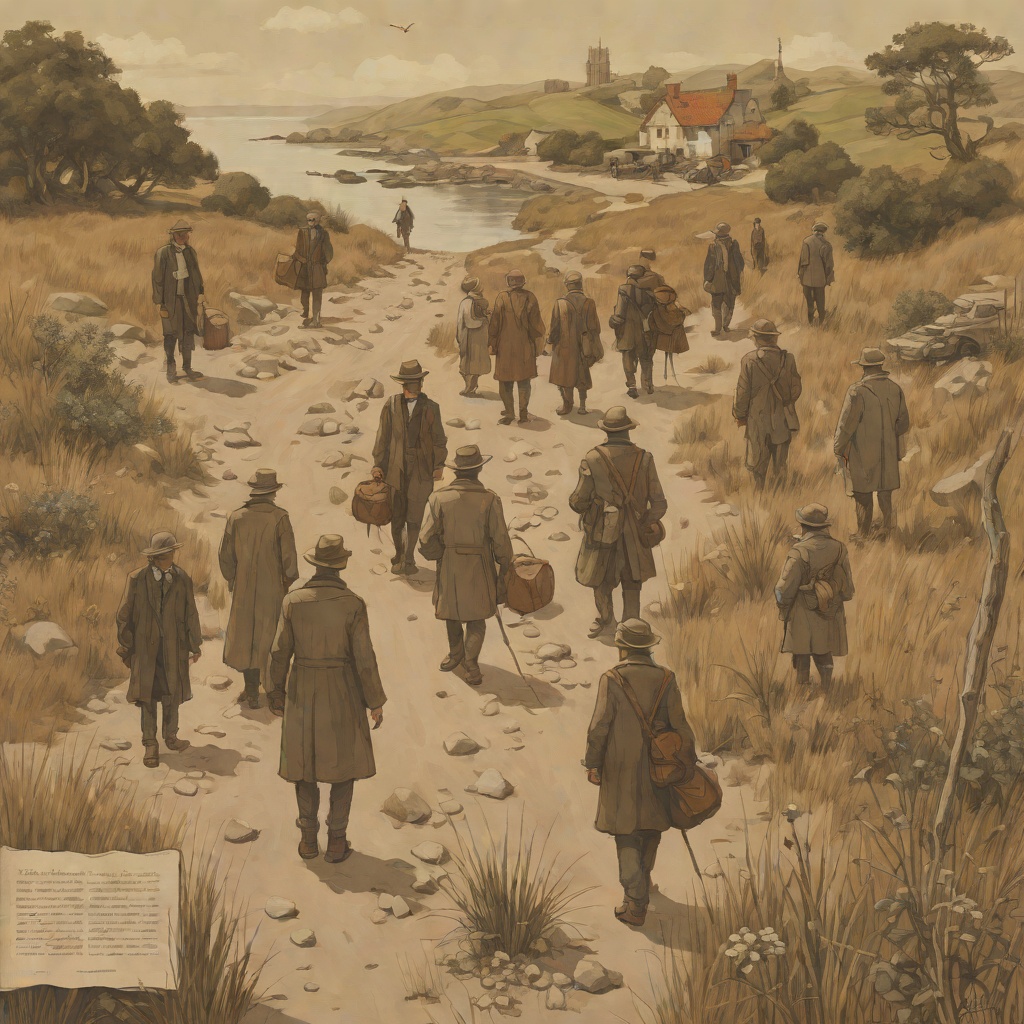
Glastonbury is the setting for Harold's most transformative encounters with the strangers who populate his path. He meets a tax inspector who is a Druid and has not worn a pair of shoes for ten years, a young woman on the trail of her real father, a priest who confesses to tweeting during mass, several people training for a marathon, and an Italian man with a singing parrot. Most significantly, he spends an afternoon with a white witch from Glastonbury, alongside a homeless man who had drunk away his house, four bikers looking for the M5, and a mother of six who confides she had no idea life could be so solitary. Harold walks with these strangers and listens, judging no one, and as the days wear on and time and places begin to melt, he can no longer remember if the tax inspector wore no shoes or had a parrot on his shoulder. It no longer matters. He has learned that it is the smallness of people that fills him with wonder and tenderness, and the loneliness of that too.
The Act of Prayer and Faith
Within Glastonbury's spiritual atmosphere, Harold performs his first deliberate act of faith. Visiting the cathedral, he sits in its chilled light, pouring like water from above, and reminds himself that centuries ago men had built churches, bridges and ships, all of them a leap of madness and faith. When no one is looking, Harold slips to his knees and asks for the safety of the people he has left behind and those who are ahead, asks for the will to keep going, and apologizes for not believing. This private prayer marks a profound departure from the man who left Kingsbridge, and it is here that the idea of the pilgrimage as something larger than a physical trek takes root. The world, he now understands, is made up of people putting one foot in front of the other, and a life might appear ordinary simply because the person living it had done so for a long time. Harold can no longer pass a stranger without acknowledging the truth that everyone is the same and also unique, and that this is the dilemma of being human.
A Threshold on the Pilgrim's Way
Glastonbury functions as a liminal space where Harold sheds the last of his old identity and embraces his new one as a pilgrim. The town's ancient associations with myth and spirituality resonate with the transformation he undergoes there, and the encounters he has in and around it prepare him for the trials ahead. He walks so surely it is as if all his life he had been waiting to get up from his chair. The lessons of Glastonbury — the value of listening, the wonder of smallness, the necessity of faith — become the compass that guides him through the Cotswolds, Warwickshire, and into middle England, where he will meet Mick and the pilgrims who gather around him. The town stands as the moment when Harold's walk ceases to be merely an act of will and becomes an act of belief, the point from which he measures his journey not in miles but in the people he has touched and the faith he has found.