Harold Fry and Dog
The Unlikely Pilgrimage of Harold FryThe dog enters Harold Fry's pilgrimage almost as a test of his resolve. It first appears on the other side of a road, a small thing the colour of autumn leaves with rough fur like a brush, studying the sky with its tongue to one side, having apparently waited all night outside a toolshed. When Harold insists, "That dog is nothing to do with me," the animal simply crosses the road and trots behind him, shrinking into the hedgerow with its head dropped whenever Harold looks back, as if it were not there at all—perhaps a statue of a dog. Harold's protest is the first of many, and it establishes the central paradox of their relationship: the dog is never his, and yet it chooses him anyway.
The Reluctant Adoption
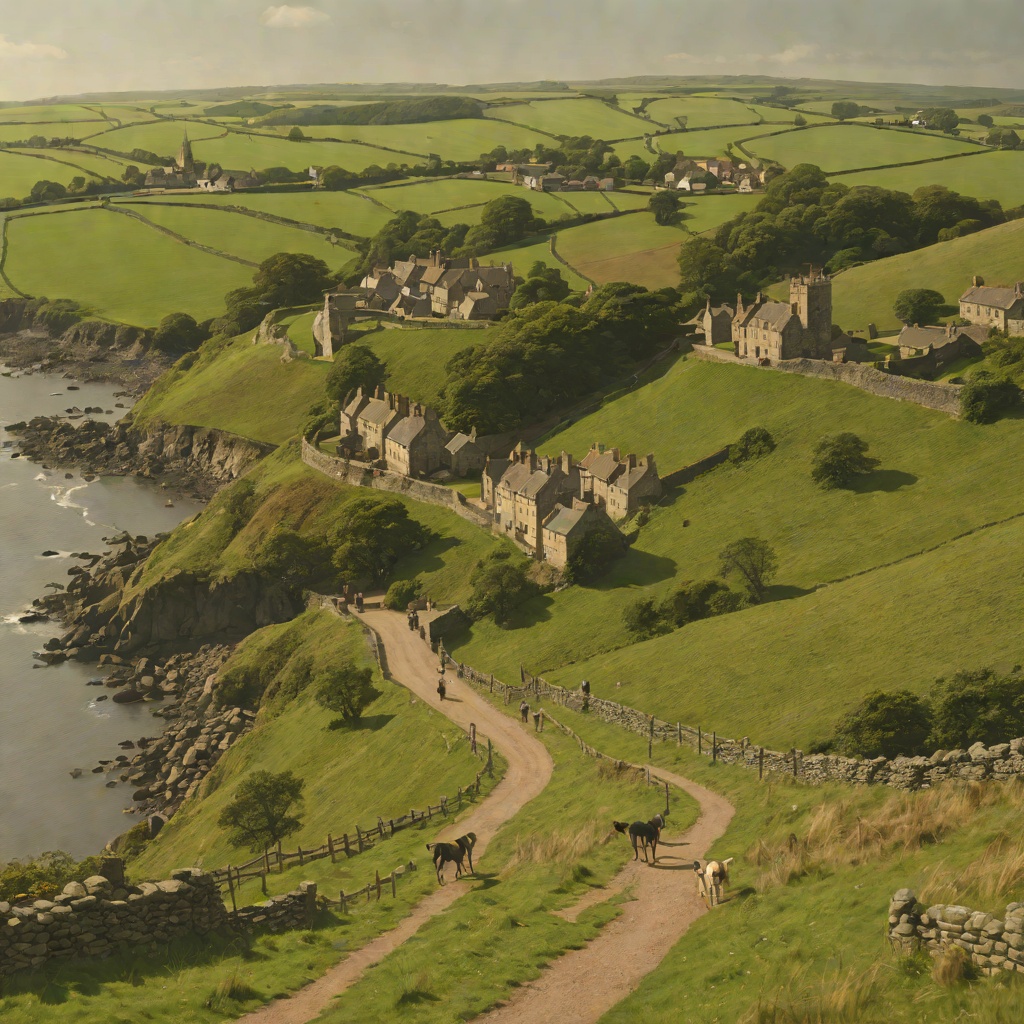
Harold's resistance to the dog is practical and sincere. "I can't look after a dog. I don't have food. And I'm walking to Berwick on busy roads. It's too dangerous. Go home, dog," he tells it, standing on the horizon of the dark moors of the Peak District. He and his companion Wilf even try to fool the animal by throwing its stone into a field and hiding behind a hedge, but the dog fetches the stone and sits beside the hedgerow, wagging its tail. "The trouble is, I reckon it likes you," Wilf whispers, and so they crawl out and continue, with the dog now sauntering openly at Harold's side. The diversion onto the quieter B6132 is slow—Wilf must keep stopping to pull off his trainers and shake them, and they cover only a mile—but the dog's persistence wins. It is a small, unassuming victory of loyalty over logic, and it sets the pattern for everything that follows.
A Companion Without a Name
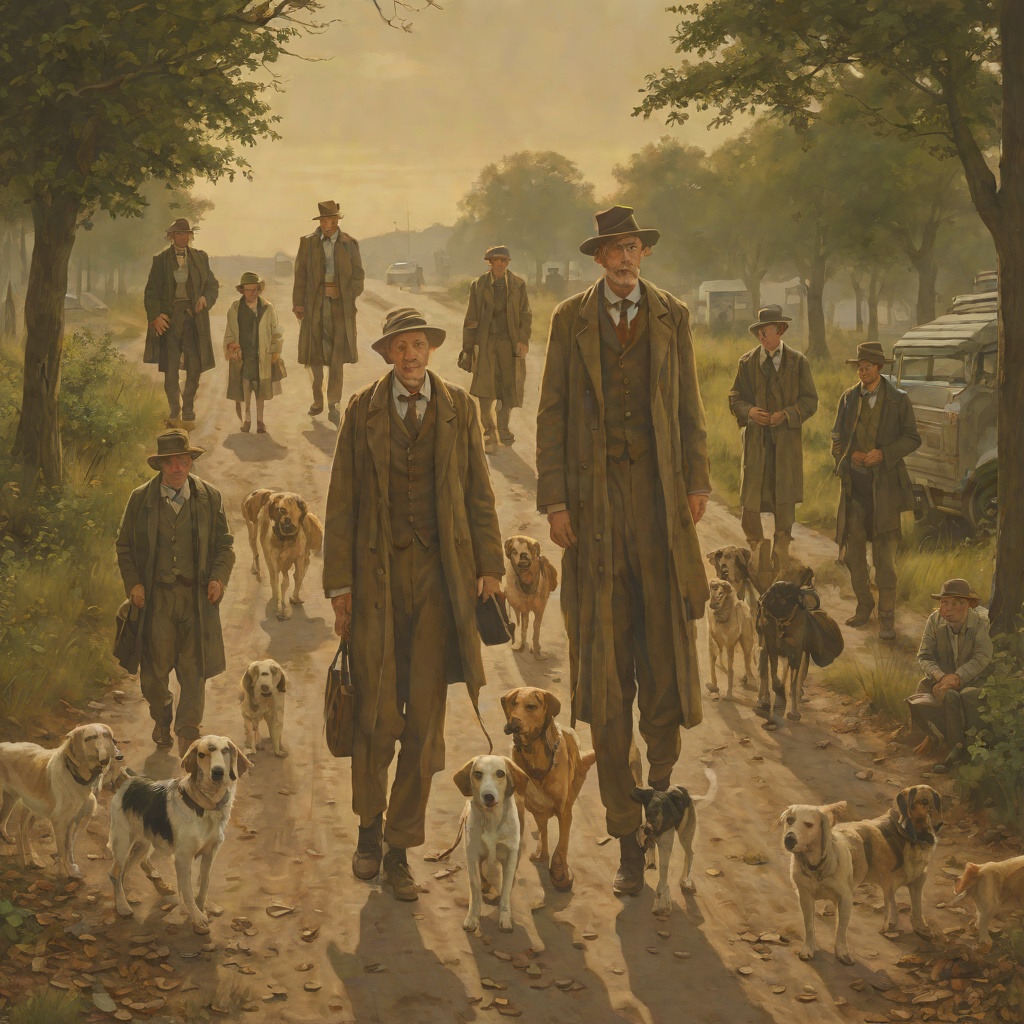
Harold's refusal to name the dog is deliberate and revealing. When a woman asks if he has given it a name, he explains, "Just Dog. It didn't seem right to give him anything else. He's-his-own-animal sort of thing. I felt a name might sound as if I thought I owned him." The dog, in turn, has its own habits: it brings stones, and Harold learns to be careful not to throw them, because if he does, the dog thinks he likes throwing stones and follows him. "He doesn't forget," Harold says with a laugh. The relationship is built on a mutual respect for autonomy—Harold does not claim the dog, and the dog does not demand anything of Harold beyond his company. It is a companionship of equals, the purest form of the communitas Harold experiences with the strangers he meets along the road.
The Watchful Presence in the Dark
As Harold's pilgrimage descends into crisis, the dog's role deepens. When Harold's flat, subdued feeling grows into something more violently accusing—when he dwells on how little he matters, on having made a mess of being a husband, father, friend, and son—the dog sits at his feet, watching with concern. It stops straying from Harold's path. It stops bringing stones. The dog's stillness mirrors Harold's paralysis, its concern a silent witness to his unraveling. Harold's thought that he "passed through life and left no impression" is immediately followed by the realization that the dog is missing, and the panic that floods him is the panic of a man who has lost the last creature that anchored him to the world. He retraces his steps, scouring the road and gutters, waving down cars to ask if anyone has seen "a little tufty thing about so high," but the drivers speed away as if he were dangerous, and a small child clings to her car seat and sobs at the sight of him.
The Departure at the Bus Shelter
Harold finds Dog sitting in a bus shelter at the feet of a young girl in a school uniform, with long dark hair almost the autumn colour of its fur and a kind look about her. She stoops to pat its head and picks up something by her shoe, stowing it in her pocket. Harold is about to call out, "Don't throw the stone," but he doesn't. The girl's bus draws up, she gets on, and the dog follows, looking as if it knows where it is heading. They do not look back or wave. Harold reasons that the animal made its own decision—it chose to walk with him for a while, and then chose to stop and walk instead with the young girl. "Life was like that," he reflects, but in losing his last companion he feels a further layer of skin ripped from him. He is afraid of what will come next, and knows he hasn't got it in him to take much more. The dog's departure is not a betrayal but a natural conclusion, and its absence accelerates Harold's collapse of faith at Wooler, his arguments with his compass, his looping circles, and his final, broken arrival at St Bernadine's Hospice.
The Significance of an Unpossessed Bond
The dog is the pilgrimage in miniature. It joins without invitation, stays without claim, and leaves without farewell—just as Harold himself walks into the lives of strangers and out again, leaving no trace. Harold's refusal to name it is the same instinct that makes him refuse lifts and extra packages of food, that keeps him true to his yachting shoes and his internal map of people and places. The dog teaches him, in its silent way, that connection does not require ownership, and that letting go is not the same as losing. When Harold later writes his confession letter to the garage girl, he does not mention the dog, but the lesson of their bond is woven through his understanding of his own journey: that he was both a part of things and not, both connected and passing through. The dog, like the pilgrimage itself, was never his to keep—only his to walk beside for a while.