Harold Fry and Joan
The Unlikely Pilgrimage of Harold FryHarold Fry and Joan is the story of a mother's abandonment and a son's lifelong struggle to understand it. Joan left Harold and his father when he was a teenager, sending a single misspelled letter that became the defining wound of his childhood. Her desertion shaped Harold's sense of being unwanted, surfaced throughout his pilgrimage as painful memories, and ultimately connected to the deeper losses—his son David's suicide, his estranged marriage—that the walk forced him to confront.
Identity and Background
Joan is a figure defined almost entirely by her absence. Harold never spoke of her, and his wife Maureen had never met her, only knowing that she had left without even a note. The few concrete details that emerge are stark: Joan packed a suitcase and walked out, leaving Harold and his father behind. Her only communication afterward was a single letter, written in a barely literate hand, which read: "Deer son, New Zeeland is a wonderful plase. I had to go. Muthering was not me. Send my best regads to your dad." The cruelty of the letter lay not merely in her leaving, but in her inability even to spell her explanation—the misspellings became a kind of final insult, a sign that she could not be bothered to articulate her reasons properly.
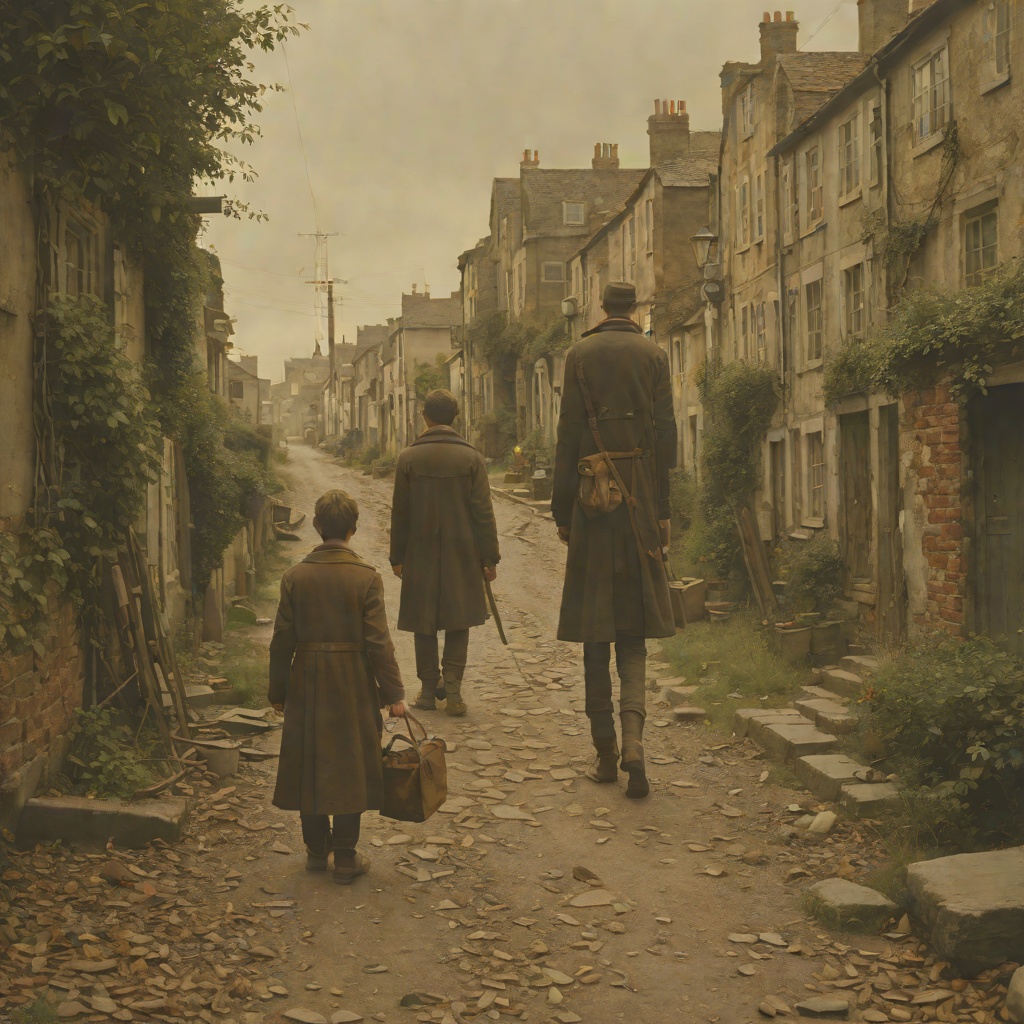
Harold's memory of her is dominated by a single vivid scene. He recalled asking her, "Where are you going?" as she lifted her suitcase and arranged a long silk scarf round her neck. It hung down her back like hair. When she answered "Nowhere," she was already opening the front door. He took hold of the scarf, just the tassels where she might not notice, and asked, "Can I come?" The silk was soft between his fingertips. The image of the scarf—something beautiful, trailing behind her as she left—became a recurring emblem of her departure, a detail that carried both her vanity and her indifference.
The Wound of Childhood
Harold's childhood home was cold, and the smell of whisky was in his school clothes. His father, left behind, was a man who trembled over a bottle, and Harold remembered his mother rolling her eyes at that trembling. The greatcoat that was his sixteenth-birthday present—a gift that marked the threshold of manhood—was itself a sign of the emotional poverty of his upbringing. For the first time, during his pilgrimage, Harold allowed himself to feel the pain of being a child that is not wanted by mother or father. He ranged for many hours in the dark, under a sky lit with infinitesimal stars, trying to capture a memory of his mother that might bring comfort. Images passed through his mind of Joan wetting her finger to turn the page of a travel magazine, or painting her lips with such care that he felt she was trapping something behind the colour. But nowhere could he find her kissing his head, or even telling him he would be all right.
The question that haunted him was simple and devastating: had she ever asked herself where he was? How he was doing? The absence of any answer was itself the answer. His mother's desertion left him with a template of abandonment that repeated throughout his life—a pattern of being left, of not being enough to make someone stay.
The Pilgrimage as Reckoning
Walking unleashed the past that Harold had spent twenty years seeking to avoid. As he walked, he no longer saw distance in terms of miles; he measured it with his remembering. The act of putting one foot in front of the other became a way of confronting what he had buried. His mother's departure surfaced alongside other losses—the fragility of David's head when he was born, the hollow cackle of a crow that reminded him of lying in his bed as a teenager, overwhelmed with loneliness. The walk became a kind of excavation, and Joan was one of the first layers he uncovered.
His encounter with Kate, a fellow pilgrim, deepened this reckoning. Sitting with her in silence, listening to the wind in the leaves of a willow, he found himself unable to articulate what his mother meant to him. He could try to find the words, but they would never hold the same meaning for her that they did for him. "My house," he would say; and the image that would spring to her head would be of her own. There was no saying it. The incommunicability of his childhood pain was itself part of the wound.
Connection to Deeper Losses
Joan's abandonment was not an isolated trauma but the first in a chain of losses that defined Harold's life. In his confession letter to the garage girl, he revealed the full scope of that chain: his son David's suicide, his wife's grief, his own drinking. The letter was an attempt to tell the full story, to unburden himself of twenty years of silence. But the roots of that silence reached back to Joan. The pattern of not speaking, of not being able to say the thing that mattered, began with a mother who left without a note and a father who trembled over a bottle.
Maureen, reflecting on Harold's decision to walk, connected it directly to Joan: "Like mother, like son." She had been tempted herself to call it a day, and it was David who kept her at home, not marital love. The parallel was inescapable—Harold, too, had left, though his leaving was a pilgrimage rather than a desertion. The difference was that Harold's departure was an act of faith, an attempt to save someone, whereas Joan's was an act of flight, an attempt to escape.
The Meaning of the Scarf
The silk scarf remained the most potent symbol of Joan's departure. It hung down her back like hair, a detail that suggested both femininity and flight. Harold's memory of it was tactile—the softness of the silk between his fingertips as he held the tassels, hoping she might not notice. It was a gesture of desperate, almost invisible clinging, a child's attempt to hold onto a mother who was already gone. The scarf was also a sign of her self-absorption: she arranged it with care even as she walked out on her family. In the end, the scarf was all Harold had of her—a memory of something beautiful that slipped through his fingers, leaving him with nothing but the question of whether he had ever been wanted at all.