Harold Fry's breakdown
The Unlikely Pilgrimage of Harold FryHarold Fry's breakdown is the physical and psychological collapse that overtakes the aging pilgrim near the end of his walk to Berwick-upon-Tweed, when exhaustion, memory loss, and despair strip away the faith that had carried him across England. It marks the darkest phase of his journey, in which he forgets his own son's name, argues with his compass, and loses all sense of time and purpose, before his wife Maureen finds him and begins the slow work of reconciliation. The breakdown is the counterweight to the ecstatic freedom of the early walk, the point where the pilgrimage's promise of redemption seems to fail utterly, and where the novel tests whether faith can survive the loss of its own object.
The Collapse of the Walk
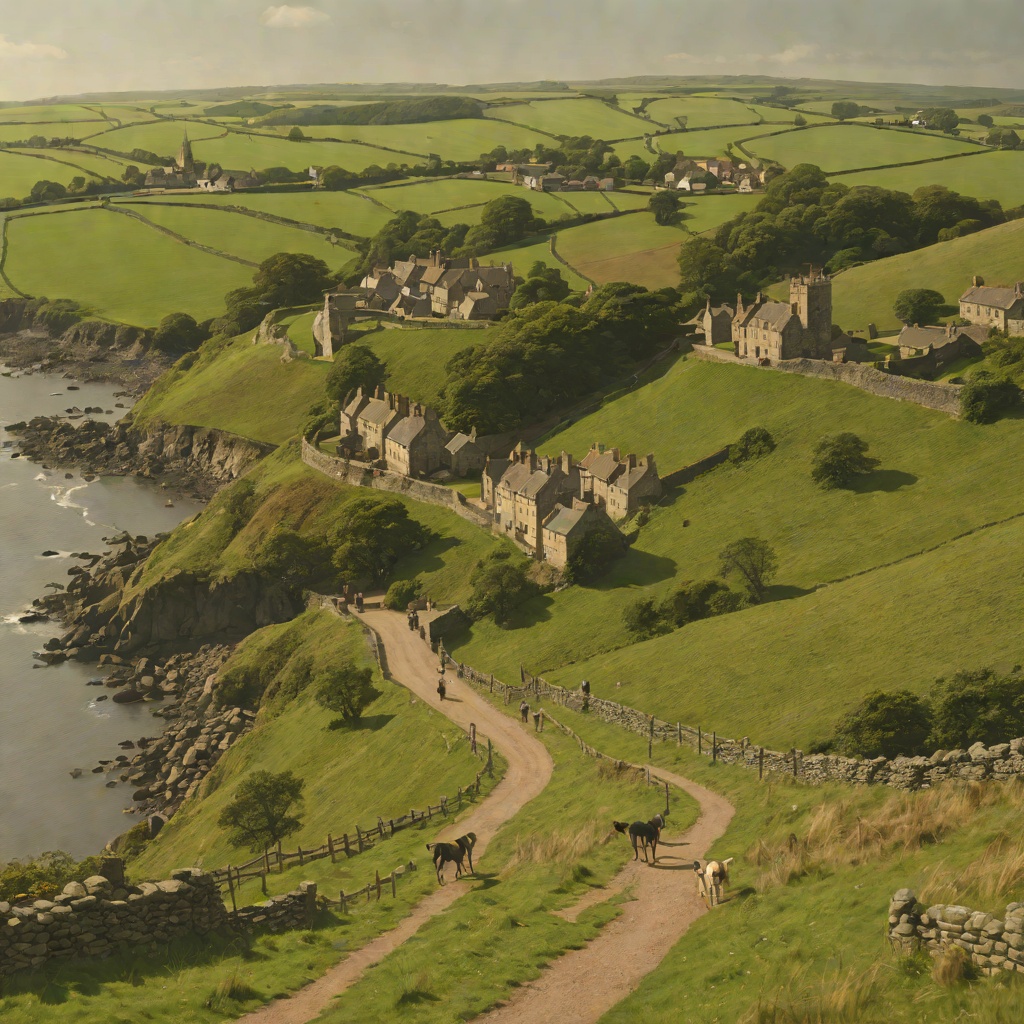
The breakdown unfolds as the physical and mental toll of the pilgrimage finally overwhelms Harold. The hours turned into days and he could not remember how one was different from another. He began to make mistakes, setting off with the first cracks of dawn, compelled to go towards the emerging light regardless of whether or not it lay in the direction of Berwick. He argued with his compass when it pointed south, convinced it was broken, or worse, that it was deliberately lying. Sometimes he walked ten miles only to discover he had travelled a large looping circle, and was back almost where he had started. He took diversions to follow a shout or a figure, but they led to nothing. Near the crest of a hill, he saw a woman calling for help, but after an hour of climbing he found she was a dead tree trunk. He frequently lost his footing and stumbled. When his glasses snapped a second time, he left them behind. The land was so expansive and he was so small that when he glanced back, trying to gauge the distance he had travelled, it seemed as if he had not advanced at all; his feet fell on exactly the same place where he had lifted them.
The Loss of Memory and Identity
Deprived of rest and hope, other things began to slip from him. He found he could not remember David's face. He could picture his dark eyes, and the way they stared, but when he tried to conjure up the fringe that flopped over them, he could see only Queenie's tight curls. It was like fixing a jigsaw together in his mind, but without all the pieces. How could his head be so cruel? Harold lost all sense of time, and whether or not he had eaten. It was not that he had forgotten; he no longer cared. He no longer took any interest in what he saw, or the difference between things, or their names. A tree was no more than another of the things he passed. And sometimes the only words in his head were the ones that asked why he was still walking when it would make no difference. A lone crow passed overhead, its black wings beating the air like a whip, and filled him with such inhuman fear that he went scampering for shelter. The deepest wound came in a café, when a manageress asked for his son's name and Harold's heart plummeted, as if he had stepped over a wall and was tumbling through emptiness. He could not remember his son's name. The manageress looked coolly back at him, waiting, waiting, with the customers behind her, and the kind man with his hand on Harold's sleeve. They had no idea of the horror, the confusion, the remorse raging inside him.
The Roots of the Collapse
The breakdown is the culmination of a journey that had always been a confrontation with the past. In walking, Harold had unleashed the past that he had spent twenty years seeking to avoid, and it chattered and played through his head with a wild energy that was its own. He no longer saw distance in terms of miles; he measured it with his remembering. The memories that surfaced were often beautiful, but some were the ones he most feared. A memory surged into his mind near Taunton, one of those that Harold most feared, of an afternoon twenty years ago when it had all come to an end. He could see his hand reaching for the wooden door, feel the warmth of the sun on his shoulders, smell the mouldering, heated-up air, hear the stillness of a silence that was not what it should be. He shouted 'No,' batting out at the rain, and suddenly his calf exploded as if the skin-side of the muscle had been sliced open. The ground tipped at an angle, and seemed to swell. He reached out a hand to stop it, but in the same moment his knees buckled and his body lurched to the ground. The breakdown was also the price of the faith that had sustained him. He had walked with the conviction that Queenie would live, that as long as he walked she must live, and that the smallness of people filled him with wonder and tenderness. But that faith, which had made him laugh with the simplicity of it, could not be sustained indefinitely against the accumulating weight of grief, exhaustion, and the knowledge that he had buried his son.
The Confession and the Aftermath
The breakdown finally forces Harold to confront the truth he had been carrying. In a letter to the girl in the garage, he confessed the full story: twenty years ago he had buried his son. David had hanged himself in the garden shed, with some rope tied to one of the hooks Harold used for garden tools. It was Harold who discovered him. He lifted him down, but there was no life. He was too late. The coroner said it must have taken a long time to tie the noose, and Harold wished they had not told him that. He had been drinking, keeping bottles in paper bags under his desk, and one night, when he was really out of it, he dismantled the garden shed. Even that was not enough, so he broke into the brewery and did something terrible. Queenie knew it had to be him and she took the blame. She was fired on the spot and then she disappeared. Harold let her go. He let her take the blame. But he gave up drinking. The breakdown is thus not merely exhaustion; it is the collapse of the repression that had held this story at bay for twenty years. When Maureen finally meets him, he tells her he is frightened that one day, maybe soon, he will lose his memories again, and this time it will be for ever. He could not remember David's name, and he cannot bear the thought that he might look at her face one day and not even know her. She tells him he is not losing his memory, that he is just very, very tired. But when she meets his gaze, it is naked, and the years fall away. She sees again the wild young man who had danced like a demon all those years ago, and filled every vein of her with the chaos of love. The breakdown, which seemed to be the end of everything, becomes the beginning of their reconciliation.