Harold Fry's pilgrimage
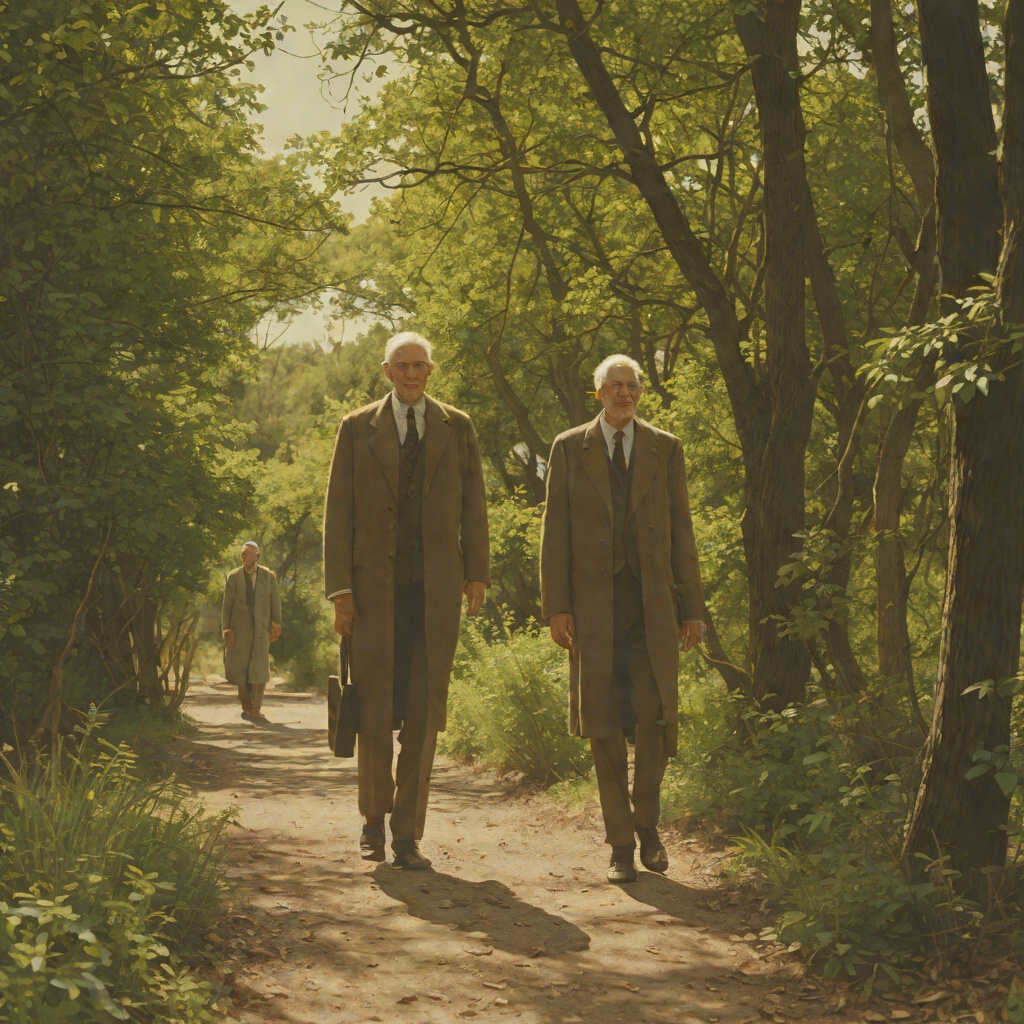
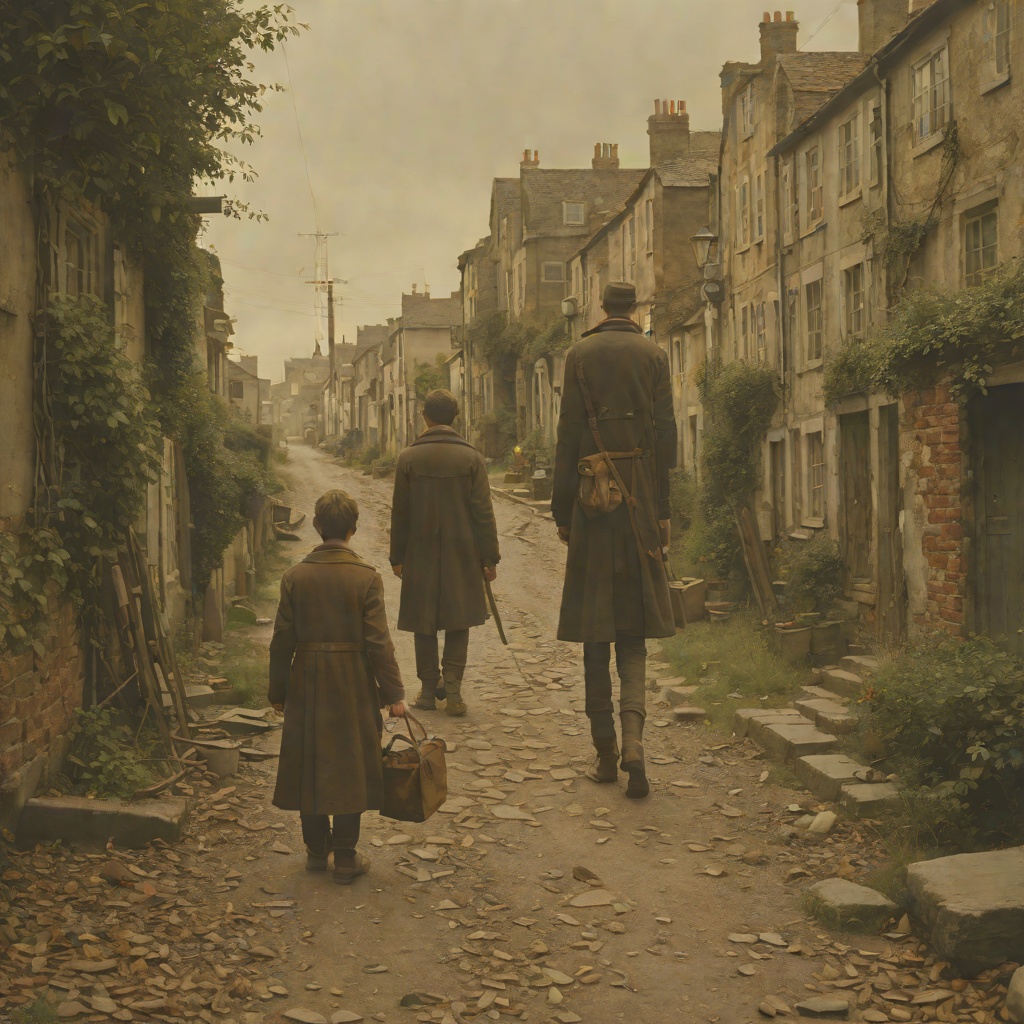
The Unlikely Pilgrimage of Harold FryHarold Fry's pilgrimage is the improbable, transformative journey at the heart of the novel: a sixty-five-year-old retired brewery representative walks the length of England, from Kingsbridge in South Devon to St Bernadine's Hospice in Berwick-upon-Tweed, a distance of six hundred and twenty-seven miles, over eighty-seven days, in a desperate attempt to keep his dying former colleague Queenie Hennessy alive. The walk begins as a simple errand—to post a letter—and becomes a national phenomenon, a personal reckoning, and a test of faith, all carried out in a pair of yachting shoes and without a map, compass, waterproof, or mobile phone. It is the engine of the entire narrative, the event that forces Harold to confront the grief, guilt, and estrangement that have defined his life, and that ultimately leads him to a kind of redemption.
Origins and the Decision to Walk
The pilgrimage begins not with a grand plan but with a letter. Harold Fry leaves his home on Fossebridge Road one morning to post a letter to Queenie Hennessy, a woman who twenty years ago proved herself a friend, and who is now dying of cancer in a hospice at the other end of the country. He has no hiking boots or map, let alone a compass, waterproof, or mobile phone; all he knows is that he must keep walking, to save someone else's life. The decision crystallizes in a phone box outside a pub, after he has spoken to the hospice and learned that Queenie is asleep. Standing in the phone box, he pictures Queenie dozing at one end of England and himself at the other, with roads, fields, rivers, woods, moors, peaks, and valleys in between. There is no deliberation, no reasoning; the decision comes in the same moment as the idea, and he is laughing at the simplicity of it. He tells the voice on the line: 'Tell her Harold Fry is on his way. All she has to do is wait. Because I am going to save her, you see. I will keep walking and she must keep living.' He insists he is coming by foot, from South Devon all the way up to Berwick-upon-Tweed, and when the voice on the line is exasperated, he shouts, 'I'm walking.'
The Walk Itself: Body, Mind, and Landscape
The physical reality of the walk is immediate and punishing. On his first morning, Harold inspects his feet in a hotel room, finding his toes soft and pale, tender around the nails, with a possible blister forming on his heel; he is quietly proud, considering his years and his lack of fitness. The blisters soon become more painful, and he develops a way of shoving his toes towards the front of his shoe to avoid the leather biting into his ankle. He walks through the landscape of England—the rolling hills and blue outline of Dartmoor, the Blackdown Hills, the Mendips, the Malverns, the Pennines, the Yorkshire Dales, the Cheviots—and the land itself becomes a measure of his progress. He feels vulnerable, a single figure without his mobile phone, but as he finds his rhythm, England opens beneath his feet, and the feeling of freedom, of pushing into the unknown, is exhilarating. He walks by day or by night, as the mood takes him, mile after mile after mile, binding his blisters with blue duct tape, sleeping when the need comes, and then returning to his feet. The walk becomes a mantra: he is the words 'You will not die,' and they are also his feet, though sometimes the words march themselves in different orders—'Die you will not,' or 'Not will you die,' or even plain 'Not not not.' The simplicity of placing one foot in front of the other is joyful; if he keeps going forward, he will of course arrive.
Memory, Grief, and the Unlocking of the Past
Walking unleashes the past that Harold has spent twenty years seeking to avoid. He no longer sees distance in terms of miles; he measures it with his remembering. Passing allotments, he sees Maureen in the front garden of Fossebridge Road, wearing an old shirt of his, her hair tied back against the wind, digging in French-bean plants. He recalls the fragility of David's head when he was born, and the hollow cackle of a crow in the silence brings back the loneliness of his teenage bed. A memory he most fears surges into his mind—the afternoon twenty years ago when it all came to an end—and he cannot hide from it, even as he shoots his elbows out sideways to go faster and drives his feet against the paving stones with fury. The walk forces him to confront the truth he has buried: that his son David hanged himself in the garden shed, that he discovered the body, that he was too late. He remembers driving Maureen to the funeral director's to see David one last time in the coffin, she having packed a red rose, a teddy bear, and a pillow to go beneath his head, and he remembers sitting outside with his head in his hands, waiting his turn, until a passer-by offered a cigarette and used three matches to light it because his fingers shook so hard. The walk is not an escape from this grief but a passage through it.
Encounters, Gifts, and the Renunciation of Possessions
Along the way, Harold meets strangers who offer him comfort, shelter, and food, and he learns that it is as much a gift to receive as it is to give. Martina, a woman abandoned by her partner, treats his feet, gives him two pairs of walking socks, a roll of blue duct tape, an empty rucksack, and a brass compass—all her partner's things—and plants a soft kiss on his cheek, saying, 'Go well, Harold. And you owe me nothing for the room. You were my guest.' He leaves her a postcard of thanks, and pats her partner's dog at the foot of the stairs. In Cheltenham, he begins to shed his possessions: he donates his washing powder to a student, offers his wind-up torch to a woman who cannot find her key, gives his plasters and antiseptic cream to the mother of a distressed child with a bleeding knee, and hands his comb to the child by way of distraction. He gives his guide to Britain to a bewildered German couple, and since he knows the plant dictionary by heart, he suggests they might like that too. He rewraps the gifts for Queenie—the pot of honey, the rose quartz, the glittering paperweight, the Roman key ring, and the wool hat—and parcels up recent souvenirs for Maureen, sending them to a post office. He keeps the compass and the rucksack because they are not his to give away. He sees that when a person becomes estranged from the things they know, strange things take on a new significance, and it seems important to allow himself to be true to the instincts that make him Harold, as opposed to anyone else.
Fame, Doubt, and the Approach to Berwick
Harold's walk attracts attention. A young man named Mick, whom Harold meets south of Coventry, buys him a lemonade, toasts his courage, and declares, 'What you're doing is a pilgrimage for the twenty-first century. It's awesome. Yours is the kind of story people want to hear.' Mick takes Harold's photograph on his mobile phone, and the image spreads, drawing followers and media coverage. But fame brings doubt. An actor Harold meets dismisses the walk: 'Bollocks to the walk. What does it matter if you walk or get a lift? It makes no difference how you get there. You've just got to see her.' Harold's voice trembles as he insists, 'The walk is the idea. That's how she will live.' He knows that in order to succeed he must remain true to the feeling that inspired him in the first place, that it doesn't matter that other people would do it in a different way. He will keep to the roads, stick to his yachting shoes despite the wear and tear, and follow the map in his mind, made up of all the people and places he has passed. As he nears the end, the walk strips him to essentials: 'On, on, on. These were the only words. He was no more than a body that housed a walk. He was blue-duct-tape feet and Berwick-upon-Tweed.'
Arrival and the Meaning of the Journey
Eighty-seven days after setting out to post a letter, Harold Fry arrives at the gates of St Bernadine's Hospice. Including mistakes and diversions, his journey has amounted to six hundred and twenty-seven miles. The building before him is modern and unassuming, flanked by trembling trees, with an old-fashioned street lamp close to the main entrance and a sign pointing to a car park. Several bodies sit in deck chairs on the lawn, like clothes set out to dry, and a seagull wheels and barks overhead. Harold walks the soft curve of the tarmac drive and lifts his finger to the buzzer, wishing the moment would hold itself, like an image cut out of time—his dark finger against the white button, the sun on his shoulders, the seagull laughing. But as his mind flees back over the miles, he sees roads, hills, houses, fences, shopping centres, streetlights, and post boxes, and there is nothing extraordinary about any of them; they are simply things he has passed, that anyone might have passed. The thought fills him with sudden anguish, and he is afraid at the point where he had least expected to feel anything other than triumph. His finger remains suspended over the buzzer, not pressing it. What had it all been about? The question hangs in the air as he stands at the threshold, his journey over, and the answer—in the meeting with Queenie, the farewell, and the reconciliation with Maureen that follows—will be the novel's final revelation.