Harold and Maureen meet at a Woolwich dance
The Unlikely Pilgrimage of Harold FryHarold and Maureen meet at a Woolwich dance is the novel's hidden origin, a single night of jiving and laughter that neither spouse can fully remember at first, yet which proves to be the key that unlocks their reconciliation. The event happened forty-seven years before the pilgrimage, when Harold was a young man with thick hair slicked to a peak with gel and Maureen was a young woman whose dark, long hair fell like velvet either side of her face. It is the moment their paths became linked, the night Harold first touched a stranger, and the source of the one joke so ordinary and so happy that, decades later, it still reduces them both to helpless, streaming-eyed laughter on a Berwick beach. The recovery of this memory — first by Maureen, then by Harold — becomes the emotional climax of their reunion, the proof that the love they thought was dead had merely been waiting to be remembered.
The Night of the Dance
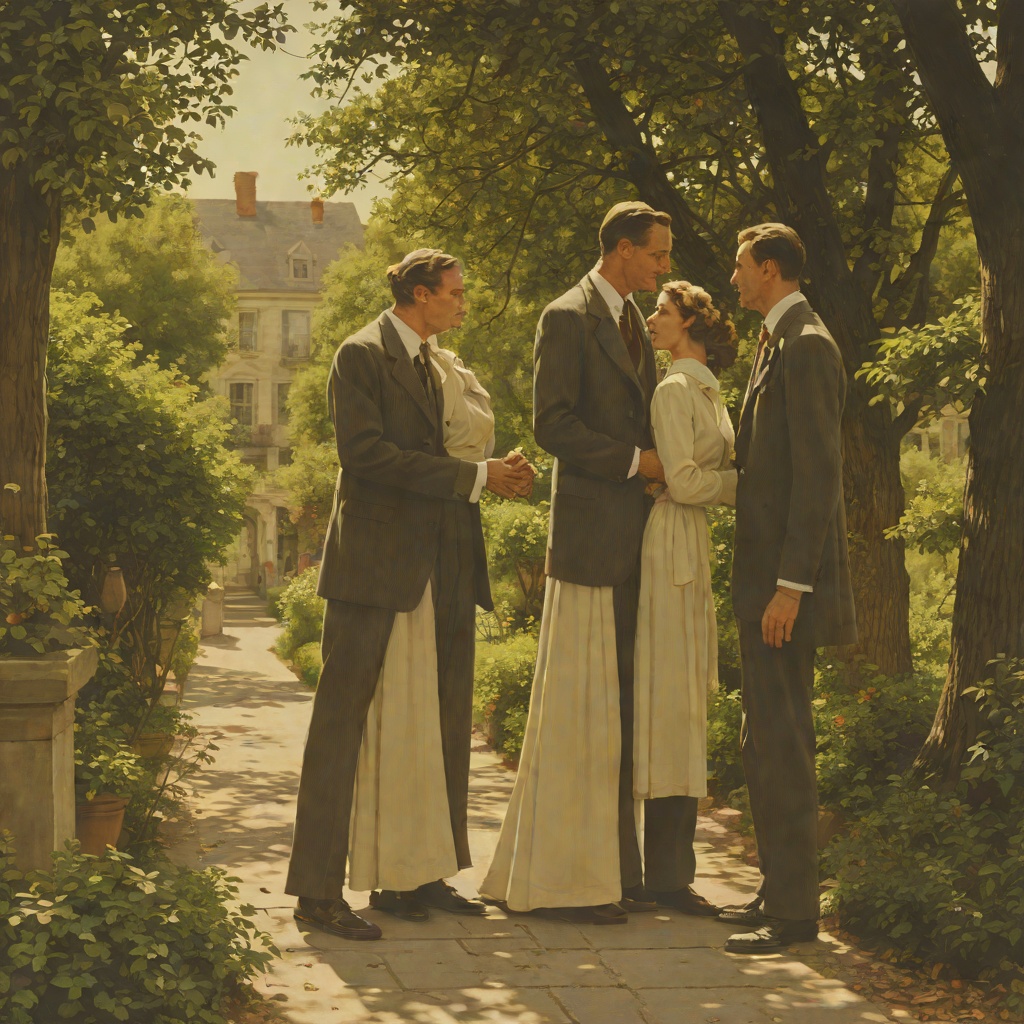
The dance took place in Woolwich, in a dark, throbbing hall where the young men Maureen's mother introduced her to were all stiff partings and black tie. Harold stood out immediately. Maureen noticed him straight away; she could not miss him. He was jiving by himself in the middle of the dance floor, the flaps of his coat flying out like great dog-tooth-check wings, as if he were dancing something out that was locked inside himself. She had never seen anything like it. It was the raw energy of him that moved her, the completeness of what he was. Maybe he sensed her watching, even across that dark, throbbing hall, because he stopped suddenly and caught her eye. He danced some more, and she continued watching, transfixed. He stopped again, caught her eye again, and then threaded his way through the crowd and halted so close she could smell the heat of his skin.
The Bold Gesture
What happened next was the boldest thing Harold had ever done. He stooped with his mouth towards Maureen's ear and parted a small lock of her hair so that he could speak into it. The gesture sent prickles of electricity shooting the length of her neck; even decades later, remembering it, she felt a distant fluttering under her skin. Then he said something funny, and they laughed so much it brought on an embarrassing bout of hiccups. Harold remembered the coat swinging as he strode to the bar to fetch a glass of water, and how Maureen had not moved, waiting for him. In those days, she recalled, it was as if the world only put its lights on when Harold was near. The two young people who danced and laughed so completely seemed almost unrecognizable to the couple they would become.
The Forgotten Joke
For Harold, the memory was harder to reach. When Maureen told him on the phone, 'It was at a dance in Woolwich. You touched my neck. Then you said something funny. We laughed and laughed,' he frowned with the effort of picturing it. He recalled a dance, but all he could see beyond that was how beautiful she had been, and how delicate. He remembered dancing like an idiot, and her dark, long hair falling like velvet either side of her face. But it seemed unlikely he had been bold enough to walk across a crowded room and claim her. It seemed unlikely he had made her laugh and laugh. He wondered if she was mistaking him for someone else. The joke itself remained lost to him, buried under twenty years of silence and grief.
The Recovery at Berwick
The full memory returned to Harold only at the very end of his pilgrimage, standing with Maureen on the shore at Berwick-upon-Tweed. He remembered how it felt to fling his arms and legs, as if shaking off all that had come before, while witnessed by such a beautiful young woman. Emboldened, he had danced more, even more crazily, feet kicking the air, hands like slippery eels. He had stopped and checked again. She was still watching. This time she had caught his eye and laughed. She was so full of it, her shoulders shaking, her hair slipping over her face, that for the first occasion in his life he had not been able to resist the temptation to stride through a crowd and touch a stranger. Beneath her velvet hair, the cushion of skin was pale and soft. She had not flinched. 'Hello, you,' he had said. His childhood was shorn away and there was nothing but himself and her. He knew that whatever happened next, their paths were linked. He would do anything for her.
The Joke Revealed
When Harold finally tried to tell Maureen what she had said, neither of them could get it out. Each time they opened their mouths, they were hit by a fresh wave of helpless laughter. They had to grip hands to steady themselves. 'Oh God,' she spluttered, 'oh God. It wasn't even very witty.' The laughter came in sobs and squeals, then whooshed up behind her like a huge wave, catching her unawares and erupting into a violent hiccup. They hung on to one another's arms, bent over, shaking with how funny it was. Their eyes were streaming; their faces ached. 'People will think we're having a joint heart attack,' she roared. Harold insisted it was not what he said but what she said — he said hello, and then she looked up at him and said something that neither could repeat. 'You're right. It wasn't even funny,' said Harold, wiping his eyes with his handkerchief. 'That was the thing, love. It was ordinary. It must have been funny because we were happy.'
The Meaning of the Memory
The recovery of this night transforms the couple's reunion. Maureen had already told Harold, 'I love you, Harold Fry. That is what you did,' and held him tight until the grief passed, kissing his salty wet cheeks and calling him a dear man. She had told him that getting up and doing something, trying to find a way when you don't even know you can get there, was a small miracle. But the dance memory adds something deeper: it restores the young people they once were, before David's death, before the net curtains, before the separate beds. The joke they cannot repeat is the proof that their love was always ordinary and always real, and that happiness, not grief, was their original condition. Walking back towards the water's edge, two small figures against the black waves, they caught hands again, and halfway there one of them must have remembered again and it passed like a fresh current of joy between them. They stood at the water's edge, not letting go, and rocked with laughter.
Narrative Significance
The Woolwich dance is the novel's structural opposite of its central trauma. Where David's suicide in the garden shed is the event that silence buried, the dance is the event that laughter preserved. Harold's confession letter to the garage girl describes how he buried his son, how Maureen put up net curtains so the neighbours could not pry, how she kept David's room exactly as it was the day he died, and how every time she looked at him she saw David dead. The dance memory cuts against all of that: it is the one night before the grief, the night Harold danced something out that was locked inside himself and found a woman who watched him without flinching. Its recovery at the end of the pilgrimage completes the arc that began with Harold's promise to walk to Berwick-upon-Tweed, and it gives the couple the language they lost — not the small words they exchanged to stay safe, but the shared laughter that needs no words at all.