Harold and Maureen's estrangement
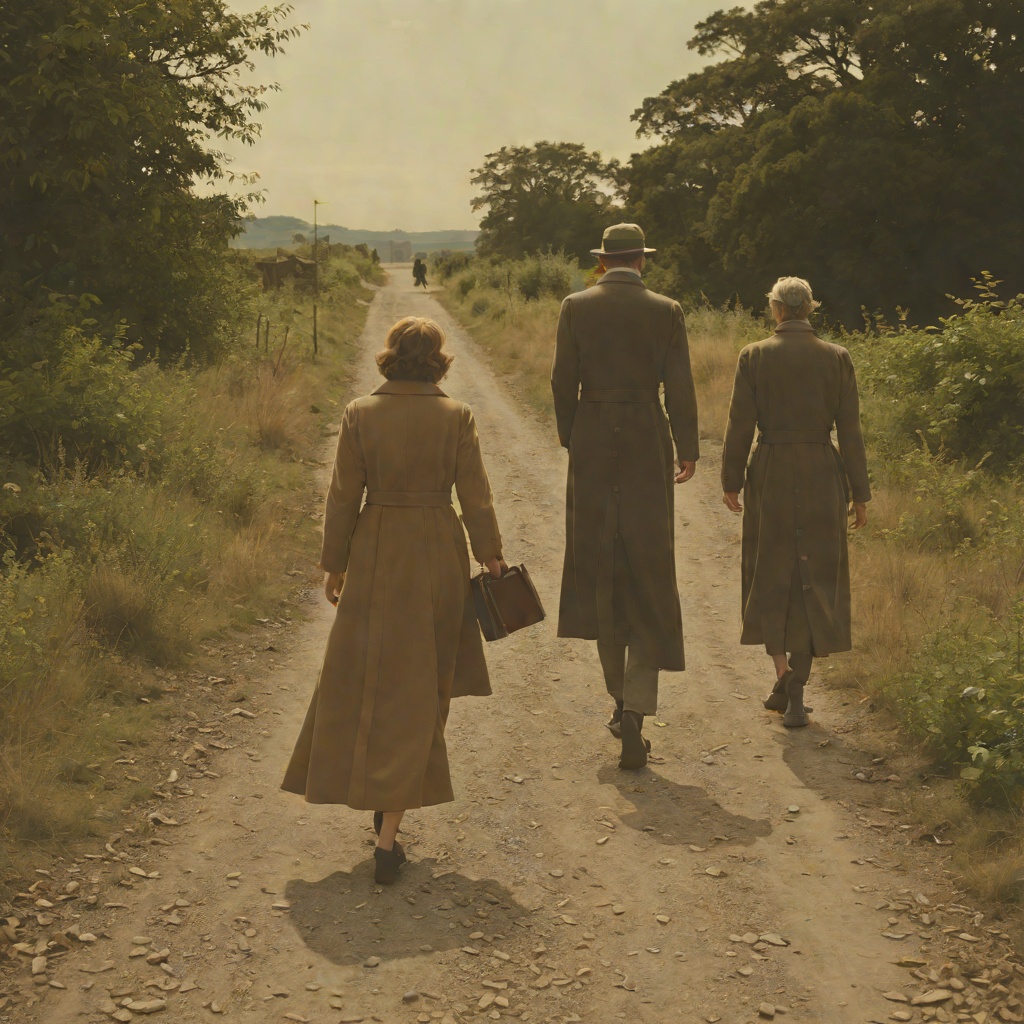
The Unlikely Pilgrimage of Harold FryHarold and Maureen's estrangement is the long, quiet catastrophe at the heart of the Fry marriage, a twenty-year silence that hardens into a way of life long before Harold Fry ever sets out for Berwick-upon-Tweed. It is not a single quarrel but a slow accretion of unspoken grief, a state in which two people who once shared a bed and a son learn to inhabit the same house as strangers. The novel traces this estrangement from its origin in the unbearable aftermath of David's suicide, through the years of separate bedrooms and meaningless small talk, to the fragile, unexpected thawing that Harold's pilgrimage makes possible. It is the domestic wound that the walk both exposes and, ultimately, begins to heal, and it is inseparable from the larger story of atonement and redemption that drives the book forward.
Origins in Grief and Blame
The estrangement has its roots in the death of David Fry, Harold and Maureen's only son, who hanged himself in the garden shed with rope tied to one of the hooks Harold used for garden tools. The coroner's verdict was suicide, and the detail that David, full of alcohol and pills, must have taken a long time to tie the noose became a fact Harold could not forget. It was Harold who discovered the body, who lifted his son down and prayed, despite not being a religious man, 'Dear God, please let him be OK. I will do anything.' He was too late. In the aftermath, Maureen took the loss terribly. She would not leave the house, and she put up net curtains because she did not want the neighbours prying. Gradually those people moved away, and no one knew about the Frys or what had happened. But every time Maureen looked at Harold, he knew she saw David dead. She began talking to her son as if he were still with her, and she kept his room exactly as it was the day he died, unable to let him be dead. The blame was not long in coming. Just before Queenie's disappearance, things finally ripped open and splintered apart. Maureen railed and sobbed and beat Harold's chest with her fists, howling, 'Call yourself a man?' and, another time, 'It's your fault. All this. It would have been fine, if it hadn't been for you.' She wept in his arms afterwards and apologized, but the words were in the air when he was alone, and there was no unsaying them.
The Twenty-Year Silence
After the railing came the silence, and this new silence was different from what had come before. Whereas once they had wished to spare one another pain, now there was nothing left to salvage. Maureen no longer blamed Harold aloud; she no longer cried in front of him, and she would not allow him the comfort of holding her. She moved her clothes into the spare room, and Harold lay in their marital bed, not going to her because she did not want him, but tortured by her sobs. Morning would come, and they would use the bathroom at different times. He would dress and eat breakfast while she paced from room to room, as if he was not there, as if never keeping still was the only way to contain a person's feelings. Their exchanges dwindled to the barest rituals: 'I'm off.' 'OK then.' 'See you later.' 'Yes. OK.' The words meant nothing; they might as well have been Chinese. There was no bridging the gap that lies between two human beings. Just before his retirement, Harold suggested they might for once go to the brewery Christmas party, and she stared back at him with her mouth gaping as if he was guilty of assault. The estrangement had its own geography: separate beds at 13 Fossebridge Road, separate rooms, a house divided by an unspoken pact. Harold remembered wondering when exactly she had stopped opening her mouth as they kissed, whether it was before or after some unnameable moment. He recalled that years earlier, after David's rejection of them, Harold had come down with a cold and Maureen had moved into the spare room; somehow or other neither of them had mentioned it, and somehow or other she had never moved back. The morning he left on his pilgrimage, she was nagging him about white bread and the jam, and he walked off. She would later confess to Rex that it had not been a marriage for twenty years.
The Unbridgeable Difference
The estrangement was sealed by a specific, terrible asymmetry in how Harold and Maureen each said goodbye to their son. Harold lived again the afternoon he had driven Maureen to the funeral director's to see David one last time in the coffin. She had packed a few things: a red rose, a teddy bear, and a pillow to go beneath his head. In the car, she had asked Harold what he was going to give, knowing he had nothing. The sun had shone very low, torching his eye as he drove, and they both wore sunglasses. Even at home, she did not take them off. At the funeral director's, she surprised him by saying she wanted to say goodbye to David alone. Harold sat outside with his head in his hands, waiting his turn, until a passer-by stopped to offer a cigarette and Harold took it, although he had not smoked since the days on the buses. His fingers shook so hard on the cigarette that the passer-by used three matches to light it. The thick nicotine caught in his throat, and as he stood and bent over a rubbish bin, he was met with the bitter stench of decay. Then, from behind him, the air was pierced with a harsh, deep sobbing cry, so animal in its intensity he was struck still. He heaved a white spume of foam into the bin. When Maureen came out, she caught his eye once, and then her hand shot to her sunshades; she had been crying so hard her whole being seemed liquid. He realized with shock how thin she had grown; her shoulders were like a hanger inside her black dress. He wanted to walk to her, to hold her, and be held, but he smelt of the cigarette and his vomit, so he hovered beside the bin, pretending he had not seen her, and she walked straight past him to the car. As they drove home in silence, Harold knew that something had passed between them which could never be undone. He had not said goodbye to his son. Maureen had; but Harold had not. There would always be this difference. He felt that in that one glance they had made a pact that would oblige them for the rest of their lives to say only what they did not mean, and to wrench apart what they most loved.
The Walk as Exposure and Turning Point
Harold's decision to walk to Berwick-upon-Tweed, made in a phone box outside a pub after receiving Queenie Hennessy's letter, was the first crack in the edifice of silence. When he phoned Maureen to tell her, she was thrown by how sure he sounded. She reminded him he was sixty-five, that he only ever walked to get to the car, that he had left his mobile phone, and demanded to know where he thought he was going to sleep. He answered, stripped away, that it was not enough to post a letter, that he needed to do this. She felt the spark of heat ignite to a bolt and said, 'Well, you head off to Berwick, Harold. If that's what you want. I'd like to see you get past Dartmoor—' before the line was staccato'd with pips. Later, when he called again from Loddiswell to ask if it was OK with her that he was walking, she answered, 'It has to be,' and hung up. The walk itself became a kind of exposure of everything the marriage had buried. As Harold walked, he unleashed the past he had spent twenty years seeking to avoid, and it chattered and played through his head with a wild energy that was its own. He no longer saw distance in terms of miles; he measured it with his remembering. He saw Maureen in the front garden of Fossebridge Road, wearing an old shirt of his, her hair tied back against the wind and her face smutched with dirt, as she dug in French-bean plants. He remembered the fragility of David's head when he was born. The walk forced him to confront the memory of the afternoon twenty years ago when it had all come to an end, the memory he most feared and was normally so good at repressing. He could see his hand reaching for the wooden door, feel the warmth of the sun on his shoulders, smell the mouldering, heated-up air, hear the stillness of a silence that was not what it should be. He shouted 'No' and batted out at the rain, and his calf exploded as if the skin-side of the muscle had been sliced open, and he fell to the ground. The physical collapse was the price of finally facing what the marriage had spent two decades refusing to say.
The Confession and the Thaw
Harold's confession came in a letter to the girl at the garage, in which he finally told the full story: the buried son, the drinking that started as one to keep him steady before the coroner's report, the bottles kept in paper bags under his desk, the night he dismantled the garden shed, the terrible thing he did at the brewery, and Queenie taking the blame and being fired on the spot. He let her go; he let her take the blame; but he gave up drinking. Maureen and he fought for a long time, and then gradually they stopped talking. She moved out of their bedroom. She stopped loving him. There were many times he thought she would leave, but she did not. The act of telling, of writing it all down, was itself a form of repair, a breaking of the silence that had defined the marriage. The thaw began in earnest when Maureen, prompted by Rex, began to acknowledge the truth of what the marriage had become. She admitted she missed Harold almost as much as she missed David, and that she wanted to see him very much, but she floundered at the thought of catching up with him, afraid of how she would feel if he did not want her after all, if he really was leaving for good. She confessed that they did not talk, not any more, not properly, and that it had not been a marriage for twenty years. When she finally met Harold in Darlington, the accumulated grief of two decades began to break. She held him tight until the grief passed, kissed his salty wet cheeks, and told him, 'You got up, and you did something. And if trying to find a way when you don't even know you can get there isn't a small miracle, then I don't know what is.' And then, cupping his face in her palms, she whispered, 'I love you, Harold Fry. That is what you did.' The estrangement, which had seemed as permanent as the net curtains she hung to keep the world out, was finally, tentatively, bridged. The twenty-year silence ended not with a grand reconciliation but with a single whispered sentence, spoken in the presence of the death that had caused it all.