Harold and the oncologist in Bath
The Unlikely Pilgrimage of Harold FryHarold and the oncologist in Bath is a pivotal scene in which Harold Fry, mid-pilgrimage, meets an American oncologist in a teashop and, through the doctor's casual observation, discovers that Queenie Hennessy's letter was written in her own deteriorating handwriting — a revelation that shatters his faith in the walk and forces him to confront the reality of her illness.
The Meeting in the Teashop
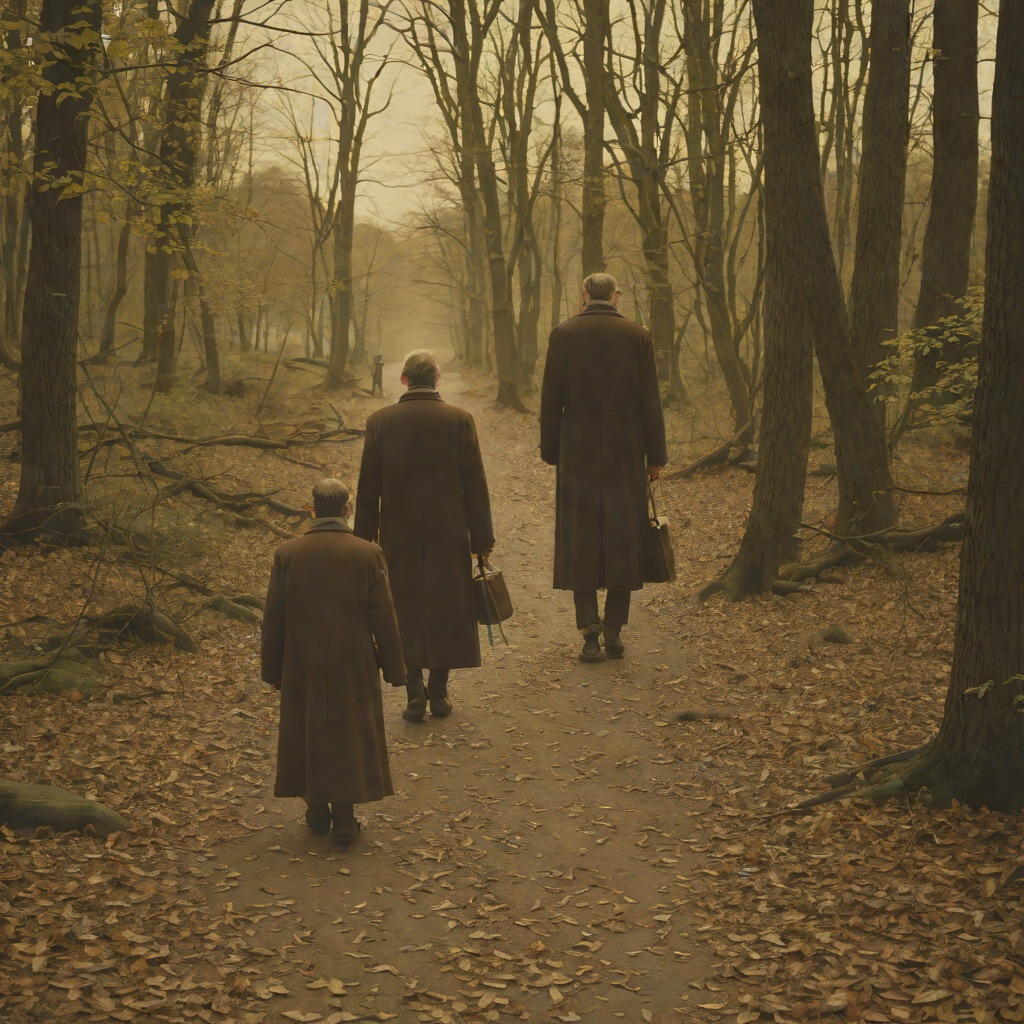
Harold encountered the American oncologist during his walk, a chance meeting that would prove to be one of the most destabilizing moments of his pilgrimage. The two men sat together in a teashop, and when Harold mentioned his journey, the oncologist asked if his son was joining him. Harold said he wasn't, and the conversation turned to the man's profession. When the oncologist revealed he was a physician, Harold's blood quickened as if he had unintentionally broken into a run. He mentioned that he had met a Slovakian lady who was a doctor but could only get cleaning work, and asked what sort of physician the American was. The answer — an oncologist — struck Harold with a force that left him stammering, 'Gosh' and 'Goodness,' as neither man seemed to know what to say next.
The oncologist raised his shoulders and gave a regretful smile, as if he wished he could be something else. Harold glanced round for the waitress, but she was fetching water for another customer. His head was dizzy with the heat, and he dabbed at his forehead. The atmosphere was thick with an unspoken tension, and Harold felt exposed, as if the oncologist might as well have been probing at his skin with his scalpel. He loosened his tie, and then his collar, and wished the waitress would hurry.
The Question of Queenie's Cancer
The oncologist asked Harold what sort of cancer his friend had. Harold admitted he wasn't sure, explaining that in her letter she said there was nothing else they could do, but she didn't say any more than that. When the oncologist suggested lung cancer, Harold confessed he really didn't know. The doctor then asked to see her letter, holding out his empty hand. Harold didn't want to show it, but he reached into his pocket and found the envelope. He adjusted the sticking plaster on his reading glasses, but his face was so slick with moisture he had to hold them in place. He wiped the table with his sleeve, and then again with his napkin, before unfolding the pink sheet of paper and smoothing it flat. Time seemed to stop. Even as the oncologist reached for the letter and gently eased it closer, Harold's right fingers hovered over the page.
Harold read Queenie's words as the oncologist read them. He felt he had to protect the letter and that, by not letting it out of his sight, he could do that. His eye fell on the postscript: 'No need to reply.' After that came an untidy squiggle, as if someone had made a mistake with their left hand. The oncologist threw himself back in his chair and blew out a sigh, calling it a moving letter. Harold nodded, replaced his reading glasses in his shirt pocket, and said, 'And beautifully typed. Queenie was always neat. You should have seen her desk.' At last he smiled. It was going to be all right.
The Revelation of the Handwriting
The oncologist then asked, 'But I assume a care worker did it for her?' Harold's pulse stopped. The doctor explained that she wouldn't be well enough to sit in an office, typing letters, and that someone at the hospice would have done it for her. He added, 'It's nice she managed the address, though. You can see she really tried,' giving a smile that was plainly intended to be reassuring but remained fixed on his face, looking like something forgotten or even misplaced.
Harold took up the envelope. The truth dropped like a terrible weight straight through him, and everything seemed to fall away. He didn't know any more if he was unbearably hot or freezing cold. Fumbling again with his reading glasses, he saw now what he had not been able to make sense of — the thing that had been wrong all along. How had he not realized it before? It was the childlike handwriting, with its downward slant and almost comical irregularity. It was the same as the messy squiggle at the bottom of the letter, which, now that he looked again, he found was a botched attempt at her name. This was Queenie's handwriting. This was what she had become.
Harold replaced the letter in its envelope, although his fingers were trembling so hard he couldn't get the corner to fit. He had to take it out and fold it again, and give it another push. The oncologist, after a long moment, asked, 'How much do you know about cancer, Harold?'
The Oncologist's Warning and Harold's Crisis
The oncologist explained that cancer became more difficult to treat as it spread, and that if it had got into her lymphatic system, the end would be quick; although with the immunity so low, another infection might kill her first. 'Even a cold,' he said. Harold listened without moving. The doctor then said, 'I'm not saying cancer can't be cured. And when surgery fails, there are alternative treatments. But as a physician, I would never tell a patient there was nothing to be done, unless I was absolutely certain. Harold, you have a wife and son. If I may say so, you look tired. Is it really necessary to walk?'
Out of words, Harold stood. He reached for his jacket and slipped his arms into the sleeves but kept missing one of them, and the oncologist had to stand to help. 'Good luck,' he said, holding out his hand. 'And please let me take the bill. It's the least I can do.'
For the rest of the afternoon, Harold continued to tread the streets but without knowing where he was going. He needed someone to share his faith in his walk so that he could believe in it too, but he barely had the energy to talk. He finally got his shoes resoled. He bought a new box of plasters to keep him going as far as Stroud. He stopped for a takeaway coffee and briefly mentioned Berwick, but nothing about how he was getting there, or why. No one said what he longed to hear. No one said, 'You are going to get there, and Queenie will live.' No one said, 'There will be crowds applauding because this, Harold, is the best idea we have ever heard. You must definitely finish.'
The Deeper Significance of the Scene
The scene in Bath is a turning point in Harold's pilgrimage, a moment when the fragile faith that had carried him across England was tested and nearly broken. The discovery of Queenie's handwriting was not merely a medical detail but a profound revelation of her physical decline, a tangible proof of the illness that his walk was meant to overcome. It connected directly to the memory he most feared, the afternoon twenty years ago when it had all come to an end, and to the buried grief of his son David's suicide, which he would later confess in a letter to the garage girl. The oncologist's question — 'Is it really necessary to walk?' — echoed the doubts that would plague Harold throughout his journey, even as he continued to put one foot in front of the other, driven by the smallness of people that filled him with wonder and tenderness, and the loneliness of that too. The scene foreshadowed the crisis at Wooler, where his faith would collapse entirely, and yet it also revealed the depth of his commitment: despite the terrible weight of the truth, he did not turn back. He kept walking, because as long as he walked, she must live.