Harold's act of shedding his possessions
The Unlikely Pilgrimage of Harold FryHarold Fry's act of shedding his possessions is the moment his pilgrimage ceases to be a mere walk and becomes a true act of faith. It unfolds in Cheltenham, after he has already spent nights in a barn and a woodshed, and it is the direct consequence of a realization that comes to him while watching the land melt toward the sky: to succeed, he must remain true to the feeling that inspired him in the first place. The act is not impulsive but deliberate, a systematic stripping away of everything that ties him to his old life, and it transforms both his journey and his relationship with his wife, Maureen, who receives his discarded belongings by post and is moved to whisper his name as if he might somehow hear her across the growing distance between them.
The Realization and Its Meaning
Harold's decision to shed his possessions grows out of a profound insight he reaches while sitting above the Vale of Gloucester, watching the Black Mountains and the Malvern Hills straddle the horizon. He understands that he is both inside and outside what he sees, both connected to the world and passing through it, and that this is also the truth about his walk. He sees that when a person becomes estranged from the things they know and is a passer-by, strange things take on a new significance, and that it is important to allow himself to be true to the instincts that made him Harold, as opposed to anyone else. This is why he keeps to the roads despite the fast cars, why he has no mobile phone, no planned route, no road map—he has a different map, one made in his mind from all the people and places he has passed. He also keeps his yachting shoes, despite their wear and tear, because they are his. The act of giving things away is thus not self-punishment but self-definition: he sheds what is extraneous so that what remains is authentically himself.
The Giving Away in Cheltenham
In Cheltenham, Harold's renunciation takes concrete form through a series of small, almost casual gifts. He donates his washing powder to a student going into a laundrette. Passing a woman from Prestbury who cannot find her key in her bag, he offers his wind-up torch. The following day, he gives his plasters and antiseptic cream to the mother of a distressed child with a bleeding knee, and also his comb by way of distraction. The guide to Britain he hands to a bewildered German couple who are lost near Cleeve Hill and, since he knows the plant dictionary by heart, he suggests they might like that too. Each gift is tailored to a specific need he perceives, and each represents a piece of his former practical self that he no longer requires. He rewraps the gifts for Queenie—the pot of honey, the rose quartz, the glittering paperweight, the Roman key ring and the wool hat—and parcels up the recent souvenirs for Maureen, taking them to a post office. The compass and the rucksack he keeps, because they are not his to give away; they belong to Martina's absent partner, and their borrowed nature makes them sacred.
The Parcel to Maureen
Two days later, Maureen is coiling her bean plants against stakes when she is called to the gate to receive a parcel. Inside she finds a new selection of gifts, as well as Harold's wallet, watch, and a postcard showing a woolly Cotswold sheep. The note reads: "Dear Maureen. Please find enclosed my debit card, etc. I am going to walk without so many things. If I keep it simple, I know I can get there. I think of you often. H." The effect on Maureen is immediate and physical: she climbs the slope to the front door without noticing that she has feet. She stows the wallet in his bedside drawer, beneath the photographs of herself and David, and pins the postcard to Rex's map of England. "Oh Harold," she says softly, and wonders if, despite the increasing distance between them, he somehow hears. The parcel is not a rejection but a communication—the first in years that carries real weight—and it signals to Maureen that Harold is no longer the man who only ever walked to get to the car.
The Walk Without Possessions
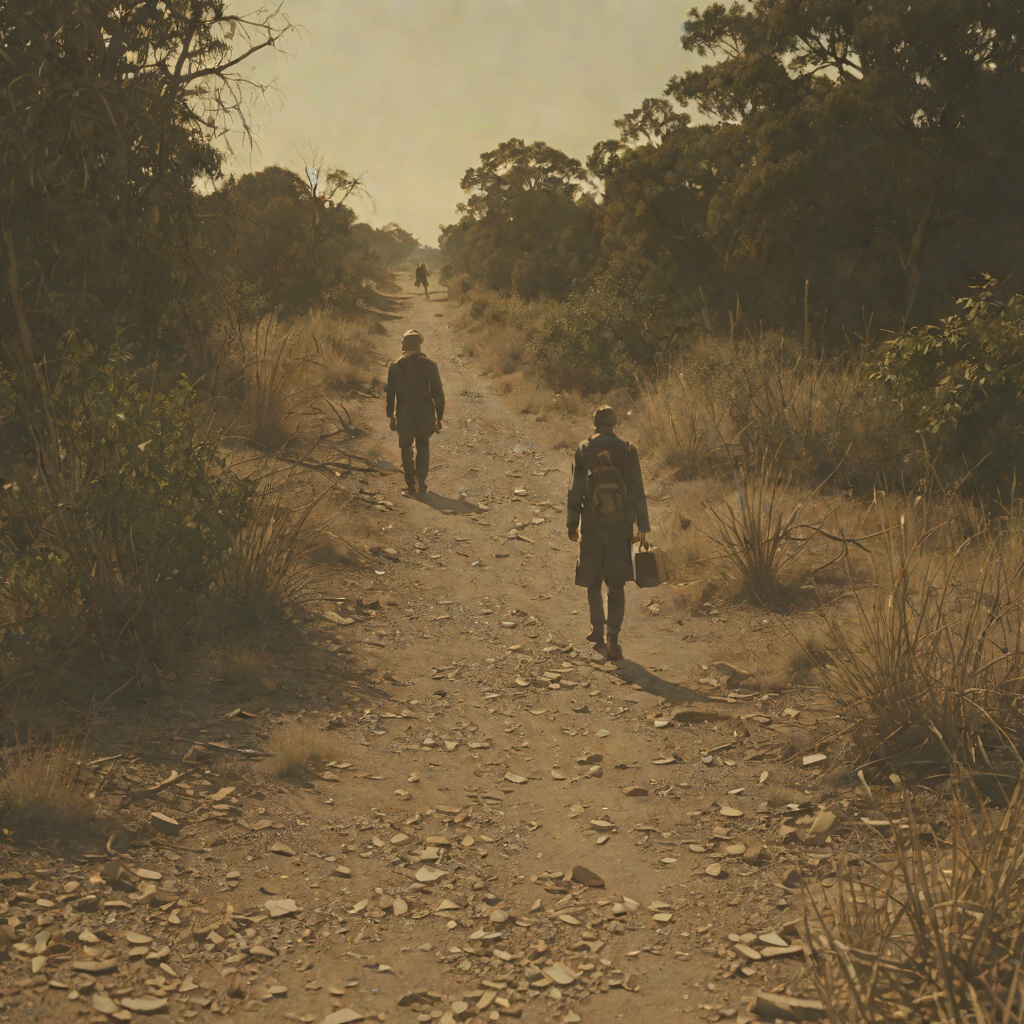
After the night in the barn, Harold continues to sleep outside, choosing dry places and being careful not to upset things. He washes in public lavatories, fountains and streams, and rinses his clothes where no one is watching. He takes the A-roads, B-roads, lanes and tracks, following the compass as it quivers northwards, going by day or by night as the mood takes him, mile after mile after mile. If the blisters are bad, he binds them with duct tape—the roll Martina gave him, which had been her partner's. He sleeps when the need for it comes, and then returns to his feet and walks again, under the stars and the tender light of the moon when it hangs like an eyelash and the tree trunks shine like bones. He walks through wind and weather and beneath sun-bleached skies. It seems to Harold that he has been waiting all his life to walk. He no longer knows how far he has come, but only that he is going forward. The pale Cotswold stone becomes the red brick of Warwickshire, and the land flattens into middle England. He reaches his hand to his mouth to brush away a fly and feels a beard growing in thick tufts. Queenie will live. He knows it.
The Significance of the Act
The shedding of possessions is the outward sign of an inward transformation that has been building since Harold left Fossebridge Road. It connects directly to his earlier vulnerability—the moment on the road when, without his mobile phone, he realizes how exposed he is, a single figure who could fall or be set upon with no one to hear his cries—and to his growing understanding that receiving is as much a gift as giving, requiring both courage and humility. The act also foreshadows the deeper confession he will later write to the garage girl, in which he reveals the full story of David's suicide, his own drinking, and his destruction of the garden shed. By stripping himself of things, Harold prepares himself to strip himself of secrets. The walk without possessions is thus the physical enactment of his spiritual goal: to arrive at Berwick with nothing but himself, so that when he finally stands before Queenie, he can offer her not objects but the truth of who he has become. And when Maureen later tells him, "I love you, Harold Fry. That is what you did," she names the true achievement of his pilgrimage—not the miles walked, but the self he shed along the way.