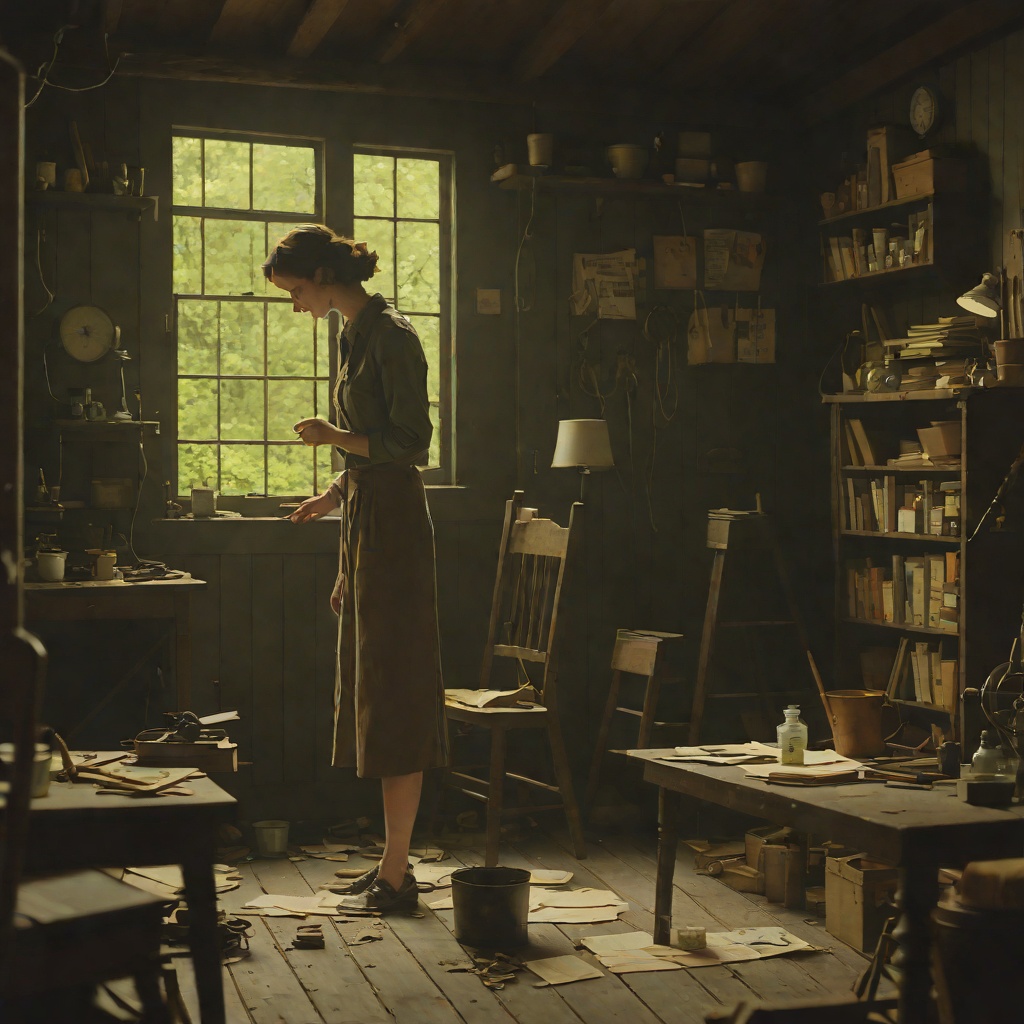
Harold's letter to the garage girl
The Unlikely Pilgrimage of Harold FryHarold's letter to the garage girl is the confession letter Harold Fry writes near the end of his pilgrimage, addressed to the unnamed woman whose chance remark about faith set him walking. In it he finally tells the full story he has carried for twenty years: the suicide of his son David, his own alcoholism, his destruction of the garden shed, his vandalism of the brewery, and Queenie Hennessy's taking the blame and dismissal. The letter transforms the pilgrimage from a private act of hope into an act of testimony, and it is the document through which Harold articulates the true reason for his walk — not romance, but gratitude and unspoken thanks.
The Letter's Origin and the Pilgrimage It Confesses
The letter is the culmination of a journey that began with a single encounter. Weeks earlier, at a garage, a girl had told Harold about her faith and her aunt, and her words had set him walking toward Berwick-upon-Tweed. Now, near the end of that walk, Harold writes to her because he owes her the full story. He addresses her as "Dear Girl in the Garage," apologizing that he does not know her name. The letter is framed as a confession: "I owe you the full story." It is also an acknowledgment that her faith and courage have never been matched by his own — "although I fear my courage has never matched yours." The letter thus connects the beginning of the pilgrimage to its end, making the garage girl not merely a catalyst but the recipient of the truth that the walk was always meant to uncover.
The Confession of David's Suicide
The heart of the letter is Harold's account of his son's death. Twenty years ago, he buried his son — "It is not something a father should have to do." David was depressed and addicted to mixing alcohol with pills, and he could not get a job. Harold confesses that he wanted to know the man his son would become, and that he still does. He does not understand why David did it, and he wishes with all his heart that David had spoken to him. The manner of death is described with brutal precision: David hanged himself in the garden shed, using rope tied to one of the hooks Harold used for garden tools. Because David was so full of alcohol and pills, the coroner said it must have taken a long time to tie the noose. The verdict was suicide. Harold was the one who discovered him. He prayed, although he is not a religious man, saying "Dear God, please let him be OK. I will do anything." He lifted David down, but there was no life. He was too late. The detail that haunts him most is being told how long David took to tie the noose.
The Aftermath: Maureen's Grief and Harold's Drinking
The letter also reveals the devastation that followed David's death. Harold's wife Maureen took it terribly. She would not leave the house, and she put up net curtains because she did not want the neighbours prying. Gradually those people moved away, and no one knew about them or what had happened. But every time Maureen looked at Harold, he knew she saw David dead. She began talking to David as if he were still with her, and she was always waiting for him. She keeps his room exactly as it was the day he died. Harold understands that she cannot let David be dead — "It is too much for a mother to bear." Meanwhile, Harold himself turned to drink. It started as one drink to keep him steady before the coroner's report, but soon he was keeping bottles in paper bags under his desk. He drove home at night, God knows how, wanting only to stop feeling. One night, when he was really out of it, he dismantled the garden shed. But even that was not enough.
Queenie's Sacrifice and Harold's Unspoken Thanks
The letter explains the true nature of Harold's relationship with Queenie Hennessy. Queenie knew all about David, but she said nothing. She looked out for Harold, fetching tea with sugar and talking about the weather. Only once did she say, "Maybe you've had enough now, Mr Fry." After Harold dismantled the shed, he broke into the brewery and did something terrible. Queenie knew it had to be him, and she took the blame. She was fired on the spot and then disappeared. Harold heard she had been warned to get out of the South West, if she knew what was good for her, and he overheard a secretary who was friendly with Queenie's landlady saying that Queenie had not left a forwarding address. He let her go. He let her take the blame. But he gave up drinking. The letter explicitly corrects the public misunderstanding of his pilgrimage: "People think I am walking because there was a romance between myself and Queenie all those years ago, but it isn't true. I walked because she saved me, and I never said thank you." This is the letter's central revelation — the walk was never about love, but about gratitude and the failure to express it.
The Letter as Testimony and the Walk's True Meaning
The letter is the written form of the remembering that the walk itself unleashed. As Harold walked, he measured distance not in miles but with his remembering, and the past he had spent twenty years avoiding chattered and played through his head with a wild energy. He understood that he must remain true to the feeling that had inspired him in the first place, and that his map was the one in his mind, made up of all the people and places he had passed. The letter gathers that remembering into a coherent testimony, addressed to the one stranger who set it all in motion. It is also an act of humility: Harold admits that his courage has never matched the garage girl's, and he signs it with his full name, "Harold (Fry)," adding a postscript apologizing for not knowing her name. The letter thus completes the arc of the pilgrimage — from a chance encounter, through a walk of faith, to a confession that finally speaks the unspeakable. It is the document through which Harold Fry becomes, in his own telling, the man who walked because he was saved and never said thank you.