Harold's yachting shoes
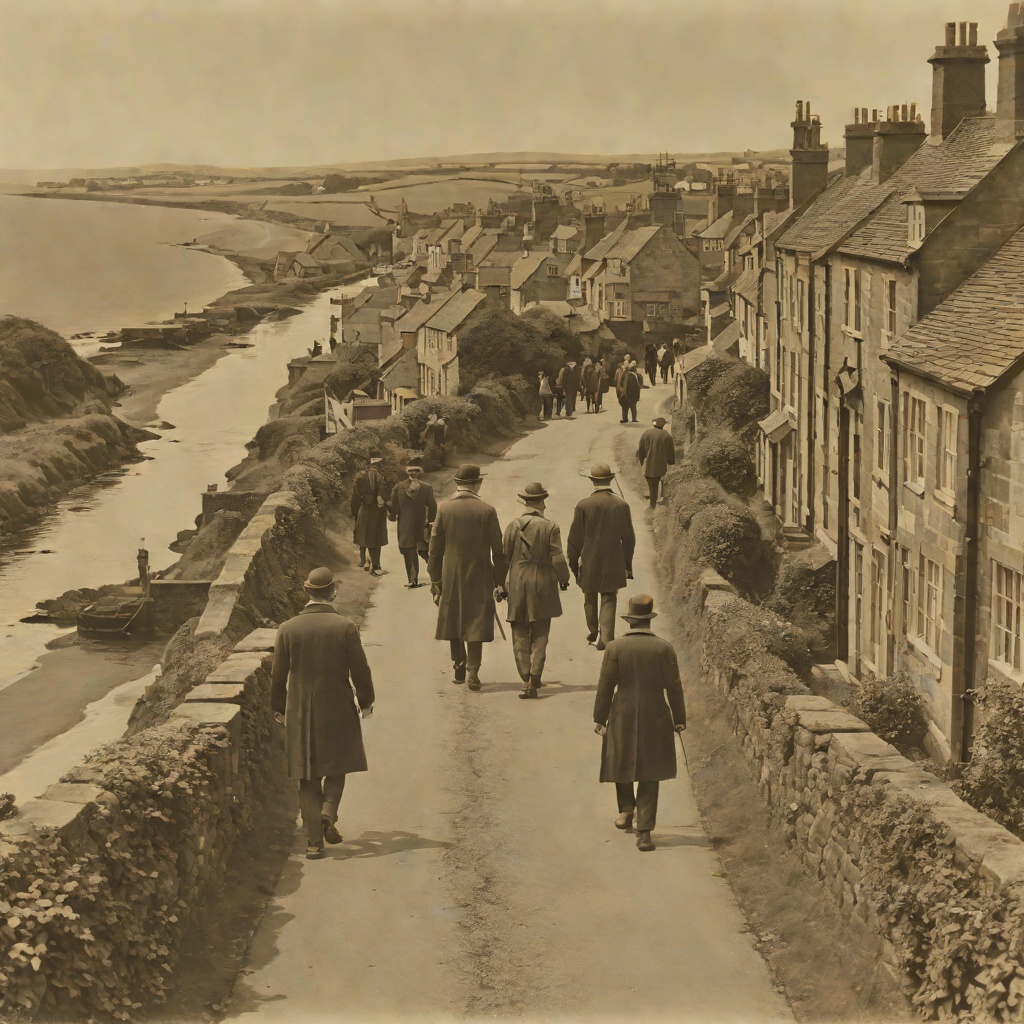
The Unlikely Pilgrimage of Harold FryHarold's yachting shoes are the most persistent and resonant object in The Unlikely Pilgrimage of Harold Fry, a pair of canvas shoes that begin as an emblem of Harold's ordinary, sedentary life and transform into the very instrument of his extraordinary journey. From the moment he glances at them while preparing to post a letter to Queenie Hennessy, through their repeated repair and eventual disintegration, the shoes carry the physical weight of his 627-mile pilgrimage, becoming a symbol of faith, endurance, and the strange alchemy by which an ordinary man's simple act becomes extraordinary. They are the humble, improbable vehicle of a quest that will redefine his life and, ultimately, his marriage.
Identity and Introduction
Harold's yachting shoes first appear in the novel's opening pages, during a seemingly trivial exchange with his neighbour Rex. As Harold prepares to walk to the post box to mail his letter to Queenie, he glances down at his yachting shoes and wonders why people wore them when they had no intention of sailing. The thought is a quiet, almost comic admission of the absurdity of his own life—a man who owns sailing shoes but never sails, who walks only to get to his car, and who is about to embark on a journey that will demand more of his feet than he has ever asked of them. The shoes, in this moment, are a symbol of the comfortable, unexamined existence Harold has built for himself in Kingsbridge, a life of routine and quiet estrangement from his wife Maureen.
The shoes are also a marker of Harold's physical unpreparedness for the task ahead. When he inspects them later, in the privacy of a hotel room, he finds the toes soft and pale, a little tender around the nails, with a possible blister forming at the top of his heel. He performs the same slow, thorough inspection of his right foot, and pronounces himself 'Not bad.' It is a moment of quiet pride—a man of sixty-five, out of practice and out of shape, assessing his own body as if it were a machine he is about to trust with a great undertaking. The yachting shoes, with their thin soles and canvas uppers, are the most fragile part of that machine, and Harold's decision to trust them is the first act of faith in his pilgrimage.
The Shoes as Instruments of the Walk
As Harold walks north, the shoes become more than footwear; they become the physical record of his journey. In the early days, he is acutely aware of his vulnerability as a single figure on the road, without his mobile phone, and the shoes are part of that vulnerability—thin-soled, unsuited to the miles of tarmac and track that stretch ahead. Yet as he finds his rhythm, the shoes carry him through the open land, and the feeling of freedom, of pushing into the unknown, is so exhilarating he has to smile. The shoes, which once seemed absurd, now seem perfectly suited to the task: light, unassuming, and utterly without pretension.
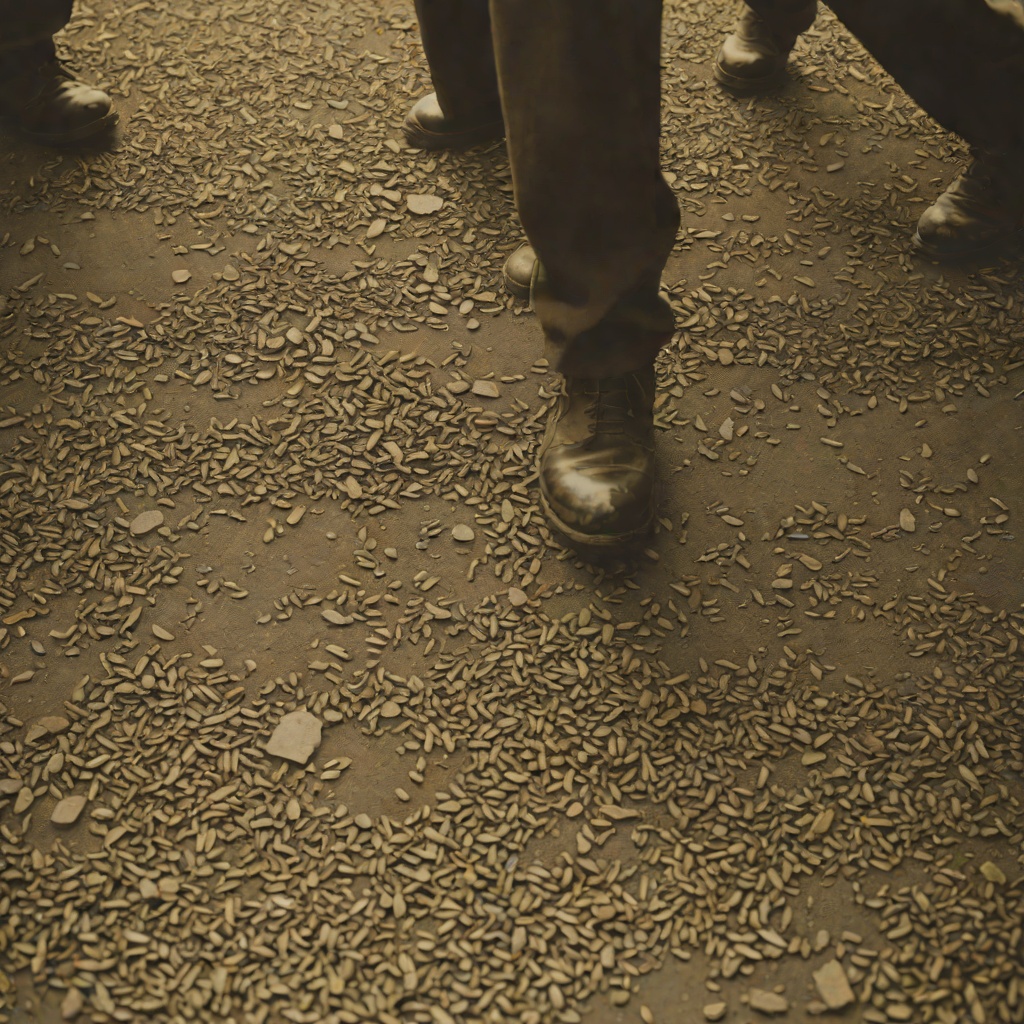
The shoes' fragility, however, is a constant companion to Harold's own physical decline. By the time he reaches the later stages of his journey, the shoes are in tatters: a bulging in the shoes makes a rip at the seam, the soles are thin as fabric, and his toes are about to push through the leather. He binds them with the roll of blue duct tape given to him by Martina, wrapping it round and round and round, crossing underneath the foot and up over towards the ankle, so that the shoe becomes a part of himself. The act of repair is also an act of transformation: the shoes, like Harold, are being remade by the journey, their original purpose forgotten in the service of a greater one. He begins to believe they have a will of their own, and in a sense they do—they are the material proof of his commitment, the thing that carries him forward when his own strength falters.
Repair, Gift, and Transformation
The shoes are also the occasion for one of the novel's most tender acts of kindness. When Harold collapses and is taken in by Martina, a woman who has herself been abandoned, she repairs his yachting shoes, resoling and polishing them and giving them fresh laces. She presents them to him in a brown paper bag, with the dry remark, 'You don't get service like that on the NHS.' The gesture is a gift of care from a stranger who has no reason to help him, and it echoes the larger theme of the novel: that Harold's pilgrimage is sustained not by his own strength but by the kindness of the people he meets. The shoes, repaired, become a symbol of that kindness, and Harold carries them—and Martina's generosity—with him for the rest of his journey.
The shoes also connect Harold to Martina's absent partner, whose rucksack and brass compass she gives him along with the repaired shoes. These objects, like the shoes themselves, are not merely tools but vessels of memory and meaning. Harold keeps the compass and rucksack because they are not his to give away, even as he sheds his other possessions in a deliberate act of renunciation. The shoes, however, are his own, and their repair marks a turning point: he is no longer the man who set out from Kingsbridge, but a pilgrim who has learned to receive as well as to give.
The Shoes as Public Symbol
As Harold's pilgrimage attracts media attention, the shoes take on a life of their own. A photograph in the local paper, captioned 'THE UNLIKELY PILGRIMAGE OF HAROLD FRY,' shows a pair of yachting shoes similar to Harold's, and the caption notes that they are enjoying record sales. The shoes, once a private emblem of Harold's absurdity, have become a public symbol of his extraordinary act—a commodity that others can buy, as if the faith and endurance they represent could be purchased. The irony is sharp: the very object that Harold wore without thinking, that he repaired with duct tape and Martina's care, has been transformed into a marketable image of the pilgrimage itself.
The shoes also serve as a measure of Harold's transformation. When Maureen looks at his photograph in the paper, she is shocked by how changed he has become: he looks unfeasibly tall, at ease with himself, his hair tangled in a mop, a mottled beard springing from his chin, his skin so dark she has to keep staring to find traces of the man she thought she knew. The shoes, visible in the photograph, are part of that transformation—the same object, but worn by a different man. They are the fixed point against which his change can be measured, the thing that has stayed the same even as everything else has altered.
The Shoes at the Journey's End
When Harold finally arrives at St Bernadine's Hospice, eighty-seven days after setting out to post a letter, his journey has amounted to six hundred and twenty-seven miles, including mistakes and diversions. The shoes, bound with duct tape, have carried him every step of the way. They are the silent witnesses to his collapse of faith at Wooler, his breakdown in the Berwick café, and his final, uncertain approach to the hospice gates. In the end, the shoes are not just an object but a record of everything Harold has endured—the blisters, the pain, the loneliness, and the moments of unexpected grace.
The shoes' journey mirrors Harold's own: from ordinary to extraordinary, from fragile to resilient, from absurd to sacred. They are the thing that makes his pilgrimage possible, and they are also the thing that makes it meaningful. In a novel about faith, the yachting shoes are the most concrete article of that faith—the object that Harold trusts, repairs, and ultimately transcends. They are, in the end, the proof that a man can walk to the edge of England and back, one foot in front of the other, and find himself changed by the simple act of putting one foot in front of the other.