I think not
The Unlikely Pilgrimage of Harold FryI think not is the verbal signature of Maureen Fry, the phrase she deploys to refuse, dismiss, and shut down her husband Harold's proposals throughout Rachel Joyce's novel. It is a small, polite-sounding negation that carries enormous weight, appearing at the very beginning of the story and returning at its most crucial emotional moments. The expression becomes a kind of wall between the couple, a habitual refusal that Maureen herself eventually recognizes and regrets. Its final disappearance, replaced by her whispered declaration of love, marks the emotional turning point of the novel and signals the possibility of reconciliation after twenty years of estrangement.
The Phrase as a Wall Between Husband and Wife
The first appearance of I think not comes on the morning the letter from Queenie Hennessy arrives. Harold, freshly shaved and in a clean shirt and tie, sits at the breakfast table with a slice of toast he is not eating. When he asks Maureen whether she would like to sign a note to Queenie, she replies, 'I think not. It would hardly be appropriate to sign a note to someone I don't know.' The phrase is polite, reasonable, and utterly final. It establishes the pattern of their marriage: Maureen's words slice down on Harold's before they have even reached his mouth. He reflects that sometimes her words cut him off mid-thought, and he wishes it were otherwise, but he cannot blame her for what she feels about him as a husband.
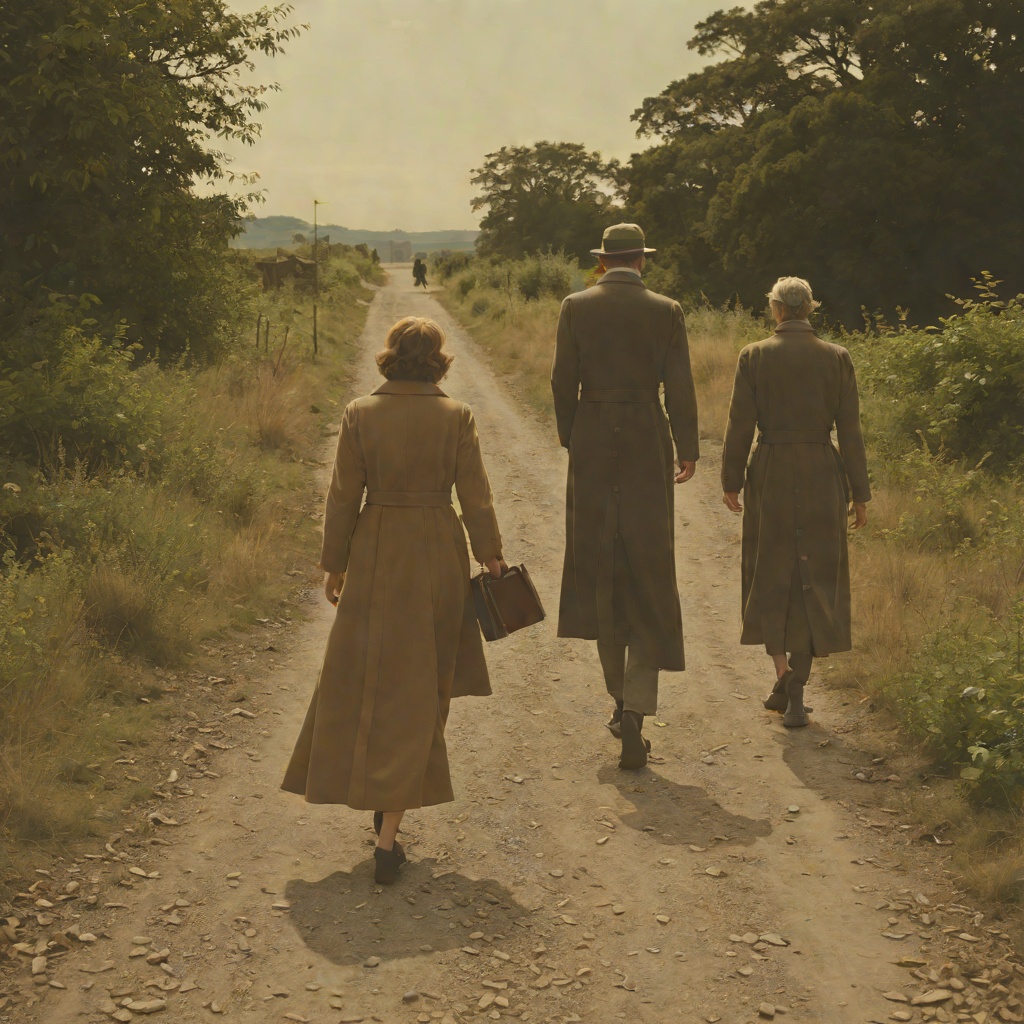
The phrase recurs at the moment Harold announces his intention to walk to Berwick-upon-Tweed. When he tells Maureen he is going to walk and save Queenie, her knees buckle and she throws her hand out to the wall to steady herself. 'I think not. You can't save people from cancer, Harold. Not unless you are a surgeon. And you can't even slice bread without making a mess. This is ridiculous.' The refusal here is not just a rejection of his plan but a dismissal of his entire capacity. Maureen's words carry the accumulated bitterness of years, and Harold, laughing as if the person they are discussing is a stranger, tries to explain that a girl at the garage gave him the idea. But Maureen sails straight through him, asking where he thinks he is going to sleep and reminding him that he left his mobile phone.
Maureen's Own Recognition of the Habit
The most striking thing about I think not is that Maureen herself comes to see it as a problem. During a visit to Bantham with her neighbour Rex, she confesses, 'I say so many things that I don't mean. It's as if, even if I think something nice about Harold, by the time it's got to my mouth it's become not nice. He goes to tell me something and I'm saying, "I think not," before he's finished the sentence.' This moment of self-awareness is crucial. Maureen recognizes that the phrase is not a considered judgment but a reflex, a way of protecting herself from the pain of engaging with Harold. She tells Rex that when she was young she assumed her life was sorted, and it never occurred to her that at sixty-three she would be in the most appalling mess.
The phrase appears again when Harold, having walked hundreds of miles, asks Maureen whether she might come with him. She eases her hand from his and pushes back her chair. 'It's too late,' she murmurs. 'I think not.' She offers excuses: there is the garden, and Rex, and she does not have her things. But the real reason is fear. Harold speaks so softly that his words are part of the air, telling her he is the one who needs forgiveness. Maureen, sitting beside Rex in the passenger seat with coffee in a polystyrene cup and a doughnut wrapped in a serviette, takes small gulps of air to stop weeping. 'I even said I think not. I can't believe I said that.' The repetition of the phrase has become a source of shame.
The Phrase as a Counterpoint to Harold's Promise
I think not stands in direct opposition to the other great verbal act of the novel: Harold's promise to Queenie. When he telephones the hospice from a phone box, he tells the voice on the other end, 'Tell her Harold Fry is on his way. All she has to do is wait. Because I am going to save her, you see. I will keep walking and she must keep living. Will you say that?' This is a performative utterance in the purest sense: Harold's words create the reality of the pilgrimage. He insists, 'I'm not in a car. I want her to live.' Where Maureen's I think not closes down possibility, Harold's promise opens it up. The contrast between the two phrases defines the central tension of the novel: one spouse refuses, the other commits.
Maureen's habitual negation also contrasts with the faith that sustains Harold on the road. He walks through wind and weather, beneath sun-bleached skies, and it seems to him that he has been waiting all his life to walk. He no longer knows how far he has come, but only that he is going forward. The pale Cotswold stone becomes the red brick of Warwickshire, and the land flattens into middle England. Harold reaches his hand to his mouth to brush away a fly and feels a beard growing in thick tufts. Queenie would live. He knows it. This certainty is the opposite of Maureen's reflexive refusal, and it is what allows Harold to keep putting one foot in front of the other.
The Phrase's Disappearance and the Reconciliation
The turning point comes at the end of the novel, when Harold and Maureen are finally reunited. After the grief of Queenie's death has passed, Maureen holds Harold tight. He is tall, and stiff, and her own. 'You dear man.' She gropes for his face with her mouth and kisses his salty wet cheeks. 'You got up, and you did something. And if trying to find a way when you don't even know you can get there isn't a small miracle, then I don't know what is.' Her mouth trembles. She cups his face in her palms; they are so close now that his features lose distinction and all she can see is the feeling she has for him. 'I love you, Harold Fry,' she whispers. 'That is what you did.'
The phrase I think not is conspicuously absent from this final scene. In its place is a declaration of love, the first genuine affirmation Maureen has offered Harold in twenty years. The disappearance of the phrase is as significant as its repetition. It signals that Maureen has finally stopped protecting herself, that she is willing to risk the pain of connection. The small, polite negation that once walled off the couple has been replaced by an equally small but infinitely more powerful affirmation. The novel suggests that language can be both a prison and a release, and that the choice of words, even the smallest ones, can change a life.